Destiny Stark, ARDMS(BR), MBA, BS
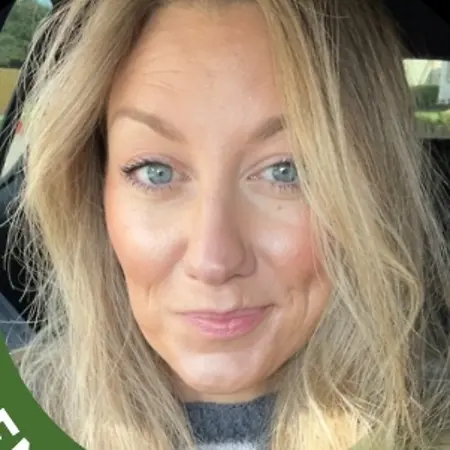
Destiny Stark, ARDMS(BR), MBA, BS in Healthcare Management, is a seasoned ultrasound professional with more than a decade of experience in breast imaging and patient-centered care. She currently serves as Lead Ultrasound Technologist at Tops Comprehensive Breast Center, where she combines clinical expertise with operational leadership to ensure high-quality, compassionate care across multiple locations. Known for her adaptability and integrity, Destiny consistently steps in wherever needed—balancing imaging, patient education, and team support to keep operations running smoothly.
In her leadership role, Destiny has spearheaded initiatives that significantly improved patient navigation and workflow efficiency, including developing decision-tree scripts and streamlining call-back processes. She oversees employee onboarding, training, scheduling, and conflict resolution, while also maintaining ACR accreditations and ensuring compliance across systems such as PACS and PENRAD. Her approach centers on honesty and clarity—making sure patients understand their care, even during difficult conversations, and empowering teams to deliver seamless, coordinated services.
Destiny’s career journey began after attending college on a softball scholarship, eventually discovering ultrasound as her true passion and professional niche. She earned her bachelor’s degree in Healthcare Management and is completing her MBA at Western Governors University, becoming the first in her family to achieve a master’s degree. As she looks ahead to director- and executive-level roles, Destiny continues to grow through mentorship and strategic planning, while staying grounded in family life—traveling for softball tournaments, supporting her children’s pursuits, and enjoying baking and cooking in her downtime.
• ARDMS
• Western Governors University- M.B.A.
• Western Governors University- B.S.
• Florida Institute of Ultrasound Inc
• ARDMS (American Registry for Diagnostic Medical Sonography)
What do you attribute your success to?
I attribute my success to perseverance, continuous learning, and the ability to adapt to new situations; while finding a niche I truly enjoy in breast imaging and consistently creating positive change through improved processes and protocols.
What advice would you give to young women entering your industry?
I'm a huge proponent of vocational school, whether it be ultrasound, x-ray, CT, anything in the medical field. You'll always have a job, they're not going anywhere. Aside from that, if healthcare is not your thing, there's always doing hair and cosmetology, or mechanics for boys or girls if that's what they're into. I feel like vocational schools are so important to make this country run, and I hate that our schools have kind of pushed that out and they push everyone to college, because college isn't for everybody. On the other hand, I also know that if I could start all over again and go back to college from day one, knowing what I know now, I would have went for my doctorate and I would have went into radiology. You don't have to be the smartest person in the room to be a doctor. I know it sounds so terrible, but you really don't. It's just about how you apply yourself, and how you study, and how you take those tests. I tell my daughter now, who is looking into the medical field, if that's something you want to do, don't ever let anybody tell you that you can't do it, because a thousand percent, you are smart enough. I work with doctors every day, trust me when I say you are smart enough.
What are the biggest challenges or opportunities in your field right now?
Some of the biggest challenges in my field are probably room for growth. I feel like I've had to push for that for several years now, and it's just now becoming available. It seems to be very age-related. I have always felt like I am beyond my years as far as where I'm at in my field, and they're like, oh, well, you're in your late 20s, or you're in your 30s, and now I'm in my 40s, so now can I be considered? I know that part of it is you're almost waiting for somebody to move on or retire before there's availability to move into positions. Aside from that, even now in 2026, there's not a lot of women in upper management in the healthcare field. You're seeing it more, but it's still not there.
What values are most important to you in your work and personal life?
I think honesty and doing the right thing every time are the most important values to me. We talk a lot with our staff about really, honestly, doing what's right for the patient and making sure that regardless of sometimes the uncomfortable conversation that you have to have, we're doing what is appropriate. Sometimes that's not necessarily what someone wants to hear because it's healthcare and there's a lot of ins and outs that go with that. One of the things that I enjoy doing is really educating my patients on why things happened a certain way, or why we're doing specific things, because I want them to know that what we're doing is the right thing and is the correct process or procedure. We even have conversations with doctors to tell them no, we shouldn't be doing this, because that is incorrect and that's not what you should be doing. The radiologists that I have worked with and will continue to always work with, I feel like they very much align with the same very high standards, and it's something that I will never compromise to go to work somewhere for money.