Her Story
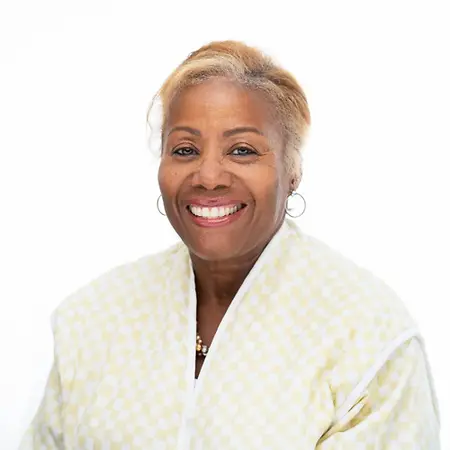
About Detria
I started my career in financial analytics with JP Morgan, auditing so many numbers that I was just done. I decided I needed to go into a career where I could be creative, but I didn't want to leave the company because I really liked JP Morgan. I met some people in human resources and volunteered to help with new hire orientation while somebody was out. About a month in, there was an opening in learning and development, and someone encouraged me to apply even though I didn't think I had the experience. I got the role, stayed about 5 years in learning and development, then went into executive coaching, employee relations, and employee management. I became VP of HR for JP Morgan and traveled all over. I have been in the energy space for about 15 years, working in energy exploration with some of the biggest exploration businesses in the world, and now in commodity trading. Today, I am an HR business partner for a company under the Loves family of businesses, supporting the energy group. We trade commodities and move them, whether it's gasoline, petroleum, or alternative energy. If you need to build a space where it can be housed and distributed or sold, we can do that too. I work with a recruiter on my team, and we hire people from engineers to data analytics professionals who are creative and design business systems. I help managers get the best out of people through executive coaching, making sure everyone from entry level to senior executives has very good communication skills, can influence and resolve conflict, negotiate effectively and quickly, navigate and lead crucial conversations, and really build influential, high-performing teams.
Her Interview
Ten minutes with Detria
01What do you attribute your success to?
I really am very serious about relationship currency. I believe that developing relationships has helped me be successful in everything I've ever done. The most important things I learned about relationship currency, I really learned as a child with my parents. I spent time in the car with my dad, and he would tell me where we were going to go, then he'd say he needed me to introduce myself, talk to two or three people about 2 or 3 things, ask questions, look the person in the face, and give a firm handshake. I think those things helped me to get comfortable in boardrooms and on boards and in leadership opportunities throughout my entire career, because no matter what you say, this is a man's world. Men are mostly in leadership positions, but I walk in like I'm supposed to be there, because when I walked in the barbershop, my dad said I was supposed to be there. The other part about relationships and currency, I'm sure that I learned from my mother, and that's active listening. Stephen Covey slapped a label on it and called it seeking first to understand before seeking to be understood. My mother would stop what she was doing to look at people in their face. And that is gold in relationship currency. It really is. She would make people feel like they were the most important person in the room.
02What’s the best career advice you’ve ever received?
My mentor Pam Davis told me that she was passing the baton because I was going to be next. She said she wasn't afraid of the light shining on me, that she was good, and now I was going to do really well because she said so. She put me in places that I thought I was going to be really out of my comfort zone, and I was, but that wasn't the point. She needed me to develop these skills. She was passing the baton so I could be next to pass the baton. My father also gave me powerful advice when I was recovering from pneumonia and feeling uncertain about returning to work. He reminded me that he and my mother worked really hard at jobs so that my sister and I could have careers. He said there's a difference sometimes between a job and a career. He told me that if I couldn't figure out how not to work somewhere for a year or two without living under an elevated bridge, then what was I telling him - that he and my mother wasted their time? He also said I seemed well-educated, that's what he paid for, and I seemed to have good sense because nobody had fired me. So unless I went to sleep and had a frontal lobotomy, I was going to have the same brains when I woke up that I had when I went to sleep. That gave me permission to take time off, travel to jazz festivals in South America, and trust myself.
03What advice would you give to young women entering your industry?
I help first-generation college students get comfortable in spaces where they haven't always been. It's about, have you been in this space before? If you're at your grandmother's house and you're getting a homemade cookie, heck yeah, you feel comfortable there. It's your grandmother and she's made cookies for you before. So I talk with them so that they can get confident and feel as comfortable in professional spaces as they would feel in their most comfortable personal spaces. I believe one of the most important things is becoming comfortable being uncomfortable. The only way that you become comfortable being uncomfortable is to get pushed into unfamiliar arenas. Walk in like you're supposed to be there. That's what I learned from my father - when I walked into the barbershop, my dad said I was supposed to be there. So now when I walk into boardrooms, even though this is a man's world and men are mostly in leadership positions, I walk in like I'm supposed to be there.
04What values are most important to you in your work and personal life?
Relationship currency is most important to me. I really am very serious about developing relationships, and I believe that has helped me be successful in everything I've ever done. Active listening is gold in relationship currency - stopping what you're doing to look at people in their face and make them feel like they're the most important person in the room. I also deeply care about people being able to be comfortable being uncomfortable, and helping the next generation of professionals, especially first-generation college students, develop confidence in professional spaces. I believe in passing the baton and not being afraid of the light shining on others. I'm good, and now you're going to do really well. I also value having fun in my work. I tell people that 97% of the time, I walk in skipping, I leave skipping. In 30 years, I've only had two bad managers. Most people can't say they've had as much fun as I've had. I mean it. I had a good time every day.
Join Influential Women and start making an impact. Register now.