Her Story
About Devina
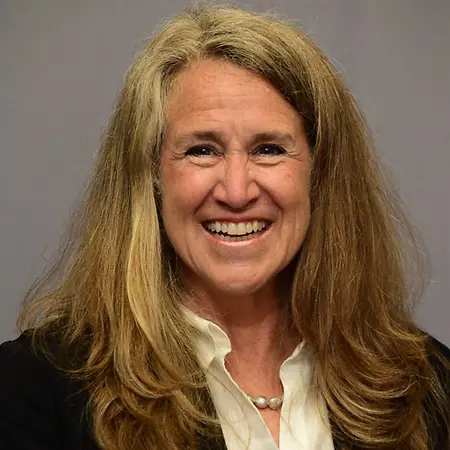
Devina Dixon Allen is an award-winning Enterprise Delivery and PMO Executive and the founder of Dixon Allen Group. Based in Atlanta, Georgia, she specializes in AI-enabled transformation, portfolio governance, enterprise technology delivery, and the development of scalable operating systems that help organizations execute strategy with greater speed, visibility, and accountability.
Across more than 20 years of progressive leadership, Devina has directed global technology programs and portfolios valued at up to €40 million and led organizations involving more than 60 professionals. Her experience spans enterprise SaaS, cloud platforms, warehouse and transportation management systems, infrastructure, cybersecurity, disaster recovery, software development, customer solutions, and professional services.
At Rocket Software, Devina led project management and customer solutions organizations supporting more than 40 products and a services portfolio exceeding $20 million. She expanded a seven-person project management function into two teams comprising 18 project managers and two managers, established a Partner Services delivery team, and developed cross-functional dashboards and governance practices used across four business units. Her operational improvements contributed to an increase in delivery profitability from 61% to 85%, customer satisfaction of 96%, and a one-month reduction in the time required to prepare new project managers for their first assignments.
Earlier in her career, Devina held program management, customer services, Scrum Master, and release coordination leadership roles with Oracle Cloud WMS. There, she supported enterprise implementations, Agile delivery, global service operations, technology-platform integration, and client relationship management. At DHL Global Mail, she managed a €40 million, three-year international program involving more than 60 resources and delivered infrastructure consolidation, warehouse management, Oracle Transportation Management, change-management, and disaster-recovery initiatives. She has also led cybersecurity audit engagements, technical support organizations, engineering teams, software quality functions, and business operations.
Through Dixon Allen Group, Devina provides AI-enabled delivery, PMO, technology transformation, and operational consulting services. She helps organizations improve PMO maturity, establish portfolio governance, recover challenged projects, strengthen executive reporting, and build practical AI-assisted workflows, dashboards, templates, and operating rhythms. Her approach treats AI as operational infrastructure that can improve planning, reporting, risk identification, decision-making, and stakeholder alignment rather than as an isolated experiment.
Devina is recognized for entering complex, high-stakes environments and creating the structure required for sustained execution. Her leadership philosophy centers on ownership, clarity, speed, disciplined governance, and outcome accountability. Rather than managing tasks in isolation, she builds systems that enable teams to make better decisions, operate with greater autonomy, and consistently deliver measurable business results.
A Project Management Professional and Certified ScrumMaster, Devina earned an associate degree in Business Administration and Management from the University of North Georgia. Her honors include Rocket Software’s Aurora Certificate of Achievement, recognizing the top 0.01% of future female leaders, and DHL Global Mail Americas Employee of the Quarter.
Her Interview
Ten minutes with Devina
01What do you attribute your success to?
I attribute much of my success to two strong women who showed me what determination, resilience, and hard work look like.
The first is my mother. She became a single mother after divorcing my father, and someone in the family told her, “You’ll never make it without us.” Her response was, “Watch me.” She went on to build a successful career in real estate, become a vice president at Northside Realty, and work with Johnny Isakson and Vice President at Citicorp. She worked hard, created her own path, and never allowed someone else’s expectations to define what she could accomplish. She gave me that same work ethic, and I have passed it on to my 3 sons.
The second was a woman who lived near us. She had served in the military as a nurse, was also a single mother, and raised two sons. I always admired her strength and independence. Even at 80 years old, she was still the kind of person who would get on the roof of her house to sweep it herself. She believed in taking care of what needed to be done and not waiting for someone else to do it.
Both women taught me to be resourceful, to keep moving forward, and to take ownership of my life and my work. Their examples shaped the way I lead, the way I respond to challenges, and the way I define success.
02What’s the best career advice you’ve ever received?
The best career advice I ever received was this: if you want to grow, you need to be training your replacement.
That advice shaped the way I have led throughout my career. I have always made it a priority to mentor and develop someone who could step into my role, because strong leadership is not about making yourself indispensable. It is about building capable people, creating continuity, and preparing the organization for what comes next.
In many of my roles, my responsibilities eventually had to be divided among several people after I moved on, but the principle remained the same: develop others while continuing to grow yourself. Training my replacement has strengthened my teams, created opportunities for others, and been one of the most important factors in my own career advancement.
03What advice would you give to young women entering your industry?
My advice to young women entering this industry is simple: do not let anyone tell you what you cannot do.
Women often underestimate their own accomplishments or question whether they are qualified, even when their experience says otherwise. When I received the invitation from Influential Women, my first thought was, “Why me? What have I done that would be impressive to someone else?” That reaction reminded me how easily imposter syndrome can cause us to minimize our own value.
I would encourage young women to look honestly at what they have accomplished, recognize the strengths they bring, and be willing to advocate for themselves. Self-promotion does not mean being boastful. It means being able to communicate your value, speak confidently about your results, and make sure your work is visible.
When there is something you truly want, go after it. Do not be afraid to take a different path, learn a new skill, or reinvent yourself. Careers are rarely a straight line, and reinvention can open doors you may not have imagined. Where there is determination, there is usually a way forward.
Networking and mentorship are also essential. I believe women need to do a better job of supporting one another rather than viewing younger or less experienced women as competition. Men have historically advanced by building strong networks and opening doors for one another. Women should be just as intentional about creating those opportunities.
Mentor other women. Share what you have learned. Make introductions. Recommend someone for the opportunity. Help another woman see her potential, and do not be afraid that supporting her success will diminish your own. There is room for all of us to grow, and we are stronger when we help one another move forward.
04What are the biggest challenges or opportunities in your field right now?
One of the biggest opportunities in my field right now is artificial intelligence and the many ways it can be applied to improve how we work. AI can take on some of the repetitive tasks, such as data entry, report writing, and routine analysis, so people have more time to think creatively, solve meaningful problems, and focus on work that can make a real impact.
At the same time, one of the biggest challenges is helping people move past fear and understand how to use AI responsibly. When the internet first became widely available, many people were afraid of it and focused on the ways it could be misused. Some of those concerns were valid, but the internet also created tremendous opportunities. I see AI in much the same way. With the right boundaries, safeguards, and human oversight, it can be used to accomplish some truly positive things.
This is an exciting time for me because I have had the opportunity to explore AI more deeply than I might have been able to while leading a full-scale delivery organization. I am currently participating in two AI learning challenges and continuing to build my knowledge through coursework and hands-on application. I am especially interested in how AI can strengthen planning, reporting, risk management, decision-making, and operational delivery while allowing people to focus more of their energy on innovation and results.
05What values are most important to you in your work and personal life?
The values that matter most to me, both professionally and personally, are integrity, honesty, and keeping my commitments.
Those values were tested when a contractor failed to pay our business after 9/11, leaving us facing bankruptcy. Attorneys advised my husband and me to close the doors and file for bankruptcy, but we looked at each other and said, “That is not who we are.” We had made commitments to our employees, vendors, and creditors, and we believed it was our responsibility to honor them.
We sold our home, our farm, and nearly everything we owned so we could pay our employees and meet our obligations. It was one of the most difficult periods of our lives, and we had to start over, but we were able to move forward knowing that we had done the right thing and taken care of the people who depended on us. And it taught my sons some invaluable lessons.
That experience reinforced something I have always believed: integrity matters most when doing the right thing is difficult, costly, or inconvenient. Your word should mean something, and people should be able to trust that you will follow through on your commitments.
Honesty is equally important to me. I raised my three sons to understand that I would rather hear the truth, even when it is difficult, than be told something that is not true. I have carried that same principle into my relationships with employees, teams, and customers.
In leadership, I believe it is always better to deliver difficult news early, explain the situation clearly, and bring forward a solution than to delay the conversation or give people false reassurance. Trust is built through honesty, accountability, and consistency, and those values continue to guide the way I live, lead, and serve others.
Join Influential Women and start making an impact. Register now.