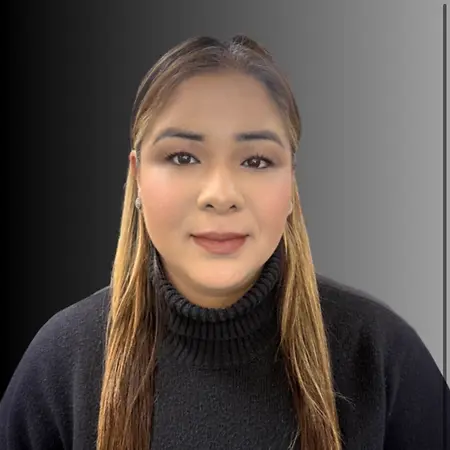
Her Story
About Deysi
I've been a school counselor for 5 years and have been in education for more than 16 years. As a first-generation college graduate myself, I understand where our students are coming from. I didn't have good counselors when I was growing up, so I had to find my own path, and that motivates me to make the impact I didn't have when I was in school. I work with the whole child across all three tiers of support - Tier 1 covers the whole school with social-emotional learning, college and career readiness, and academic support through classroom presentations and school-wide activities like career fairs. For students who need additional support, we move to Tier 2, and for those with more in-depth trauma or behavioral needs, we provide Tier 3 support with small groups, check-in and check-out, and structured breaks. We're a PBIS school, so we focus on the whole child and find the root cause of their needs. If a student is hungry, we give them snacks because a hungry student can't focus in class. When my co-counselor and I came to this school, there was nothing in place - they just said, okay, you're the school counselors. We created a comprehensive school counseling program from scratch that the district has now mimicked and implemented at other elementary schools. We're also piloting the Ripple Effects SEL program for the district. I see things through a different lens - I don't focus on consequences, I want to understand why students are acting a certain way and support them with strategies and healthy coping skills. I work closely with families because when a child feels supported at home and at school, they have a bigger chance to succeed.
Her Interview
Ten minutes with Deysi
01What do you attribute your success to?
I attribute my success to my background. Not having a good counselor and nobody to guide me when I was growing up showed me that I could make a difference and make the impact that I didn't have in my own education. Family support has been crucial - that's why we include families so much in our work, because when a child feels supported at home and at school, they have a bigger chance to succeed. I also believe in not giving up. The only mistakes we have in life are when we quit. If we keep going and learn from our experiences, they're not mistakes - we learn from them and keep moving forward. I always try to look at the positive and make something positive out of everything.
02What’s the best career advice you’ve ever received?
The best career advice I've received is not giving up. I know I had a lot of hiccups here and there in the road of accomplishing my career, but not giving up is the main thing. The only mistakes we have in life are those when we quit. When we don't quit, they're not mistakes - we learn from them and keep on going. That's kind of how I see life. If I mess up, I keep on trying. If I give up, then it's a mistake, but I've got to look at the positive and make a positive out of everything. So not giving up has been the most important advice.
03What advice would you give to young women entering your industry?
My advice to young women entering this field is that we're all here to learn new things. We never know it all, so always be open to new learnings and never give up. What works with one kid might not work with the next kid, even if you think you've got it all figured out and it's in your books. Kids are changing every year, and we've got new challenges coming all the time, so you have to be okay with change and not give up. Change is not always bad - change could be good, and being okay with it is important. Don't think that change is always negative, because it can lead to positive outcomes.
04What are the biggest challenges or opportunities in your field right now?
One of my biggest challenges is that as a school counselor, I see things through a different lens. I see the child differently - I ask why are they misbehaving, why are they being defiant, and I find the root cause. Someone outside of the counseling field might just say the child is misbehaving and focus on consequences like suspending them or taking recess away. I don't focus on consequences. I look at things through a different lens to make sure I find why the students are acting this way and support them, because at the end of the day, they're kids, they're children. If we don't teach them strategies and find how to help them, that's not going to be a good future for them. As for opportunities, when I was growing up, we didn't have counselors in elementary schools. The opportunity that students have them now gives us the chance to plant the seed early. We can teach these students the strategies they need as they grow up and go to middle school, high school, and into life. We're teaching them life lessons and learning lessons now, planting the seed so they're watering it as they learn, and then they can bloom as they get older.
05What values are most important to you in your work and personal life?
The most important values to me are communication and teamwork. Communication is a big, big one because we always want to see the whole child, and we've got to work as a team in the whole school. It's a full circle - if I support the student, the teacher supports the student, and we communicate with the families, and then the families support the students, we've got to do that full circle of communication and teamwork to make it work. I could be working with the student and teaching them strategies and healthy coping skills, but if they're only doing it with me and they go home or to the classroom and don't know how to self-regulate, then it's not going to work as effectively. But if we communicate and work as a team, I train them, they tell me what strategies they want to focus on, and then it's going to work for the whole child.
Join Influential Women and start making an impact. Register now.