Her Story
About Dia
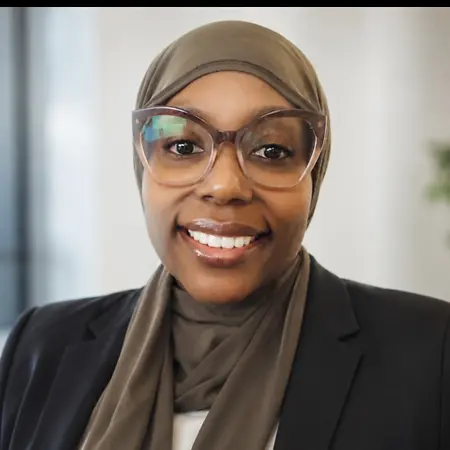
Dia Cleveland is a seasoned Human Resources and Employee Benefits professional with more than 15 years of experience turning complex benefits and HR processes into experiences that feel personal, supportive, and human. Currently serving as a Senior Benefits Analyst at Globus Medical, Dia was recruited in March 2025 to help support the company’s rapidly growing workforce through what she proudly calls a “white glove, humanistic approach to HR.” In a world where employees can often feel like ticket numbers and case files, Dia’s mission is simple: bring the humanistic side back to HR.
Licensed in Pennsylvania for Life, Accident & Health and Property & Casualty insurance, Dia specializes in employee benefits administration, compliance, auditing, open enrollment strategy, and employee experience. She is also actively pursuing her Certified Employee Benefit Specialist (CEBS) designation because apparently free time sounded overrated.
Throughout her career, Dia has become known for balancing operational excellence with genuine compassion. Her work places her alongside employees during some of life’s biggest moments: welcoming children, planning weddings, navigating health crises, grieving loved ones, and trying to understand benefits language that occasionally feels like it was written by a raccoon with a law degree. She approaches every interaction with empathy, patience, and the belief that people deserve to feel heard, not processed.
Prior to joining Globus Medical, Dia held HR and benefits-focused roles with organizations including Independent School Management, Lamb Insurance Services, and Zenefits. Her people-first philosophy is deeply personal and shaped by the loss of her father, who dedicated 37 years to a corporation only for her family to feel overlooked during one of the hardest moments of their lives. That experience became the heartbeat behind her commitment to ensuring employees and their families never feel like “just another number.”
Beyond benefits strategy and compliance work, Dia is a passionate advocate for workplace wellness, mental health awareness, and authentic human connection in corporate spaces. Through her leadership involvement with the Global Women Impact Network (GWIN), she created wellness initiatives centered around mindfulness, meditation, tea, and employee wellbeing across multiple office locations. From virtual meditation sessions and themed “tea of the week” experiences focused on energy, boundaries, and support, to personally hanging flyers and setting up wellness stations herself, Dia believes care should be visible, tangible, and accessible. She also launched a workplace book club initiative designed to foster conversation, reflection, and connection among colleagues.
Dia holds a Master of Science in Organizational Leadership from Grand Canyon University and a Bachelor of Science in Psychology from Wilmington University. She continues to lead with empathy, authenticity, and the belief that HR can still have a heartbeat.
Her Interview
Ten minutes with Dia
01What do you attribute your success to?
I attribute my success to authenticity, hard work, and genuinely caring about people. I’ve never tried to fit into the stereotypical corporate mold. I lead with empathy, build real relationships, and treat employees like human beings, not numbers.
At the same time, I’m very operational and detail-oriented behind the scenes. I work hard, stay curious, ask questions, and continuously learn from both mentors and mistakes.
I also think resilience has played a big role. Life and work have both stretched me in many ways, but I’ve learned how to keep showing up with compassion, consistency, and heart no matter the season.
02What’s the best career advice you’ve ever received?
The best career advice I can give is simple: be authentically you.
I’m colorful. I’m loud. I’m energetic. I laugh hard, I care deeply, and yes, sometimes I cry at work. I’ve cried for my own reasons, cried alongside employees, hugged people during hard moments, and celebrated with them during joyful ones. That doesn’t make me less professional. If anything, it makes me more human.
Too often people think professionalism means becoming robotic. Suddenly everybody is “circling back,” talking in acronyms, and sounding like they were generated by a corporate handbook instead of raised by actual people. Employees do not need perfection. They need sincerity. They need to know the person sitting across from them genuinely cares.
People can always tell when someone is performing professionalism instead of living authentically. Your personality is not something to suppress to succeed. It is often the very thing that makes people trust you, remember you, and feel safe with you.
So be professional, absolutely. But also be real. Be kind. Be approachable. Be yourself. Your authenticity will always speak louder than buzzwords ever could.
03What advice would you give to young women entering your industry?
One of the biggest pieces of career advice I can give is this: find your “rabbit.” Find someone who has already gone where you’re trying to go. Someone seasoned, respected, and established in their field, and learn from them intentionally. Ask questions. Sit at the table. Observe how they move. There is nothing wrong with saying, “I admire the way you lead. Teach me.”
Some people are afraid to ask for guidance because they think it makes them look inexperienced, but the truth is the most successful people usually had someone pour into them too. Growth rarely happens in isolation.
One of my mentors is Christy Treese. I remember sitting with her and asking direct questions like, “How did you get here? What did you do differently?” She became a Senior Vice President in less than five years, and I wanted to understand not just the title, but the discipline, relationships, mindset, and consistency behind it. We had lunches together, she joined my book club, and we talked about life beyond work. Some of the most impactful mentorship moments didn’t happen in conference rooms. They happened in ordinary conversations that carried extraordinary wisdom.
For younger professionals entering the field, I always encourage them to navigate their career alongside people with experience and tenure. Learn from those who have already weathered storms, made mistakes, rebuilt, pivoted, and succeeded. Their lessons can save you years of trial and error.
And speaking of mistakes, learn from them quickly. The first time may be a mistake. The second time should be a lesson. By the third time, it becomes a choice. Growth requires accountability. You have to be willing to reflect, adjust, and do better the next time around. That’s where real development happens.
04What are the biggest challenges or opportunities in your field right now?
One of the biggest challenges for me honestly is learning how to practice what I preach.
A lot of the conversations I have every day happen during some of the most vulnerable moments in people’s lives. Some are beautiful moments like preparing for a baby, getting married, or starting a new chapter. But most of the calls and emails I receive are from employees who are overwhelmed, grieving, stressed, scared, or trying to navigate a health crisis while still showing up to work every day. My goal in every interaction is to make sure people feel supported, heard, and cared for.
But if I’m being real, after call after call and situation after situation, it can get heavy. I pour a lot into people, and because I’m naturally an empath, I carry things with me. I feel things deeply. So one of the lessons I’m actively learning is how to refill my own cup while still serving others well. You can’t continuously pour from an empty teapot.
That’s the part of the work that fills me back up. Knowing I helped create even a small moment where someone felt seen, exhaled a little deeper, or realized they weren’t carrying everything alone. That’s the kind of impact I want to leave wherever I go.
05What values are most important to you in your work and personal life?
For me, the most important part of my work is how people feel after interacting with me. HR and benefits are not just transactions to me. They’re human moments. If someone walks away feeling heard, supported, or even a little less overwhelmed, then I’ve done my job well.
Right before this interview, I received a phone call from the husband of an employee who recently passed away. He initially called with questions regarding final pay, but before we hung up, he shared something that really stayed with me. He said he remembered attending one of my Open Enrollment webinars back in October where I spoke about “bringing the humanistic side back to HR,” and he told me, “You really meant that.”
That mindset is deeply personal for me. After losing both of my parents, having to contact their employers often left my brother and me feeling passed around during some of the hardest moments of our lives. I promised myself then that the employees and families I support would never feel like “just a number.”
When people come to HR, I want them to feel like they’re talking to someone who genuinely cares. Someone empathetic, compassionate, and human first.
Join Influential Women and start making an impact. Register now.