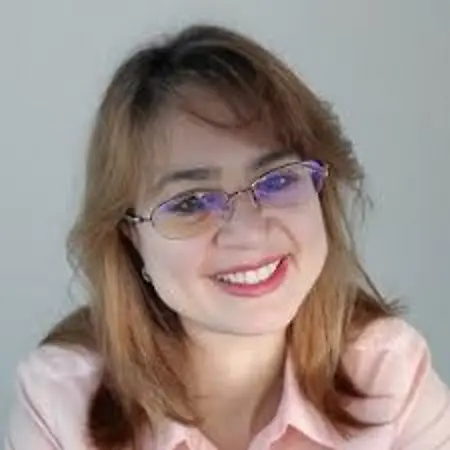
Her Story
About Diana
Diana Cardenas del Monaco, PhD, MBA, MPH, is a bilingual healthcare and clinical research operations leader with more than 15 years of experience advancing research, regulatory oversight, and modernization across government healthcare systems. Based in the San Antonio metropolitan area, she serves as a Regional Research Support Center Lead and Research Portfolio Manager within the federal health research enterprise, where she guides trauma and clinical research portfolios and leads the development of enterprise‑level research support capabilities. Her work strengthens clinical trial operations, regulatory compliance, and research infrastructure across government networks, ensuring alignment with FDA, federal, and global research standards.
Diana began her career as a bedside nurse, an experience that shaped her commitment to integrating scientific rigor with compassion in patient care. She later transitioned into clinical research, advancing through roles in trauma care, military medicine, and large‑scale clinical operations. Her expertise spans human subjects protection, risk mitigation, regulatory auditing, and multi‑site trial management, as well as the modernization of research and electronic medical record systems to improve interoperability and data integrity.
Her academic foundation includes advanced post‑graduate training from the Harvard T.H. Chan School of Public Health and Georgetown University, complementing her doctoral training in epidemiology and dual master’s degrees in public health and healthcare administration. Diana is deeply committed to advancing healthcare equity, mentoring emerging leaders, and expanding access to high‑quality care through innovation and collaboration. Grounded in resilience and service, she continues to champion patient‑centered, evidence‑based systems that strengthen both government and civilian healthcare outcomes while broadening global engagement in clinical research.
Her Interview
Ten minutes with Diana
01What do you attribute your success to?
I attribute my success to the values and resilience instilled in me by my grandmother, who consistently emphasized that education would be my path to opportunity and independence. Despite coming from a broken home and limited financial means, I was determined to pursue my studies and ultimately paid my own way through college. She was a migrant worker with only a third-grade education, yet she taught herself to read and speak English and modeled perseverance, strength, and a deep belief in learning. Her sacrifices, courage, and unwavering focus on education shaped my ambition to break cycles of hardship, and I ultimately earned my PhD in her honor, dedicating it to her memory and the foundation she built for me.
02What’s the best career advice you’ve ever received?
The best career advice I’ve received comes from my grandmother’s example: that education and perseverance are the foundation of opportunity. Her resilience despite limited formal schooling taught me to stay committed to learning, push through challenges, and trust that consistency and discipline can change your circumstances.
03What advice would you give to young women entering your industry?
I serve as a mentor to many women in my field and to first-generation students, and I often remind them that regardless of where you come from, resilience is essential. It’s important to remain adaptable, open to change, and committed to continuous learning as the industry evolves. I also encourage them to view leadership not as a pursuit of power, but as a responsibility to uplift others, create access, and open doors for those who follow. Inequities and gaps in access will continue to exist, so we must be intentional about building and rebuilding systems that respond to new technologies and changing needs. Ultimately, my hope in sharing my story is to inspire others to take the next step without fear, knowing their journey can make a difference for someone else.
04What are the biggest challenges or opportunities in your field right now?
Right now, one of the biggest opportunities in my field is the rapid evolution of technology, particularly the integration of AI into systems and workflows. Having grown up and built my early career in the analog era and later transitioning through the rise of computers and electronic health records, I’ve seen firsthand how transformation reshapes the way we work and deliver care. That experience has made me adaptable and forward-looking as we enter this next phase of innovation. At the same time, a key challenge remains ensuring that as we rebuild systems with new technology, we do not overlook persistent gaps in care and inequities in access. The pace of change is accelerating, but our responsibility to create equitable, human-centered systems must remain constant.
05What values are most important to you in your work and personal life?
Education is central to everything I do—it’s the foundation my grandmother instilled in me when she told me it would be my liberation, a belief that ultimately guided me to earn my PhD in her honor. Resilience is equally important, as it allows me to remain adaptable and steady through constant change. Service is at the heart of my work; I am committed to lifting others, creating safety, and opening doors for as many people as possible. For me, leadership is not about power, but about helping others succeed and honoring the knowledge and opportunities I’ve been given by leaving a meaningful legacy. On a personal level, being a mother to my adopted son has deepened my understanding of unconditional love and remains my greatest accomplishment.
Join Influential Women and start making an impact. Register now.