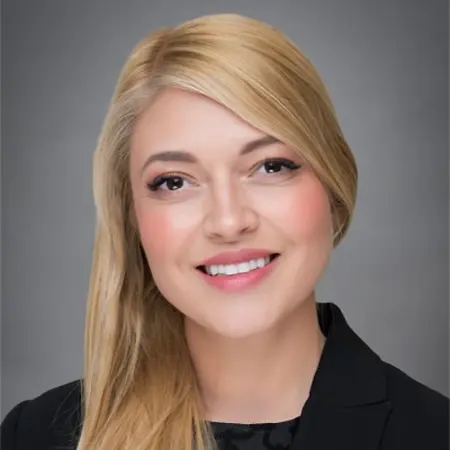
Her Story
About Diana
My first job in high school was as a receptionist at a community clinic, and I've only worked in medicine my entire life. I consider that I started my medical career in 2009 when I began residency. I completed a residency program for OBGYN in the Bronx, which was a very unique and different experience from Los Angeles. After that, I did a fellowship in minimally invasive GYN and robotics surgery at the Center for Minimally Invasive Surgery out of Stanford Hospital. I then moved back to Southern California where I'm from and practiced privately at Shriners for a couple of years, doing mostly GYN surgery. I didn't miss the OB part of my field, so I joined a company called OB Hospitalist Group, and they immediately put me into leadership. I got called for a director role at Huntington Hospital, and even though I questioned if I was ready, my boss told me I had to do it and that I was the one they thought should do it. After I became a director, I never had planned on going into administrative work - I very much enjoyed being a surgeon. But I really enjoyed leadership. It was easy for me to build relationships and get the team going in the right direction, and doing that for so long allowed me to continue to get promoted. My preferences changed as I realized I had a bigger impact than just one patient at a time. Writing policies for the hospitals had more of an impact than treating one single patient, so I ended up enjoying this work more than clinical work. I became a regional medical director, which meant I would start labor and delivery programs in all of Southern California, hire all the OBGYNs, hire a director, train them, and continue to check in with them to ensure the program was delivering. Now as Chief Medical Officer, my typical day includes a daily huddle with all the directors and managers of the hospital for 30 minutes at the beginning of the day to talk over operations. I have regular meetings with the quality department, risk manager department, pharmacy, and different physician leaders including the medical executive committee. I do a monthly operating review internally with other executives. I round on the floor, checking in with patients to make sure their stay has been going the way they expected, and I round on staff in different units, usually the ER, ICU, and labor and delivery. I have one-on-one meetings with folks who report to me once a week, and I spend a lot of time doing care coordination, ensuring that patients who are ready to go home go and that we're not creating internal delays preventing them from going to their next level of care.
Her Interview
Ten minutes with Diana
01What advice would you give to young women entering your industry?
If you want to remain in clinical medicine, it's so important to avoid burnout so that you can be there for your patients. But if you're a physician who is interested in leadership and management, it is so important for a physician to be part of the table, to have a seat at the table. Here at the hospital, within the senior leadership team, there's 10 of us and I'm the only doctor. I represent the voice of 750 physicians here. They're not our employees - we have 2,000 employees, but the doctors are not part of the employees. So I have to be able to bridge what the doctors want or need to the other executives who don't have that lens, who haven't lived it. A lot of times I have to be the one who says, when we're revising contracts or something like that, to remind them that it is not just about money. The doctors already live comfortably. They need work-life balance too. Sometimes they may come off as wanting more money, but no, they want help. And if we're taking them away from their family, well yeah, they should be fairly compensated because they work 24 hours, they don't work Monday to Friday, they work every day. I always try to keep in mind that I have to be the one that can put it in a way so that folks who have not gone through medical training and lived the hard life can understand. I remind everyone of the sacrifice that these doctors make every day for the patients.
Join Influential Women and start making an impact. Register now.