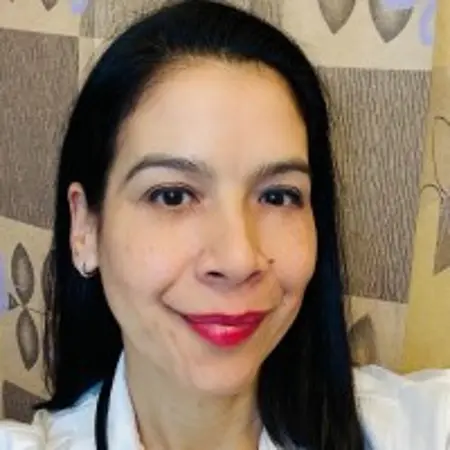
Her Story
About Diana
From a young age, I always dreamed of becoming a nurse. I started my journey by attending a vocational school to become a medical assistant, which I saw as an opportunity to get my foot in the door and decide if nursing was truly for me. Once I became a medical assistant, I immediately knew I wanted to pursue nursing, and after becoming a nurse, I set my sights on becoming a nurse practitioner and eventually a Doctor of Nursing Practice. My path wasn't easy - I left home early due to various challenges and came from difficult circumstances, growing up as the poor family in a middle-class community after my parents divorced. Working seven days a week for years while attending evening and weekend programs, I earned my associate's degree, then my bachelor's, master's, and finally my doctorate. Today, I work full-time at NYU Hospital in Manhattan, providing primary care pediatrics to children from birth to age 21 in an underserved community. I see everything from sick visits to broken arms, injuries, vaccines, behavioral health needs, and food insecurity - the full spectrum of needs in an underserved community. My doctoral project, 'Equity in Action: Improving Pediatric Referral Systems for Underserved Populations,' is what I'm most proud of because it addresses a major problem where about 55% of children in underserved communities who are referred to specialists never make it to the specialist, ending up in emergency rooms or receiving no care at all. Beyond my clinical work, I'm passionate about teaching and mentoring nurse practitioner students and nursing students, having taught for NYU, Columbia, and other universities. I love being people's biggest cheerleader and encouraging them along their career path, because this life is tough and we all face obstacles.
Her Interview
Ten minutes with Diana
01What do you attribute your success to?
I would say number one, God, honestly, because he's allowed me to be able to study, work, keep it together, have a family, and get married along the way. Facing so many hurdles and challenges, having a very difficult childhood and being marginalized - I remember when I was a little girl feeling shame growing up in my community and not being like everyone else, not having the mother and father and resources that others had. Growing up with all those challenges and not being like everyone else in our community made me angry, but it inspired me to really try to excel and do the best that I could so that my life would be different. I wouldn't have been able to do it without the help of God and my prayer life, just staying connected.
02What advice would you give to young women entering your industry?
I think it's important to, if you have something that you're interested in, connect with someone who is working in that field or within that position. It's important to connect with people and really get a good sense, get some feedback, meet with them. If you're able to visit their workplace, that would really be beneficial so you can see what they're actually doing throughout the day and really spend time with them and get advice from them, because they know firsthand what the profession is like. It's very important to have a mentor - it's vital, everybody needs a mentor. Be able to laugh when things are hard, and don't expect to avoid mistakes, but get up and keep on going and never quit, because a mistake is temporary. Pursue your dreams and be okay with coming to the conclusion that what you thought you were going to be up until this point in real life is not what you want to do - it's okay. Don't cave in to pressures of parents or society or culture. Pursue your dreams, go after your dreams, because you will do it. If it's your dream and you are meeting with people and getting feedback and having experiences from people who are in the field and still are saying yes, this is what I want to do, then nothing's gonna stop you because there's that passion and that zeal that will keep you when times are hard and you're exhausted.
03What are the biggest challenges or opportunities in your field right now?
Challenges would be safe staffing levels, both in hospital and outside of hospital systems. Administrators who don't understand the clinical reality, who don't have clinical training - they have masters and doctorates, but they don't have clinical training and don't understand the reality and challenges that are faced by healthcare providers that are actually seeing patients outside and inside of hospital systems. It really has been such a hindrance, working with leadership and leaders that don't understand, so it's dollars and cents and growth graphs and data, but when it comes down to it, staffing is impacted, and then that impacts patient safety. So it's been a real challenge for me in the different systems I work with, working with people, trying to collaborate with people who have a grave disconnect from reality.
04What values are most important to you in your work and personal life?
Honesty, integrity, consistency, care, empathy, determination, never quitting, resiliency - never giving up. Things are possible for those who never quit.
Join Influential Women and start making an impact. Register now.