I stopped explaining my ambition and started owning it — moving with more clarity, more conviction, and far less apology, because I finally chose myself.
The Day She Stopped Explaining Her Ambition
Explore moreLeadership isn't about avoiding failure, it's about reflecting on every setback, learning from it, and coming back stronger than ever.
Diane Deaver · In Her Own Words
I stopped explaining my ambition and started owning it — moving with more clarity, more conviction, and far less apology, because I finally chose myself.
The Day She Stopped Explaining Her Ambition
Explore moreHer Story
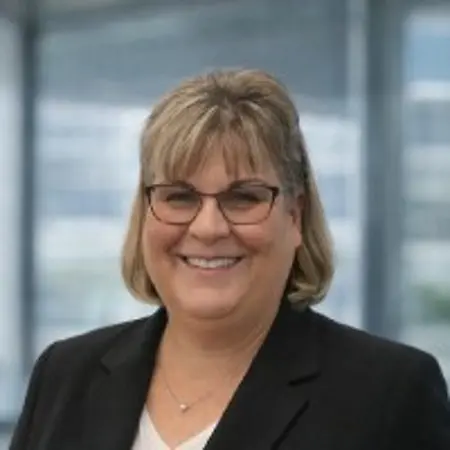
Diane Deaver is a seasoned technology leader and Director of Technology Delivery at American Express, with more than 30 years of experience in software development, IT strategy, and enterprise delivery. She is recognized for her ability to lead large-scale, complex initiatives and drive transformational outcomes across the organization.
Diane began her career in 1994 as a COBOL programmer at AlliedSignal, where she built a strong technical foundation over four and a half years. She joined American Express as a Programmer Analyst in the Authorizations Technologies organization and went on to spend 23 years advancing through roles of increasing responsibility. During this time, she worked across a wide range of technologies, including COBOL, DB2, TPF, mainframe, and distributed systems, contributing to the development and evolution of real-time authorization platforms.
As an Engineering Director, Diane focused on the credit side of the authorization system, leading critical capabilities such as cardmember exposure, limits, and payments. She successfully delivered high-profile initiatives, partnered with senior stakeholders, and balanced both development and production support, earning a reputation as a trusted, innovative, and results-driven leader.
Building on this deep technical expertise, Diane transitioned into enterprise delivery, where she now leads a team of delivery and test managers responsible for end-to-end execution of complex programs. She provides horizontal, journey-level oversight—structuring initiatives into manageable workstreams, aligning timelines and resources, and ensuring clear, actionable requirements that enable successful and timely delivery. Her leadership style emphasizes collaboration, clarity, and accountability, empowering cross-functional teams to execute with precision.
Throughout her career, Diane has been recognized for her innovation and impact, including receiving the prestigious 2025 Edward P. Gilligan Innovation Award and multiple American Express Chairman’s Awards. She holds a Bachelor of Science in Computer Information Systems from DeVry University and is a Certified Professional Leader of Business Relationships through PeopleTek Coaching.
A passionate mentor and advocate for diversity and inclusion, Diane is committed to developing high-performing teams and future leaders. She continues to drive meaningful business and technology transformation while fostering a culture of continuous improvement and excellence.
Her Interview
01What do you attribute your success to?
I attribute my success to a combination of strong execution discipline, deep curiosity, and a genuine commitment to people.
First, I’ve consistently focused on delivering outcomes in complex environments; breaking down large, ambiguous initiatives into clear, executable plans and driving alignment across teams. That consistency in execution has been a key driver throughout my career.
Second, I invest heavily in relationships and team development. I’m very people-centered in my leadership approach, I believe that without engaged, empowered teams, success isn’t sustainable. I make it a priority to ensure individuals feel valued and understand the impact they have on the broader outcome. One of the most rewarding aspects of my career has been mentoring others and helping them recognize their potential, often before they see it in themselves.
Finally, I’ve maintained a continuous learning mindset. From my early days in COBOL to leading enterprise modernization efforts, I’ve evolved alongside the technology and business landscape, which has enabled me to stay relevant and take on increasingly complex challenges.
02What’s the best career advice you’ve ever received?
The best career advice I received from my mentors was that success isn’t just about delivering results—it’s about how you deliver and how you bring others along with you.
Early in my career, they helped me understand that leadership isn’t just execution; it’s about developing the soft skills, building relationships, and elevating the people around you. That shifted my perspective from simply getting the job done to creating an environment where others can grow and succeed.
I became very aware of the investment they made in me, and I’ve always felt a responsibility to pay that forward. They taught me to share knowledge openly—that real impact comes from giving it away, not holding onto it.
That’s a principle I carry with me today. I measure success not just by what I deliver, but by the people I’ve helped develop, the leaders I’ve built, and the legacy I leave behind.
03What advice would you give to young women entering your industry?
I would tell her not to limit herself—stay curious and be intentional about exploring opportunities.
One of the things I’ve learned in hindsight is that it’s easy to stay in one place or one lane for too long. There’s value in going deeper, but there’s also value in stepping out, exploring different environments, and continuously expanding your perspective.
I’d also emphasize the importance of carving out time for strategic thinking at every stage of your career. It’s not enough to just focus on the work in front of you—you have to stay aware of the broader landscape. Understand what’s happening in the market, what competitors are doing, and how technology is evolving. That curiosity and awareness are what help you grow into more strategic roles.
Don’t be afraid to ask questions—even the ones you think might sound basic. If you’re wondering about something, chances are others are too. Asking questions is how you learn, and it’s also how you contribute.
And most importantly, never underestimate the value of your perspective. Whether you’ve been in the room for five days or five years, you bring something unique. The best teams aren’t built on people who simply agree—they’re built on individuals who are willing to challenge thinking, offer new ideas, and push each other to be better.
From day one, there are so many ways to add value—it starts with showing up, staying curious, and having the confidence to contribute.
04What are the biggest challenges or opportunities in your field right now?
There are a few major challenges and opportunities shaping our field right now, and they’re all closely connected.
First is the pace of AI adoption versus the readiness of enterprise platforms. Organizations are moving quickly to adopt AI, but many are still dealing with legacy systems and data limitations. That gap creates both risk and opportunity for leaders who can modernize foundational systems while enabling AI will have a significant advantage.
Second is the continued modernization of payments and real-time capabilities. We’re seeing a shift toward instant payments, programmable money, and real-time compliance, which is fundamentally changing how systems need to be designed, more scalable, resilient, and always-on and a need to bring new capabilities and products to market faster.
Another major challenge is balancing innovation with security and governance. As AI and digital capabilities expand, so do risks, especially around fraud, data privacy, and regulatory expectations. Organizations need to build trust and embed security into everything they do, not treat it as an afterthought.
Finally, there’s a big opportunity around the evolving role of technology leadership. Technology leaders are no longer just delivering systems—they’re shaping business strategy, driving transformation, and aligning cross-functional teams to deliver outcomes at scale.
For me, the biggest opportunity is bringing all of that together, modernizing platforms, enabling innovation, and building teams that can operate effectively in that level of complexity and with the speed required to stay competitive.
05What values are most important to you in your work and personal life?
Continuous learning is at the core of everything I do. I’m always challenging myself to grow because I believe you’re never truly done evolving as a leader and as a person. A big part of that for me is self-reflection, taking the time to assess what’s working, where I can improve, and how I can show up better for my teams and those around me.
I actively seek out new perspectives, whether through formal training, LinkedIn Learning, or industry content. I don’t wait for development to be assigned, I take ownership of it.
A few years ago, I had the opportunity to lead a professional development initiative within my organization, where we reimagined how we approached learning. We transformed the standard five days of annual training into a structured, monthly learning model. Individuals aligned their learning to their development plans, then shared insights with the broader team, creating a culture where learning was continuous, collaborative, and scalable.
I strongly believe that the power of knowledge is in sharing it. For me, learning isn’t just personal, it’s about multiplying that value across teams and the organization.
That’s why I invest heavily in developing others, not just within my team but across the enterprise. I take pride in helping people recognize their potential,often before they see it themselves, and I measure my success by the impact I’ve had on others and the legacy I leave behind.
Join Influential Women and start making an impact. Register now.