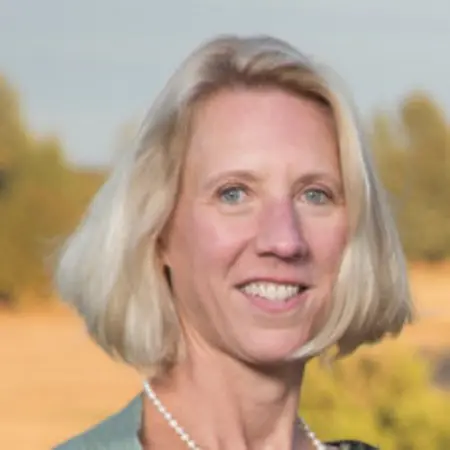
Her Story
About Diane
I started my career in chemical engineering at MIT and began graduate school work in material science. When my mother developed aggressive breast cancer, I came home and spent the last 6 months with her while she was alive. Taking her to doctor's appointments, I saw how broken the system was and decided to pivot to medical school. I went to medical school in Kansas, which was a huge change for my husband who was from the East Coast, but he followed me and we've had an amazing marriage for many decades. I initially started in OBGYN because I wanted to help women, but the field was very misogynistic at the time. The attendees and teachers were laughing at naked women on operating room tables, which made me sick to my stomach. It was trauma for me to go into an operating room because they didn't treat people with respect. So I left and went into primary care and family medicine, where I do outpatient work, which I absolutely love. I found that nobody was interested in making cervical cancer screening better, they just figured it was what it is, the same thing from 1929. I realized this area was wide open, so I started doing my work. My first academic appointment was in a safety net hospital where we had women with absolutely no money and no resources who had been turned away from every other doctor and healthcare place. They were incredibly grateful for someone to listen to them and help them understand what they needed. Then I went to Dartmouth for 15 years, where our children were raised. The clientele were people of Vermont and New Hampshire, some very rural, some very educated, some not. It was an absolutely wonderful experience. I got to take care of generations of people, deliver babies, and now I'm seeing great-grandbabies. It was a really beautiful way to do that, and at the same time I was participating on national trials as part of the NIH ALTS Trial. My research career was going very well. I tried some leadership positions, managing people as chair of the department, which was fun because I could give people opportunities, but it wasn't really where my heart was. My heart was doing the research and making life better for people. About 10 years ago, I came to Michigan, and I have loved it here. Michigan has amazing resources and an amazing group of people to work with. While I used to be an engineer, I'm not one now, but the engineers here can take my ideas and figure out how to make them happen. It's so much fun to work with a team of people where everybody is amazingly talented in their own way.
Her Interview
Ten minutes with Diane
01What do you attribute your success to?
I attribute my success to the love of my family. I couldn't do this by myself, I couldn't do this if I was single. I just have the most amazing husband, and my children are just amazing. We give each other space, but more importantly, we just love each other. If we're tired, or if an angry word comes out, it's coming out because something's not right somewhere, and it's not an angry word at the person. Even on their side, if they say something angry, there's something that's unbalanced them in some way, and I should go beyond the anger I'm hearing and look beneath it and say, what happened today? Tell me about it. Why are you acting this way? It soothes a lot of souls. We all piss each other off in some way, of course, it's just being human. But we lead with love, and that's the bottom line.
02What’s the best career advice you’ve ever received?
The best career advice I've ever received is Follow Your Heart. You have to follow your heart, because if you're doing something because it's allowing you to earn enough money to pay your taxes, then you are not a happy person. You have to do what you love to do, because there are going to be times when you don't want to do it, or times when work has to get done, and you're going to regret it, you're going to begrudge it if you don't really love doing it.
03What advice would you give to young women entering your industry?
Self-reflection is incredibly important, and it's not a skill that many people are taught. Self-reflection is a tool to help look at yourself and look at why am I responding this way to that verbal stimulus or that written stimulus. Going through medical school and residency was incredibly exhausting. I was a 1980 Olympic athlete in rowing, and I can tell you that medical training was truly, truly exhausting. It is definitely not for the faint of heart. My suggestion to a young person considering entering the field, or even a mid-career change, is that it takes a ton of energy to get there. Figure out what you're passionate about, because you are going to spend more time than you ever thought in recertifying and taking your boards every 5 years, in taking exams, in getting your CME done, in having all of your patient care scanned by the insurance agents to determine whether or not they're going to pay for it or not. It is brutal being a physician. The concept of self-reflection to understand what's making you happy, what's affecting the people around you who love you, that you love, what is it that you want to be doing, is really important. You have to have the ability to step back and say, something needs to change, what's going on with me. Medical school does a better job now of trying to teach people self-reflection, but they did not when I was going through. Helping people figure out, was that a good experience, a bad experience? Where did the good or bad come from? What can I do to prevent it or make it happen again? Those are all such important questions that only the single person can answer. You have to be brutally honest with yourself. And that takes an acceptance that sometimes people are not mature enough yet to be able to do. It can be hard to be brutally honest with yourself.
04What are the biggest challenges or opportunities in your field right now?
Medicine is so broken. There are huge opportunities for people interested in economics to figure out a better economic model, for people in systems and engineering to help. I just saw engineers creating humanoids because they understand systems and processes and logistics, and in medicine we haven't understood that. We haven't adapted it because what medicine has done is try to make everybody into a widget. Everybody fits into a 15-minute time slot, everybody has these codified billing codes that you have to use, and then they bring in this structure of hierarchy within the medical staff. It just needs somebody to come in with a new, fresh look and redesign it from the beginning, because at this point, our entire healthcare system is all around hospitals and hospitalization. It should be around health, and it should be around promotion of good health. We need prevention, we need people understanding what they do on a daily basis. Yes, we always need trauma surgery, heart attack care, but the healthcare system is now built around making its money off of people who are sick. The insurance is a driver of what is allowed and what's not allowed. There's a tremendous need for fresh solutions. I used to think we didn't have any money, but when I saw that Elon Musk just became a trillionaire, we have money. There's money in the United States. There are people who have money that could put to a different solution that would really make a difference. Human beings are complex creatures, and human beings have lots of needs, and therefore there have to be lots of solutions, and not a single solution. I'm really glad that I'm on my kind of way out. Death is out there closer to me than it's ever been before, and I don't have the energy to take, to climb that mountain. I've climbed my mountain. I need somebody else to climb the mountain now after me.
05What values are most important to you in your work and personal life?
Respect. Respect the people that you're with, respect yourself, respect the data that your patients are sharing with you, respect the people around you, respect the journals you're sending it to. Respect your family that they don't want to hear about what you're doing. I think that respect is probably the biggest one. It's all about the patient. You listen to what the patient says, because most of the time, the patient is telling you exactly what's going on, and you don't need to order $100,000 worth of tests.
Join Influential Women and start making an impact. Register now.