Diane Husic
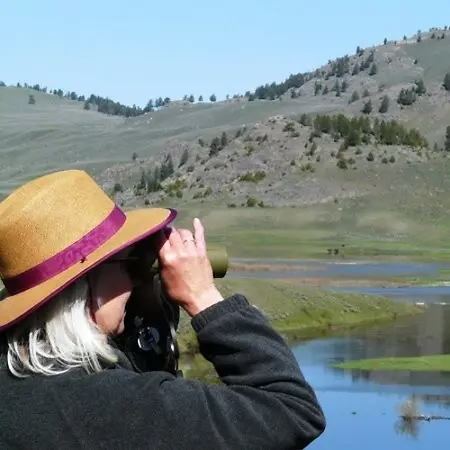
Diane Husic is the Executive Director of the Center for the Environment at St. Lawrence University, where she has served since July 2024. With more than 30 years of experience in higher education, she has built a career grounded in the belief that the most impactful learning happens when academic theory meets real-world application. Her work spans roles as a faculty member, academic leader, and researcher, with a strong emphasis on interdisciplinary collaboration and public engagement. Throughout her career, she has partnered with policymakers, nonprofits, and conservation organizations, bringing together diverse voices to address complex environmental challenges.
Diane’s approach is deeply rooted in experiential learning and mentorship. From her early work restoring a contaminated Superfund site—where she helped revegetate a mountainside and involved students directly in the process—to her current efforts building sustainability programs, she consistently creates opportunities for students to engage with real environmental issues. In her role, she works closely with students interested in becoming sustainability fellows, guiding them through hands-on campus initiatives while connecting them with regional organizations across the Adirondacks and the St. Lawrence Seaway. She also collaborates with donors and community partners to expand these programs, all while continuing to teach and inspire the next generation of environmental leaders.
A passionate advocate for student success and well-being, Diane finds her greatest fulfillment in mentorship—helping students discover their purpose and watching them grow into impactful changemakers. A first-generation college student herself, she brings both empathy and perspective to her work, ensuring that students feel supported as they navigate their academic and professional journeys. Whether leading institutional initiatives, advancing environmental research, or fostering meaningful community connections, Diane remains committed to empowering others and demonstrating that environmental challenges are not just problems to solve, but opportunities to create lasting, positive change.
• Senior Fellow
• Global Council for Science and the Environment
• Audubon Together Green Fellow
• Michigan State University
Ph.D., Biochemistry
• Northern Michigan University
Bachelor of Science, Biochemistry
• Senior Fellow
• Global Council for Science and the Environment
• Audubon Together Green Fellow (2011)
• Adirondack Research Consortium (Board Member)
• Lehigh Gap Nature Center (President of the Board)
• Hawk Mountain Sanctuary (Board Member and Chair of Conservation Science Committee)
• NCAA Leadership Workshops (Faculty Athletic Rep Support)
• Superfund Site Revegetation and Wildlife Refuge Conversion
• Student Mentorship and Sustainability Education
• Regional Nonprofit Environmental Collaboration
What do you attribute your success to?
I think what has really driven my success is watching students that I've worked with succeed. I have the coolest job in the world because I get to mentor students, help them find their passions, and then when they do and come back to tell me about it, those are the moments that matter most. I just had this happen the other day when a student who graduated last year came back partially to see some people, but also to come back and thank me. When you see them light up and say, this is what I'm doing now, and you helped me get here, that's the reward. When you've been in the field for a really long time, I'm lucky to have had that happen several times. Beyond that, I think it's about following meaningful work and staying curious. I was told to view environmental issues not as insurmountable problems, but as insurmountable opportunities, and I think that's a great mindset. It's about finding those stories of hope, like the Superfund site that's been converted to a wildlife refuge, and focusing on where good change is happening.
What’s the best career advice you’ve ever received?
The best advice I've received is to view environmental issues not as insurmountable problems, but as insurmountable opportunities. That mindset has really shaped how I approach challenges in my work. It's about finding the positive stories, the places where good change is happening, and focusing on that rather than getting overwhelmed by the negative headlines. I always tell students they need to find those stories and find people who are doing really good work that inspire them, because that's what keeps you going in this field.
What advice would you give to young women entering your industry?
For young women in particular, I reflect back on coming up at a time in science when there were a lot more males than females, and we were told things like, well, maybe you should just be a nurse, or maybe you should go teach elementary school kids or something like that. There are so many more opportunities for women now, but they're still looking for mentors and wondering how to network. We talk a lot about, instead of networking, about net weaving. This is the idea of making connections to support everyone, not to build yourself up on your own career path, but to create this structure that is going to help everybody. That's the motto we live by. Find your mentors, make those connections, and focus on lifting everyone up together.
What are the biggest challenges or opportunities in your field right now?
With any environmental issue, there are differing political views and a lot of frustration. It's so easy to focus on the headlines, which are the negative stories most often. There are no stories of where things have gone well. I always tell students they need to find those stories, and I can help them. They need to find people who are doing really good work that inspire them and focus on that positive, on where good change is happening. This has been a particularly tough year. A lot of students are feeling like there's no hope, or there's no jobs. But then you show them stories, like the student who came back last week, or people that I've gotten to meet from around the world through my work with the United Nations. These role models matter. The challenge is getting past all the negative energy, but the opportunity is in sharing those positive stories and showing that meaningful change is possible.
What values are most important to you in your work and personal life?
The values that drive me are really about stewardship, connection to nature, and supporting others. I really love to be outdoors. I love to bird, especially this time of year when migration is coming back, and there's a new birding club on campus, so I get to go out and do that with students as well. As everything comes back alive, I like to garden, spend time with my dogs, and cross-country ski. Pretty much all of my personal interests are nature-based. I grew up on Lake Superior, so being near water and in the mountains matters to me. In my work, it's about mentorship and creating meaningful connections. We talk about net weaving instead of networking, this idea of making connections to support everyone and creating a structure that helps everybody, not just building yourself up. That's the motto we live by. I also value being real with students, being a little silly, being experimental, and letting them see I'm a real person, whether that's hanging out at their folk festival or traveling to Costa Rica with them.