A compelling memoir exploring how embracing unconventional paths, diverse curiosities, and neurodivergent perspectives can lead to meaningful career success and personal fulfillment beyond traditional expectations.
Her Story
About Dina L.
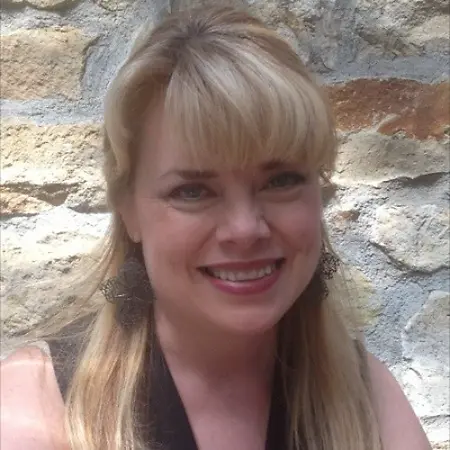
Dina L. Northcutt is a seasoned Management Analyst, Public Information Officer, speaker, and empowerment coach with a career rooted in technology, communications, and community service. She began her career in web development and has worked as a webmaster ever since, specializing in Section 508 and ADA digital accessibility standards to ensure websites are usable and inclusive for all audiences. Currently serving full-time at the County of Monterey’s Housing and Community Development department, Dina leads digital communications, process improvement, and public outreach initiatives. One of her proudest accomplishments was restructuring their website into one cohesive, user-friendly platform to eliminate digital sprawl and improve access to public information. That project received a Granicus Operational Excellence award recognition. She also developed MCCarWeek.com, a digital navigation resource designed to help visitors and residents safely navigate Monterey County during the annual Car Week events, which earned a California State Association of Counties (CSAC) Challenge Award in innovation.
Throughout her career, Dina has built a parallel path combining technology, business analysis, marketing communications, and culinary arts. She has supported global and local initiatives across software development and digital strategy, serving as a business analyst, project manager, learning management trainer, and change management specialist. She is also a culinary instructor and chef at Williams-Sonoma, where she conducts cooking demonstrations and educational classes.
Recently, she was awarded the opportunity to cook at Julia Child’s historic home in France for a week, an experience she is now expanding by organizing more accessible cooking classes for groups, reflecting her belief that meaningful experiences should be available to everyone. Her work in both technology and hospitality reflects her passion for creating accessible, engaging experiences that connect people to knowledge, culture, and opportunity. Dina is also an accomplished public speaker and advocate for accessibility and inclusive education. She regularly speaks on digital accessibility, including upcoming presentations on Title II website accessibility at the CAPIO (California Public Information Officers) Conference in San Diego, where her sessions have become highly requested by attendees.
As a lifelong learner who lives by the philosophy of “if you want to do something, just do it,” Dina has built her career through volunteering, mentorship, networking, and continuously seeking new opportunities to grow. Living with dyscalculia, she approaches teaching and training by tailoring instruction to diverse learning styles, helping others understand complex concepts through practical, visual, and experiential methods. Above all, she is driven by a commitment to empowerment, service, and making technology, education, and culinary arts more accessible to everyone.
Her Interview
Ten minutes with Dina L.
01What do you attribute your success to?
I attribute my success to taking initiative and refusing to let fear or self-doubt hold me back. From a young age, I’ve believed that if you want something, you have to go after it without waiting for perfect credentials or ideal circumstances. As a teenager, I reached out directly to CEOs and leaders in fields that interested me, invited them to lunch, and asked how they got started, and sometimes, how I could contribute to their organizations. I believe success comes from focus, learning by doing, pushing past limiting beliefs, and staying true to your own path, all while being humble and appreciative.
Throughout my journey, I’ve embraced rejection as part of the process and kept moving forward. Even now, I continue to create opportunities by putting myself out there. I'm speaking at conferences because I wrote up a proposal for why I should speak on a topic I have been working diligently on for 3 years, and they accepted it. Since then, I spoke on the topic at a conference, have been invited to give 2 multi-jurisdictional webinars, countless private webinars with other jurisdictions, and am an invited speaker again this year on this topic, because it is so important for inclusivity.
02What’s the best career advice you’ve ever received?
The best career advice I’ve ever received came from my mentor, who emphasized the importance of continuous learning and always adding “new tools to your toolbox.” He intentionally gave me projects that stretched my knowledge and challenged me to grow, followed by more creative or engaging assignments that reinforced what I had learned in a practical way.
He was also very intentional about recognizing my strengths and building on them, while still pushing me to expand beyond my comfort zone. If there was something new I wanted to learn, he encouraged me to speak up, and he would actively look for ways to help me develop those skills, including getting me into classes or new opportunities when possible. At the same time, he made sure I stayed grounded in core responsibilities and key initiatives, so I was both productive and constantly learning.
That balance between structure and growth, and the idea of always building a broader skill set over time, has shaped how I approach my entire career. I’ve carried that mindset forward with me—continuously learning, staying curious, and always looking for ways to expand my “toolbox” so I can adapt and grow in any environment.
03What advice would you give to young women entering your industry?
My advice to young women entering my industry today is to be fearless and just start. If something truly interests you, don’t let a lack of formal schooling or money stop you. While some careers do require education to build essential skills, many opportunities come from getting involved, learning through experience, and proving yourself along the way.
When I wanted to become a chef but couldn’t afford culinary school, I volunteered, worked for free, and learned by shadowing others. Later, when I entered the wine industry, I took the same approach—I immersed myself in everything I could learn about wine, from terroir to vinification, and sent my resume to over 100 wineries despite having no hands-on experience. That ultimately led to an opportunity at Château Montelena, the winery that put California on the map in the Paris Tasting, where I was able to prove myself right away. In both cases, I simply believed I could do the job and was willing to put in the work to get there.
Not everything will go as planned. You might fail, and you might end up somewhere different than you originally imagined. I also once pursued comedic acting and earned an associate arts degree in performing arts, even though that path didn’t become my career. But every experience adds to your growth and helps you discover what’s right for you.
The key is to pursue your interests, try things without fear, and stay true to yourself rather than living according to someone else’s expectations. You only have one life. Don’t wait for perfect credentials—start doing the work, gain real-world experience, and keep building your skills as you go.
Who says you have to be one thing when you grow up?
04What are the biggest challenges or opportunities in your field right now?
The biggest challenges in my field right now come from how quickly technology and accessibility standards are evolving. In web development, there is a constant need to stay current, continuously learn, and adapt as tools, regulations, and best practices shift. Accessibility in particular is an area that requires ongoing attention, because standards are improving and expanding as our understanding of inclusive design grows.
At the same time, there are significant opportunities emerging from that same evolution. There is a growing awareness and prioritization of digital accessibility and inclusive design, which is creating meaningful momentum for more equitable online experiences. Organizations are increasingly recognizing that accessibility is not optional, but essential, which opens the door for deeper impact and innovation in this space.
In the culinary world, I also see strong opportunities driven by rising interest in experiential learning and cultural immersion. People are looking for more than just instruction—they want meaningful, hands-on experiences that connect them to food, culture, and community. This creates room for more creative, immersive approaches to teaching and sharing culinary skills in ways that are both engaging and accessible.
05What values are most important to you in your work and personal life?
The values that are most important to me in both my work and personal life are inclusivity, perseverance, and openness.
Inclusivity is at the core of everything I do. I believe opportunities, knowledge, and experiences should be accessible to everyone—not just those with money or traditional credentials. That belief shows up in my work with ADA compliance in digital platforms, where I focus on making sure websites are usable for all people, regardless of ability. It also guides my efforts to create cooking classes in other countries, with the goal of making culinary education more accessible and not limited by cost or privilege.
Perseverance is another key value. I’ve faced learning challenges due to dyscalculia, which affects how I process numbers, but instead of seeing that as a limitation, I’ve used it to better understand how different people learn. It has shaped the way I design and deliver training—whether in ADA compliance or cooking—so that I can reach a wider range of learners. I believe obstacles don’t define you; how you respond to them does.
I also deeply value openness and the willingness to remove limiting beliefs. I try to encourage people to ask themselves what is truly holding them back, and to take action rather than wait for perfect timing or conditions. I’ve had to do the same in my own life, and it has made a huge difference. I stay open to new ideas, new people, and new ways of thinking, and I try to pass that openness on to others.
Ultimately, I believe we’re all in this together. Whether I’m teaching a class or helping someone troubleshoot a recipe, I make myself available and approachable because supporting others is part of what gives the work meaning.
Her Content Hub
Articles by Dina L.
Curiosity as a Career: Leading Across Technology, Accessibility, and Human-Centered Design
How embracing your unique path leads to creating meaningful impact and redefining what success truly means.
Square Peg, Round Hole? Yes, Please!
I have always known I was never meant to follow just one path.
Part of that was a fear of boredom, but more importantly, it came from a deeper calling: How do I make a meaningful difference? How can I truly help?
With so many interests pulling me in different directions, choosing only one never felt authentic.
So I didn’t.
Instead, I chose exploration.
My journey began with an associate degree in performing arts, followed by two years toward a bachelor’s degree in marketing communications. But formal education was only one part of my story. Curiosity became my greatest teacher.
I read constantly. I asked questions relentlessly. I sought out people already doing the work that inspired me.
When I once heard the advice, “Take a millionaire to lunch,” I took it seriously.
I began interviewing successful leaders across industries that fascinated me. Those conversations opened doors to mentorships, job shadowing opportunities, and hands-on roles that shaped my career in ways traditional pathways never could.
At the same time, I volunteered extensively—immersing myself in cooking schools, catering events, floral design, grape harvests, theater set construction, architectural rendering, and publishing articles for major outlets like CNN and local magazines.
These were not random pursuits.
They were intentional explorations.
Each experience expanded my skill set, deepened my understanding, and revealed surprising connections between creativity, strategy, and systems.
Over time, a consistent thread emerged.
No matter the environment, I naturally gravitated toward organization, problem-solving, and connecting complex ideas.
I was, at my core, a project manager and business analyst.
I excelled at:
- Breaking down large ideas into actionable steps
- Designing workflows
- Prioritizing execution
- Creating systems that improve outcomes
- Translating complexity into clarity
These strengths eventually led me into software project management and business analysis, where I could merge curiosity with structure to build meaningful solutions.
Yet my passion for cooking evolved alongside this path.
And I discovered something fascinating:
Managing a kitchen is not so different from managing a large-scale project.
Both require:
- Timing
- Resource management
- Precision
- Adaptability
- Leadership under pressure
Recipe writing mirrored user manual development.
Cooking classes reflected instructional design.
End-user needs remained central in both spaces.
This realization shaped my professional philosophy.
As someone on the autism spectrum, I have always processed information differently—more systematically, more literally, and often with heightened attention to structure.
This perspective became a strength.
It taught me that there is no singular “right” way to learn.
People engage with systems, tools, and information differently.
That understanding fueled my passion for user-centered design.
Whether creating software, websites, training programs, or recipes, I became deeply committed to accessibility, clarity, and adaptability.
I developed:
- User manuals
- Training systems
- Instructional videos
- Learning labs
- Accessible digital experiences
By 2000, I was managing international multimillion-dollar software projects and delivering training at global scale.
Today, I continue that mission through my work with the County of Monterey, where I build award-winning websites while also teaching cooking classes on weekends.
Last year, I had the extraordinary opportunity to spend a week cooking in Julia Child’s La Pitchoune kitchen in France—a full-circle moment that beautifully united my lifelong passions.
I have also become a featured speaker, including upcoming presentations at the CAPIO conferences in 2025 and 2026 on Title II Digital ADA compliance.
My journey has never been conventional.
It did not always make me wealthy.
In fact, following curiosity often meant financial resets, professional pivots, and periods of uncertainty.
But it never left me uninspired.
What it gave me instead was something far more meaningful:
- Perspective
- Resilience
- Wisdom
- Humility
- Purpose
Every success, every setback, every unexpected turn contributed to who I am today.
I have learned that sometimes being a “square peg in a round hole” is not a flaw.
It is the very thing that allows you to create new spaces, challenge outdated systems, and build bridges others cannot yet see.
So when people ask for my advice, I keep it simple:
Be true to yourself.
Follow opportunities to learn, even when they do not offer immediate rewards.
Not every investment pays financially.
But the right ones will shape your life in ways money never could.
Because the goal is not simply to fit into existing molds.
Sometimes, the real purpose is to redefine them entirely.
Join Influential Women and start making an impact. Register now.