Influential Woman · Executive Coaching and Business Consulting
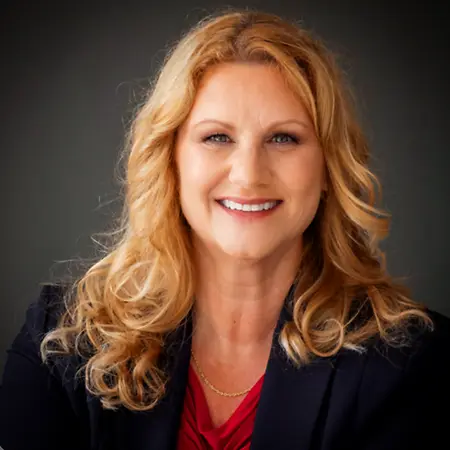
Dina Perreault
Executive Coach & Organizational Strategist, P3 Consulting
Philadelphia, PA
Her Story
About Dina
On January 1st, Dina Perreault launched P3 Consulting, an executive coaching and leadership advisory firm grounded in a clear philosophy: People, Process, and Performance. She partners with senior leaders to strengthen executive presence, build scalable systems, and elevate organizational performance.
Though newly formalized, P3 has been years in the making. Dina first launched the firm in 2008, but the recession redirected her back into corporate leadership. With 24 years in human resources, spanning Fortune 500, Fortune 1000, and retail environments, and the past four years focused heavily on executive coaching and leadership development, she recognized the timing was finally right to step fully into her own practice.
A former U.S. Army officer and commander, Dina served for 10 years before transitioning to corporate America as a single mother of two. She began her civilian career leading large-scale operational and project transitions before being recruited into HR, an unexpected pivot that became the foundation of her executive leadership career.
Over two decades, she has led organizations through mergers, acquisitions, rapid growth, economic downturns, and large-scale transformation efforts. Along the way, she built leadership pipelines, designed multi-tier development programs, and partnered directly with executive teams to align talent strategy with business performance.
Today, through P3 Consulting, Dina integrates military leadership discipline, corporate executive experience, and deep coaching expertise to help leaders manage themselves, lead others, and build organizations that perform at their highest level.
Her Interview
Ten minutes with Dina
01What do you attribute your success to?
I attribute my success to investing deeply in the people I lead. Developing others as a mentor and as a coach has been the most meaningful and enduring part of my career. There is something powerful about reaching back and pulling the next person forward. In every leadership role I’ve held, the greatest reward hasn’t been the title or the results, it’s been watching someone gain confidence, earn promotions, and grow into their full potential. Not just as professionals, but as human beings.
I believe in genuinely caring about people and also in holding them to a high standard. Growth requires both support and stretch. When you challenge people to do the hard work while standing beside them, something transformational happens.
What fulfills me most is seeing those leaders go on to develop others. That ripple effect, two or three generations of leaders down the line, is the real legacy. They may never know my name, but I know I played a part in helping them rise. And that, to me, is success.
02What’s the best career advice you’ve ever received?
The best career advice I received wasn’t a single sentence; it was an experience. Early in my military career, I assumed you needed one great mentor, and that was enough. But when I became a commander, I realized that assumption was wrong.
I had three mentors, and each shaped me in a different way. One was highly tactical and deeply grounded in policy and execution. Another excelled at coaching and developing people. The third possessed extraordinary organizational savvy — she understood influence, power dynamics, and how to navigate complex systems to create impact.
Individually, they were strong. Together, they formed the “complete” mentor I needed.
That experience fundamentally changed how I think about mentorship. I tell the leaders I coach that no one person can, or should, be everything. Take what resonates, what strengthens you, what stretches you. And for the areas that aren’t being filled, seek someone else. If I can help make that connection, I will.
Mentorship isn’t about loyalty to one voice. It’s about building a personal board of advisors that helps you grow in every dimension.
03What advice would you give to young women entering your industry?
If I could give one piece of advice, it would be this: don’t wait longer than you need to, but DO plan well.
I sometimes wish I had launched my business sooner. But the truth is, I also needed financial stability at the time. Entrepreneurship requires courage, but it also requires strategy. Make sure you’re positioned for it. Build a runway. Understand your numbers.
Before launching, I met with four coaches and consultants who had started their own firms within the past five years. I intentionally sought recency. I took them to breakfast or lunch and asked one simple question: What do you wish you knew then that you know now? Almost all of them said the same thing: have a solid plan, and be prepared for the first year (or even 18 months) to be lean. Unless you already have a highly developed pipeline, revenue takes time.
You also have to recognize that the work changes. If you’ve spent your career inside organizations, you’re used to being selected for roles. Building your own business means putting yourself out there, networking intentionally, asking for introductions, and not being afraid to pursue opportunities. For many leaders, especially those who haven’t worked in sales, that can be the biggest stretch.
But if you’re willing to do that work upfront, something shifts. Over time, you build momentum. You gain the ability to choose your projects, choose your clients, and focus on the work you truly love.
Plan well. Be patient. Be visible. And understand that the early stretch is temporary, but the autonomy on the other side is worth it.
04What values are most important to you in your work and personal life?
The values that matter most to me, in both work and life, are genuine care for people and real allyship.
When I was 23 years old, deployed to Saudi Arabia, I left behind a ten-week-old son and was responsible for 150 soldiers. I was 10 weeks postpartum, out of shape, and determined to meet the physical standards required of me. What happened next shaped my entire philosophy of leadership.
Those soldiers ran with me through the desert, five miles at a time. Every Friday, they stood beside me at weigh-ins, cheering as my weight was called out. When I finally made the standard, they celebrated with me over ice cream, and then ran seven miles with me the next morning to work it off. At the time, I couldn’t fully articulate what I was experiencing. I just knew I was grateful. Years later, I understand it clearly: that was allyship in action.
It didn’t matter where we came from. It didn’t matter that I outranked most of them. We lifted each other up. We walked through holidays away from family together. We showed up for one another in tangible, human ways. That experience fundamentally shaped how I view leadership. It’s why my work has evolved beyond mentorship and toward a deeper exploration of allyship, the difference between performative support and the kind that costs something, that shows up consistently, that walks the path with you.
It’s more than credentials or titles. It’s more than the letters after your name. Real leadership is about the daily impact you have, often in ways you don’t even realize, by choosing to care, to challenge, and to stand beside others as they grow. That’s what drives my work today.
Join Influential Women and start making an impact. Register now.