Influential Woman · Biotechnology and Public Health
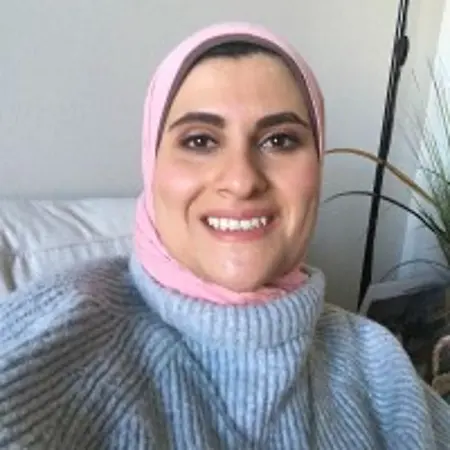
Douaa Mugahid
Scientific Program Manager at TB-CHIM Consortium, Data Officer at Hi-IMPAcTB Consortium
Boston, MA 02115
Her Story
About Douaa
Douaa Mugahid is a scientist, biotech innovator, and science communicator whose work sits at the intersection of biotechnology, digital health, and public health innovation. She currently leads scientific initiatives at Harvard T.H. Chan School of Public Health, focusing on infectious disease research. Specifically, she is involved in the development of technologies that can accelerate diagnostics and vaccine development as well as infectious disease outbreak detection. With a background in systems biology from Heidelberg University, Douaa approaches biological systems through a quantitative and interdisciplinary lens, combining data science, computational modeling, and experimental biology to solve complex health challenges. Her current research focuses heavily on tuberculosis, the world’s deadliest infectious disease, which disproportionately affects populations in the Global South. Douaa works on developing safe biological models that allow scientists to study tuberculosis infection in controlled clinical environments, potentially reducing the cost and scale of traditional vaccine trials. In parallel, she collaborates with researchers, healthcare providers, and industry partners to build data-driven digital platforms that use advanced analytics and AI to detect disease outbreaks earlier and improve public health surveillance. Beyond her scientific research, Douaa is deeply committed to expanding access to scientific knowledge and fostering global collaboration. She serves as the founding Chief Operating Officer of the Scientific Arab Forum, where she helps lead a large network of volunteer scientists and editors working to make high-quality scientific content accessible to Arabic-speaking audiences. Through her leadership, research, and science communication efforts, Douaa strives to bridge disciplines, empower communities, and advance innovations that improve healthcare outcomes worldwide.
Her Interview
Ten minutes with Douaa
01What do you attribute your success to?
What drives me most is having an impact on the world, something I think runs in the family to my father's side. Over the years, I've developed the skill of identifying gaps in very niche areas where I think people have overlooked something important or there's not enough people with a diversity of perspectives or expertise working on a problem. As a non-competitive person, that's been how I've navigated my career choices, less about what other people think is important at the time, what is most lucrative, or provides the most status, but what I think is an important problem that clearly has not been solved, and where I am convinced I can fill an important gap. In the end, it's really about identifying a big gap that has a big impact on communities.
I really care about people, especially vulnerable populations, which is why it's no surprise that I've wound my way towards working on tuberculosis. This is an infectious disease that mostly affects people in the Global South - largely invisible to many in the Global North and ignored by many professional drug developers because they assume they can't make a huge profit serving these populations. But the COVID19 pandemic has shown the world how detrimental respiratory infectious diseases can be for societies, especially the most vulnerable, and that they can spread and affect everyone if not controlled well.
Similarly, I realized there's a problem with access to knowledge for people who speak Arabic not English and I try to bridge that gap through my work with the Scientific Arab Forum. I feel like that's why we have a lot of the world's problems - it's ignorance, it's people not being served by the educational system, not given facts, kept in the dark about things, not allowed autonomy, so they're not able to make good choices in life. I pick these problems and try to do something about them. I am aware I will never single-handedly ever solve these problems, so I like to collaborate and work with other people and build a community of like-minded people who care about the same thing.
02What’s the best career advice you’ve ever received?
Perhaps the words "perfection is the enemy of good", which have really helped me realize that growth and change are incremental and that lived experience allows us to make mistakes and grow from them so what we do next, not necessarily in the moment, is better and better.
03What advice would you give to young women entering your industry?
One thing would be to be bold, and don't let other people dictate what you can and cannot do. Another would be, be a lifelong learner and improve yourself constantly, so that in a fast-changing world, you are adaptable and can shift. A third thing is don't let titles define you. As you chart your own path your title will always change so it doesn't really matter as long as you're doing something that you really, really care about and has a lot of real-world impact.
04What are the biggest challenges or opportunities in your field right now?
One of the biggest challenges in my field is that tuberculosis continues to cause significant global illness and death but the resources available to work on curbing the problem are becoming increasingly limited. At the same time, there are major opportunities to accelerate progress by developing safe human-challenge models for faster vaccine testing and by using digital, data-driven tools to modernize outbreak detection and identify health threats earlier across populations.
05What values are most important to you in your work and personal life?
I believe everyone deserves access to healthcare and knowledge for a better shot at life, which informs my values. The values most important to me are a strong commitment to honest, meaningful impact and serving the most vulnerable. I also value collaboration, lifelong learning, and ensuring that high-quality knowledge and scientific information are accessible to others.
Join Influential Women and start making an impact. Register now.