Her Story
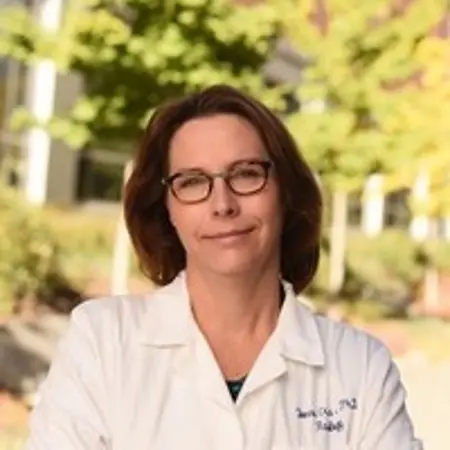
About Donna
I started my career as an aerospace engineer, but the Challenger explosion happened when I was a junior in my bachelor's program and NASA wasn't hiring, so I took a different path. I became a professional equestrian and almost went to the Olympics before eventually pursuing my PhD in neuroscience. I've been an academic professor for almost 20 years, working in radiology at the University of Utah, where I use imaging tools to look at the living brain and understand the process of dementia. About a decade ago, I came up with an idea to repurpose a common cancer drug at a fraction of the dose to treat brain disorders, dementia, and spinal cord injuries. The key was finding a way to deliver it to the brain and reducing the dose to about a 30th of a cancer dose, which gives it a completely different biological effect that's actually nerve protective. I never wanted to start a company, I was perfectly happy in academia, but when people started sending donations after my public lectures and saying they needed this research to get to clinical trials, I realized I had a moral and ethical obligation to try. So I recently started a company and got accepted into a startup incubator program here in Salt Lake. I'm preparing for a pitch event in about 3 weeks. My approach has always been creative and out of the box, which is what sets me apart. When I first presented this cancer drug idea at meetings, people would literally yell at me from the audience, questioning how I could propose a toxic cancer drug for brain injuries. But I stood by my data and kept fighting for what I believed in, even though I almost gave up too many times to count. My company's tagline is 'Innovating Resilience' because we're not focusing on any one particular disease, we're just trying to make the brain and nervous system stronger so it can handle whatever insult, injury, or disease comes its way.
Her Interview
Ten minutes with Donna
01What do you attribute your success to?
I attribute my success to having a really creative outlook on the world and a creative way of looking at things. That's what sets me apart. It's not that I'm super, super smart - I'm plenty smart - but I think it's more the creative way that I view the world and look at solutions. I have a very creative outlook for how to solve problems. I also have this drive to fix things, which comes from my engineering background. I'm a scientist in that I want to know how things work, but I really want to fix them. And sometimes you just have to fight for what you believe in and keep going so that you can get to a point where it will do some good. Even when people were yelling at me from the audience at conferences, questioning my research, I stood by my data and kept pushing forward because I knew it was right, even though I almost gave up too many times.
02What advice would you give to young women entering your industry?
For academia, I have never regretted the career pivot to academia. But I'm sad that things are happening now that make it a challenge. I have students in my lab, and I'm basically telling them, don't do it. Find something that you can earn a living at, because this is not going to be it for a while, if ever, unfortunately. And that's really sad to me, because we're going to lose an entire generation of really wonderful scientists. There's just no way to see it forward right now with the current funding situation. For the entrepreneur path, I feel like people either have the desire, or they don't. I joke about not wanting to do it, but at the same time, I'm all in. This isn't something that I'm just dabbling at. My primary reason for going into academia and science in general was because I felt like I could really make a difference in the health and well-being of people. And sometimes you just have to fight for what you believe in and keep going, even when it gets hard to swim against the stream.
03What are the biggest challenges or opportunities in your field right now?
The funding status right now is really dire, and I'm certainly not the only person suffering. There are so many people suffering from the current status in NIH funding. It's really hard right now. It is really, really hard. I don't know how much longer I could keep the lab open if I weren't receiving extra support from donations from people, and I'm so grateful for it. The donations have been a lifeline for our lab, an absolute lifeline. People are starting to understand the funding crisis and wanting to help. On the opportunity side, getting a pharmacologic to a clinical trial is dauntingly expensive, and you can't really do it by staying in academia. You have to do it through starting a company and building an investment strategy. The odds are long - only 1 in 10 succeed at what I'm trying to do, which is about the same as writing an NIH grant right now. But I'm hoping that if I get enough of the word out there, eventually this will actually happen and make a difference, whether I succeed in it or not.
04What values are most important to you in your work and personal life?
My primary reason for going into academia and science in general was because I felt like I could really make a difference in the health and well-being of people in this world, but mostly the people that I interact with on a daily basis. There are grander ideas, and then there's the minutiae of the people around us who are suffering from things, and maybe we can help. When people started sending me donations and saying they needed this research to get to clinical trials, I realized I had a moral and ethical obligation to go outside of my comfort zone and see what it's going to take to make this happen faster. I thought long and hard about it, and I really just decided, after a lot of sleepless nights, that if I didn't try, I wasn't going to be happy with myself. If I decide to do something, I'm going to do it to the best of my abilities. Doesn't mean I'm going to succeed, but I'm going to give it my best shot. I'm just hoping that if I get enough of the word out there, eventually this will actually happen and make a difference, whether I succeed in it or not.
Join Influential Women and start making an impact. Register now.