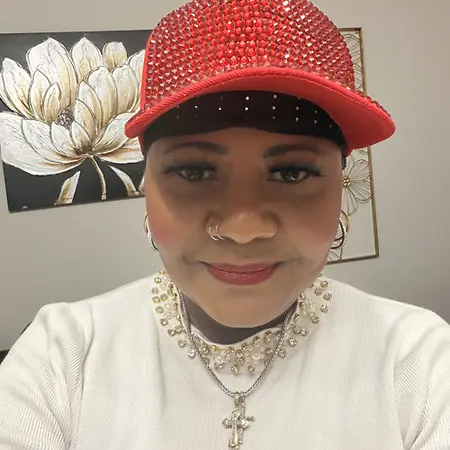
A reality is that life is full of challenges. Stay motivated and determined to meet your goals and leave a legacy.
Donna Y. Ford, PhD · In Her Own Words
Her Story
About Donna Y.
Donna Y. Ford, Ph.D., is a nationally recognized scholar, author, speaker, and advocate whose career has been dedicated to advancing equity in education, particularly for gifted and talented Black students. Currently serving as a Distinguished Professor at The Ohio State University, Dr. Ford is widely regarded as a leading authority in gifted education, multicultural education, and achievement-gap research. With nearly 400 scholarly articles and book chapters, more than 15 books, and over 2,000 presentations delivered throughout her career, she has built an international reputation for challenging inequities and advocating for educational opportunities that allow all students to reach their full potential.
Dr. Ford’s work focuses on addressing the underrepresentation of Black students in gifted and talented programs, the overrepresentation of Black and Brown students in special education, and the persistent achievement gaps that affect marginalized communities. Her research and advocacy are deeply informed by both professional expertise and personal experience. Having faced racism and classism as a gifted student herself, and later witnessing similar barriers affect her own son, she transformed those experiences into a lifelong mission to dismantle systemic inequities in education. Throughout her distinguished career, which has included faculty appointments at Vanderbilt University, University of Virginia, and Ohio State, she has consistently pushed educators, policymakers, and institutions to recognize and nurture the brilliance of underserved students.
Known for her fearless voice and unwavering commitment to justice, Dr. Ford continues to influence the national conversation on educational equity through research, consulting, public speaking, and advocacy. She was the first Black endowed chair at Vanderbilt University and has been recognized among the world’s leading education researchers. Driven by a belief that no child should be denied opportunity because of race, class, or circumstance, she remains committed to ensuring that future generations of students have access to the resources, challenges, and support they deserve. Her work is fueled by persistence, courage, and a steadfast refusal to remain silent in the face of inequity.
Her Interview
Ten minutes with Donna Y.
01What do you attribute your success to?
I attribute my success to 35 years in education, being a Distinguished Professor of Education and Human Ecology, and ranking among the top 2% of educators globally. I am the number one scholar on gifted and talented Black students with almost 400 articles and 16 books. I love to write and play word games. But beyond the numbers, my success comes from staying motivated and never giving up. I did everything I needed to do - I was a hard worker with dreams that I would not let anyone or anything distract me from. I grew up with that United Negro College Fund saying that a mind is a terrible thing to waste, and I believed I was intelligent even when others might not have seen it. I also came up with the concept that a mind is a terrible thing to erase. God blessed me with intelligence, and I was committed to using it not just for myself, but for my family, loved ones, and to help others. Even when I became a teen mother at 19, pregnant when I graduated, I was not going to let that distract me. I made sure my son would not be ashamed that his mother was a teen mom and unmarried. No matter how smart you are, you must work hard to be successful. Effort is more impactful than your ability. Effort matters more than anything else. I stayed with my vision and learned from my mistakes.
02What’s the best career advice you’ve ever received?
The best career advice I’ve ever received is that effort matters more than ability—stay committed to your vision, work hard, and never allow others to distract or derail you from your goals.
03What advice would you give to young women entering your industry?
My advice is to work intentionally and be very conscious about making sure that you have academic efficacy - that you know you are capable, despite what the tests say, despite what your grades say, despite the expectations you might experience from your professors or teachers. You've got to believe in yourself. There's this theory called Prove Them Wrong, and one of your goals might be to prove them wrong. But just never give up. One of the characteristics of Black culture, according to the research of A. Wade Boykin, is persistence. People also talk about resilience, but persistence is key. Do not give up, and also know that you're being a role model if you have children or if you're working with other Black students or Black females, or just females in general. Don't give up. Be a role model. Let them know that we all face challenges, yet that's life, but you can't give up. Use those challenges as a stepping stone, learn from them, and keep moving up. You have to learn how to multitask. I set deadlines and use calendars as reminders. I do my best and always meet my deadlines. I'm always looking forward and thinking about what I'm doing now and then the next thing. Stay motivated. Don't get distracted. Don't let people talk you into doing things that might ruin your life and your career. Do your best. Put forth effort. No matter how smart you are, you must work hard to be successful. Effort is more impactful than your ability. Effort matters more than anything else. Stay with a vision and learn from your mistakes.
04What are the biggest challenges or opportunities in your field right now?
One of the biggest challenges in education today is addressing the persistent effects of racism, classism, achievement gaps, and the underrepresentation of Black students in gifted programs alongside their overrepresentation in special education and disciplinary actions. At the same time, there is a tremendous opportunity to continue expanding the reach of equity-focused research, advocacy, publishing, and public speaking to drive meaningful and lasting change for underserved students.
05What values are most important to you in your work and personal life?
The values most important in my work and personal life are equity, advocating for marginalized communities, persistence, consistent effort, and using my gifts and abilities to uplift and support others.
Join Influential Women and start making an impact. Register now.