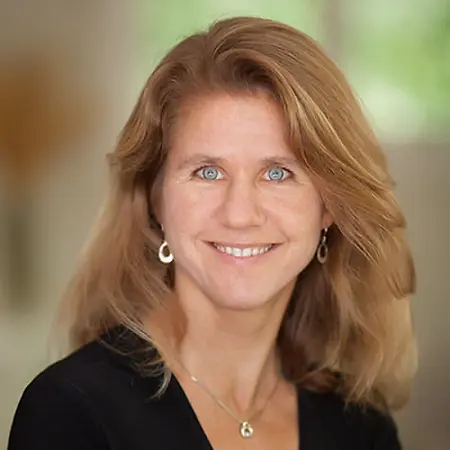
Her Story
About Donna
I've been in the field of education for 25 years, with the last 15 years focused on brain science. I started as a special education teacher, working mostly with kids with attention and emotional challenges. I went back to get my doctoral degree from Teachers College, Columbia University, which I completed in 2005. My greatest accomplishment was creating a model 15 years ago to translate the neuroscience of our brain's response to challenge and make it easy enough for young children to understand. It's taken 15 years to get it to the point where people recognize the value, but I've stuck with it. Now I serve in three roles: I'm co-founder and director of education at Pathways to Empower, which we started in January 2020. We also started the Mental Health Literacy Collaborative in 2023, a nonprofit focused on getting mental health literacy into schools and communities. This past fall, we launched Pathways to Empower Productions, producing entertainment and media focused on teaching brain health and resilience to preschoolers through our Danny Dragonfly TV show, YouTube videos, songs, and live performances. My typical day involves a lot of juggling - I might be writing songs for Danni Dragonfly, doing puppeting, creating presentations for conferences, or having calls with people from all over the world through the Global Wellness Education Collaborative. The best teacher for me has been raising my four kids, who are now young adults. I practice what I preach about building resilience and giving kids a sense of purpose.
Her Interview
Ten minutes with Donna
01What do you attribute your success to?
I attribute my success to persistence and collaboration. My business partner has been amazing - he has strengths in areas that I don't, and we work really well together. That partnership was a huge shift for me. When I first met him, he asked what my product was, and I said 'me.' He told me that wasn't scalable, which was a turning point. But beyond that, I'm just not willing to give it up. I know that this work is so critically important for the world. One of the things I always say is that the people who understand the brain science are the people using it against us - the media and social media companies trying to trigger the limbic system to keep our attention so they can make more money. We need to even the playing field. We need people to understand what is happening. I've been saying for 15 years that we were going to have a huge mental health crisis, and if you look at what companies are doing to people's brains and understand our brain's evolution, it was clear this would happen. My favorite quotation is 'the real problem with humanity is we have Paleolithic emotions, medieval institutions, and godlike technology, and it's come to a point of crisis.' We need to understand those Paleolithic brains, and I can explain it to young children. I so believe that this is so important that I will continue no matter what.
02What’s the best career advice you’ve ever received?
The best advice I've received is about persistence. When I was a teacher going back to get my doctoral degree, one of my friends gave me a little plaque that said 'persistence,' and I have always carried that with me. Another piece of advice that has really shaped me comes from a very good friend who was paralyzed in college and went on to become the most decorated male Paralympic skier in the world. His organization is called One Revolution, which stands for every decision we make being one revolution of his hand cycle. He climbed Mount Kilimanjaro, and they estimate it took him 560,000 revolutions to get to the top. He talks about every revolution being a decision - we all have to make decisions throughout the day. So one of the things I'm always saying is 'one revolution at a time.' Every decision you make helps you get up that mountain.
03What advice would you give to young women entering your industry?
I would say persistence and collaboration are key. If you have an idea that you believe in, keep going with it, but find the right people to work with. I think a huge step for us was when we started the nonprofit, because we were able to make connections, build credibility, and build collaborations that completely shifted our ability to make a difference. So collaboration is key. Integrity is also critical - it's not easy out there, but making those long-term decisions is really important. For example, we recently made a decision to pull all of our content from YouTube Kids because we realized it was intentionally trying to addict kids to media, even though we had always been human-created and never used AI. We changed how our content is delivered, adding bumpers on each side of our videos to help parents teach kids how to get off and just watch one. To do that, we had to lose all of our views, and YouTube significantly suppressed us. Making those difficult decisions gains a lot of credibility.
04What are the biggest challenges or opportunities in your field right now?
The biggest challenge is that people are getting the wrong messages, particularly in terms of parenting. We're working against people with a whole lot of money who are trying to go against the brain using technology. The messages to parents are that the world is unsafe and you need to micromanage your kids - you need to know exactly where they are, you need to tell them what to do. I believe that has undermined a sense of trust and the sense of control and autonomy that young adults have. As kids move into adolescence, they're not thriving because they're not feeling that confidence to go out on their own. The biggest opportunity is teaching parents, educators, and people in general the brain science behind it. When I say that 'self-esteem isn't a gift, it's a neurochemical response you rob kids of,' I always get an audible gasp. The brain science shows us what we are doing to our kids. It's difficult because you're constantly getting messages from media and social media, and there's a lot of money pouring into telling you to micromanage. But if you can understand the why and how - we tell people what to do, but we don't tell them why and how - I believe the key is the brain science.
05What values are most important to you in your work and personal life?
The values most important to me are integrity, resilience, hard work, and a sense of purpose. Raising four kids, they know that those values are critically important to me. I am very much focused on the importance of hard work, purpose, and integrity. I practice an authoritative leadership style both in parenting and in our work. I don't have many rules of parenting, but I always say, 'With privileges come responsibilities, and with responsibilities come privileges.' I believe we need to scaffold people's ability to feel good about themselves and be successful. One of the things I say in my talks is that self-esteem isn't a gift; it's a neurochemical response we rob people of if we don't let them struggle towards success. For people to have a sense of accomplishment, they need to go through that struggle with support. Our team of mostly young adults constantly says they've never been treated with this much respect, and they work so hard and are so dedicated. They feel respected, and that is what I have always done. I teach that leadership style, so I better practice what I preach.
Join Influential Women and start making an impact. Register now.