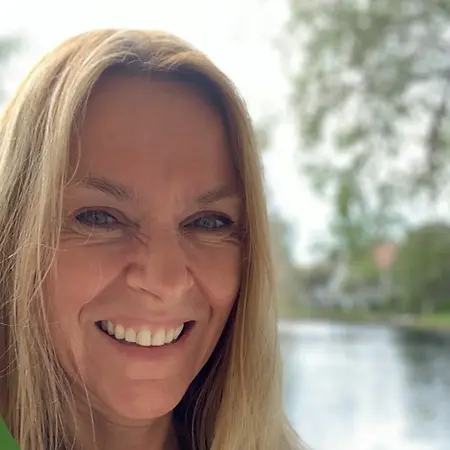
Her Story
About Dr.
I started at the very bottom as a preschool teacher's assistant, and I really quickly learned and understood the behaviors, what their function was, and why children were doing certain things - like trying to escape something they struggled with or avoid something. I was also able to apply this understanding with my own daughter, who had some behavioral problems. As a preschool assistant, I didn't really get the kind of support or respect that you get with a degree, so people really did not consult me or ask me, but they did see the results that I had when I applied interventions that I thought the students would need. I felt that I had a natural gift for this, and that's why I wanted to get more integrated in the education system and become the expert that they need. Now, teachers and administrators come to me and ask me for help when students are struggling, when they don't perform, or when they're having trouble passing state testing. I evaluate them to find out where the problems are and how they can be better supported. My goal is to take my knowledge and skills to the corporate level, looking for motivation within the corporate environment, retaining staff, human resources, and data analysis.
Her Interview
Ten minutes with Dr.
01What do you attribute your success to?
I attribute my success to my kids. I wanted to be the best I could for my kids and give them the best example I could, because kids learn by example, not by what you tell them. You have to show them instead of telling them. I also didn't want to give them expectations that I don't expect from myself, so I would only expect the things that I would also expect for myself. I made them very much a part of my world - I took them to work with me, I took them to school with me when I was still going to school, I took them everywhere and showed them what that looks like. I learned that from my dad, who used to take me to his jobs and show me the beautiful things he built. I wanted to be the best for my kids, but I also wanted to know what my limit was, and I learned there's no limit. I was motivated by seeing how far I can get, how much I can do. I've always done competitive sports, like figure competitions, not to compete against others but to compete with myself. I brought my kids around and let them see that you gotta be dedicated and focused on what you want to do, and then you can do it, as long as you don't stop trying.
02What’s the best career advice you’ve ever received?
The past is in the past, and you can't do anything about it. The future is not here yet, but the present is a gift - that's what we have right now, and that's why they call it the present. A lot of people are in the future or in the past, but the past you can't change anyways, so why are you in the past? And the future you can't control - you can only control what you do right now for the future. So you gotta be present at this moment, because that's the only way that you can do anything about it, affect any changes, only what you're doing right now.
03What advice would you give to young women entering your industry?
No matter what a person gets into, they really need to do some research - how happy are people with their jobs, how content are they, what really are the challenges, and what are the benefits. For the education system, it really depends on what state you work in, so it's really important for a person becoming a school psychologist to find out first what state they want to live in, because from state to state there's really a huge difference in the education laws and the state laws. Different states pay more than other states, some are more supportive than other states. In some states they don't have unions, in other states they do. Some states are really well supported, and other states are not. So I would really research how happy people are in their career, and what they wished they did differently, and what they knew better first. Times have changed since I got into the field - there was no social media when I started, no technology in schools, which are barriers as well as advantages. You don't want to struggle with your passion either - if you are passionate about something, go to a place where you are also supported. It's not just the individual support, but also the fields that they are in.
04What values are most important to you in your work and personal life?
Being present in the moment is really important to me, because the moment is really what we have right now. A lot of people are in the future or in the past, but the past you can't change, and the future you can't control - you can only control what you do right now. You gotta be present at this moment, because that's the only way that you can affect any changes. I believe in showing people by example instead of just telling them. I also believe you have to be okay with being uncomfortable for a while in order to achieve something. People don't like to be uncomfortable, but it hurts to work out at first, it hurts to think at first - it probably hurt when we were little kids trying to walk, but we kept going. I always give that analogy to kids who have a hard time reading. People are trying to avoid discomfort, and that is the biggest hurdle. I also believe in time management and being really organized with how I do my tasks, limiting distractions, and not letting technology use you. Nothing is to be taken for granted - we really have to just enjoy the moment, because the moment is really what we have right now.
Join Influential Women and start making an impact. Register now.