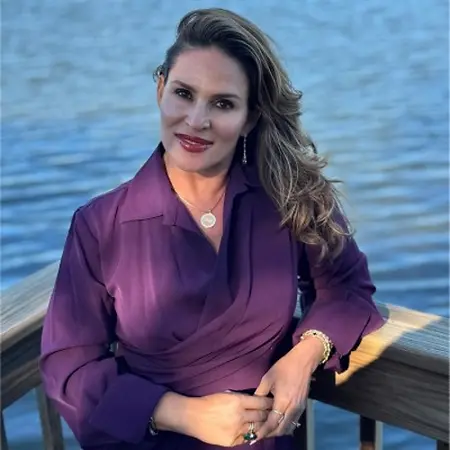
Her Story
About Vanessa
A Medical Science Liaison (MSL) in Rare Disease, Dermatology, and Neurology serves as a critical scientific bridge between the pharmaceutical or biotechnology organization and the external medical community. This role is grounded in deep scientific expertise, clinical understanding, and ethical scientific exchange, with the ultimate goal of improving patient outcomes particularly in complex, underserved, and often life-long conditions.
In this position, the MSL develops and maintains trusted, long-term peer-to-peer relationships with key opinion leaders (KOLs), investigators, and healthcare professionals across academic centers, centers of excellence, and community practices. These engagements focus on high-quality scientific exchange related to disease state education, mechanism of action, clinical data, real-world evidence, and evolving standards of care within rare diseases, dermatologic conditions, and neurological disorders. Given the complexity of these therapeutic areas, the MSL must be highly proficient in translating sophisticated scientific and clinical data into relevant, balanced, and actionable information tailored to each audience.
The MSL plays a central role across the product lifecycle, supporting early clinical development, pre-launch activities, product launch, and post-marketing phases. Responsibilities often include supporting clinical trial site identification and feasibility, engaging investigators, facilitating investigator-initiated research, and contributing to evidence generation strategies. In rare diseases especially, the MSL collaborates closely with patient advocacy groups, multidisciplinary care teams, and specialty clinics to better understand unmet needs and barriers to diagnosis, access, and treatment.
Internally, the MSL functions as a strategic partner to Medical Affairs, Clinical Development, Market Access, and Commercial teams. By collecting and synthesizing insights from the field, the MSL informs medical strategy, educational initiatives, and future research priorities. The role also involves contributing to advisory boards, speaker programs, medical education, and training of internal stakeholders, always in alignment with regulatory, legal, and compliance standards.
A successful MSL in Rare Disease, Dermatology, and Neurology demonstrates strong scientific credibility, emotional intelligence, and adaptability. The role requires comfort working in ambiguous environments, managing large territories, and engaging with highly specialized experts. Above all, this position demands a patient-centric mindset, scientific integrity, and a commitment to advancing care in areas where therapeutic options may be limited and the impact of innovation is profound.
Her Interview
Ten minutes with Vanessa
01What do you attribute your success to?
I attribute my success to a combination of scientific rigor, disciplined execution, and an unwavering commitment to patients. I have consistently grounded my work in deep clinical and disease-state knowledge, which has allowed me to engage credibly with leading experts and earn trust over time. In Medical Affairs, credibility is currency without it, nothing else moves and I have been intentional about continuously strengthening that foundation.
Equally important has been my ability to listen. By actively listening to healthcare professionals, investigators, and internal partners, I am able to identify true unmet needs, anticipate challenges, and translate insights into meaningful action. This approach has enabled me to move beyond transactional interactions and operate as a strategic partner and trusted advisor.
I also attribute my success to strong cross-functional collaboration and accountability. I approach my role with an enterprise mindset, balancing scientific integrity, compliance, and business priorities while delivering consistent follow-through. Finally, resilience and adaptability have been critical particularly in complex, fast-evolving therapeutic areas such as rare disease, dermatology, and neurology allowing me to remain effective, focused, and value-driven even in ambiguous environments.
I always believe on myself
02What’s the best career advice you’ve ever received?
The best career advice I’ve ever received was to build credibility before influence and let consistency do the talking.
Early on, a senior leader emphasized that titles may open doors, but sustained impact comes from being scientifically rigorous, dependable, and aligned with purpose. In Medical Affairs, that means mastering the science, honoring compliance without shortcuts, and showing up prepared every time. Influence follows naturally when colleagues and external experts know your word is reliable and your intent is grounded in patient benefit.
That advice shaped how I operate: focus on long-term trust over short-term wins, invest in relationships through consistency and follow-through, and never compromise scientific integrity for convenience. Over time, this approach has positioned me not just as a contributor, but as a strategic partner and trusted advisor someone teams rely on when decisions truly matter.
03What advice would you give to young women entering your industry?
I would advise young women entering this industry to own their expertise early, stay grounded in scientific rigor, and play the long game.
This is a field that rewards credibility, consistency, and composure. Invest deeply in your knowledge, ask thoughtful questions, and never underestimate the power of preparation. Confidence should be built on substance when you know the science and understand the healthcare landscape, your voice carries weight in any room.
Equally important, build relationships with integrity. Trust is the true currency in Medical Affairs, and it is earned through reliability, ethical decision-making, and respect for diverse perspectives. There will be moments when you need to advocate for yourself; do so professionally and without apology.
Finally, seek mentors, support other women, and remember that leadership is not a title it is demonstrated through influence, accountability, and how you lift others as you advance. Stay patient, stay curious, and remain anchored to why this work matters: improving outcomes for patients.
04What are the biggest challenges or opportunities in your field right now?
One of the biggest challenges in the MSL field today is navigating a rapidly evolving scientific and healthcare landscape while maintaining scientific integrity and compliance. With increasingly complex therapeutic areas such as rare diseases, immunology, neurology, and oncology MSLs must stay ahead of emerging data, guideline updates, and competitive intelligence, all while distilling nuanced information into meaningful insights for diverse stakeholders.
Another challenge is balancing deep scientific exchange with real-world practice needs. Healthcare professionals are inundated with information and constrained by time, so MSLs must deliver high-value interactions that are concise, relevant, and actionable. Additionally, evolving regulatory and compliance expectations require MSLs to be meticulous in communication, documentation, and engagement strategies without compromising scientific depth.
Remote and hybrid engagement models also present a learning curve: while digital tools expand reach and flexibility, MSLs must thoughtfully integrate these platforms to maintain authentic relationships and effective scientific dialogue.
At the same time, these shifts present significant opportunities. The emphasis on evidence generation, including real-world evidence and patient-centric outcomes, positions MSLs as essential contributors to strategic planning and value demonstration. MSLs who can translate complex data into actionable insights influence both internal strategy and external clinical practice.
There is also a growing role for MSLs in multi-disciplinary care teams, especially in rare disease and specialty care settings, where scientific education and collaborative care coordination directly impact patient outcomes. Additionally, omnichannel engagement offers innovative ways to tailor scientific communication and expand reach while enhancing responsiveness and stakeholder satisfaction.
Finally, as healthcare increasingly prioritizes precision medicine and individualized care, MSLs are uniquely positioned to support personalized treatment approaches and drive meaningful change at the intersection of science, clinical practice, and patient care.
05What values are most important to you in your work and personal life?
At the core, I am guided by integrity, purpose, accountability, and respect values that anchor both my professional conduct and personal life.
In my work, integrity is non-negotiable. As a Medical Science Liaison, credibility is the currency. I am committed to scientific rigor, ethical decision-making, and transparent communication, even when the message is complex or challenging. Accountability follows closely; I take ownership of outcomes, honor commitments, and hold myself to high standards because patients, healthcare professionals, and colleagues depend on that consistency.
Purpose drives my day-to-day efforts. Working in medical affairs particularly in rare and serious diseases requires a deep sense of responsibility to patients and families. I am motivated by work that creates meaningful impact, advances science, and improves care, not just short-term wins.
In both professional and personal settings, respect and empathy are essential. I value listening, understanding diverse perspectives, and building trust through thoughtful engagement. Strong relationships grounded in mutual respect enable collaboration, resilience, and long-term success.
Finally, I value continuous growth. I believe in learning from experience, seeking feedback, and evolving with intention. That mindset allows me to stay grounded in proven principles while remaining adaptable in a rapidly changing environment both in my career and in life.
Join Influential Women and start making an impact. Register now.