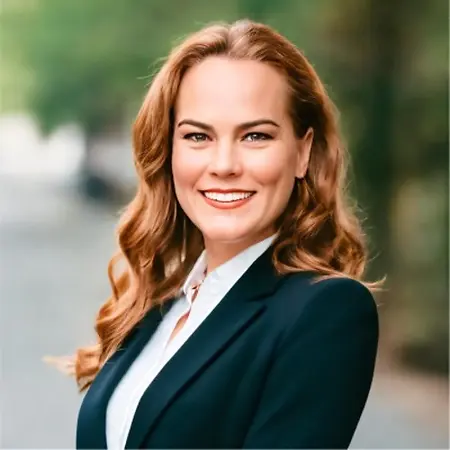
Her Story
About Dr. Misty
I've been in my field for 15 years, and I've been with the University of South Alabama for 6 years. I teach undergraduate data analytics and graduate information systems, and my research focuses on artificial intelligence and innovation, and statistical methodology. My main area of expertise is information systems, which means I work with AI-enabled software platforms embedded in systems to increase efficiency, particularly in HR departments. I also build novel mathematical models that provide more robust measurements so people can get more nuanced information out of their data. Before moving to Alabama in 2019, I worked in Houston, Texas for the Lone Star College System, one of the largest community college systems in the country. There I was the director of the Innovation Room, where I wrote grants for cutting-edge technology and built a beta test site for students to interact with pre-consumer technology. I trained other professors how to use the equipment in their teaching. Prior to education, I was a stock analyst for Schlumberger, one of the world's largest oil and gas services companies, working with executives on stock compensation and global tax withholdings. My career path hasn't been linear, but I've always been in the world of data analytics. I made the transition to academia because my husband was an FBI executive and no one was around to take care of our children, and I felt it was important that we spend time with them. So I stayed home for a few years and put myself through school to get my doctorate so I could have a better work-life balance.
Her Interview
Ten minutes with Dr. Misty
01What do you attribute your success to?
I think one of the causes of my success is drive and determination. But I've also redefined success for myself every few years, depending on what season of life I'm in. I used to think that success meant recognition, but now I feel like it means something closer to alignment. Just knowing that the work that I'm doing reflects my values, and that my voice isn't being edited into something that isn't me or something that is unrecognizable. I think that showing women to seek that alignment helps them to find success as well, and I think that kind of success lasts longer. So I guess I would define success as aligning the things that I'm doing with the goals and the values that I have, and being very intentional with every choice that I make.
02What’s the best career advice you’ve ever received?
To be very frank, I don't feel like I've ever been given good career advice. But I will say, the most impactful thing for me was when I worked as a stock analyst at Schlumberger and worked very closely with our highest level executives who were extremely wealthy. They were never happy about retirement, and it almost seemed like they were afraid to retire. They spent all this time building these vast amounts of wealth in a high-powered job, but they didn't nurture any other part of their life. I was seeing these men weren't on their deathbed yet, but they were already having the regrets. So I told myself, you're not gonna lay on your deathbed and wish that you would have worked more. Not too long after that, I resigned from the job, and I stayed home to spend that time with my children, and I raised them until they were school age before I went back to work. My driving thing is, you only get one shot at raising your children. You do not get a do-over. And if you mess that up, you will suffer for the rest of your life, and so will they. So I have to say, the best career advice anyone ever gave to me was the advice that I gave to myself, and that's don't make your career your life.
03What are the biggest challenges or opportunities in your field right now?
As a teacher right now, trying to get your arms around artificial intelligence and what it means in the classroom, and what it means for your students, is good but hard work. Showing people how to improve their efficiency while not shortcutting their learning is a balancing act. I teach students the foundations of AI, and I teach them how to use it, and then I try to show them how it's not the magic answer box, it is the help me think better critically box, in that you have to spend time with it. On the research side, honestly, as a female, if I have a publication with a male who has more notoriety than me, and I am the lead author, there's been more than one occasion where they've taken my name off as lead author and put me behind the co-author who had more notoriety. There's a lot of bias against females in academia, which is crazy, right? We all know better. So I'm still fighting some gender bias as a scientist and a researcher. And as a mom, because that's definitely a job too, my biggest challenge is to push my kids towards being the best that they can be while also helping them to understand how to give themselves grace in the times they weren't the best that they could be. That's a long and challenging lesson to teach, and you really have to model it to teach it well, and it's a hard thing to model, especially if you're more of the perfectionist type of person.
04What values are most important to you in your work and personal life?
My family is my number one priority. And not just taking care of everything for them, like a lot of moms do, but enjoying, like, finding peace and happiness and joy in all the things, not just the big things. I apply that to my work as well. It can be something as simple as my H-index bumping up by 1, and I get excited about it. I tell my husband about it. He doesn't really care, but he pretends like he does while he listens. And I feel good about it for that day. It's not a huge accomplishment, it happens for professors every day. But if I don't find the joy in those small increments, then I feel like you quit appreciating the small things, and I really think at the crux of it, that's what life is all about. It's about the small things, not the big things.
Join Influential Women and start making an impact. Register now.