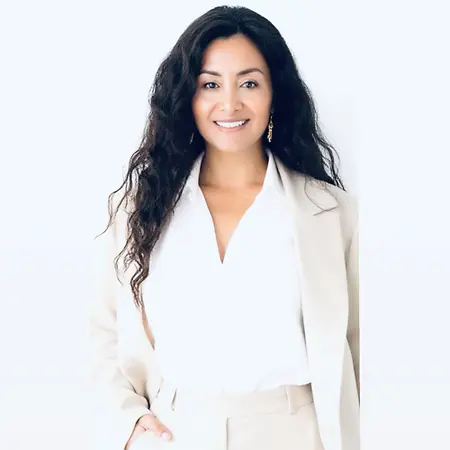
Influential Woman · Nonprofit environmental advocacy and water conservation
Edith Freeze
Founder Executive Director & Community Scientist, Pachacamak Foundation & Robert H. Lurie Comprehensive Research Cancer Center of Northwestern University.
Chicago, IL 60613
Her Story
About Edith
Edith Freeze is an economist, environmental leader, Community Scientist, and Founder and Executive Director of the Pachacamak Foundation, a Chicago-based nonprofit organization advancing environmental stewardship, water conservation, biodiversity protection, and community led research. Rooted in ancestral knowledge from her ethics, her work bridges economics, environmental science, and community engagement to advance clean water for all while protecting the health of both people and ecosystems.
Edith’s commitment to water conservation was shaped by firsthand experiences with water scarcity and contamination in her grandparents community homeland. Since founding the Pachacamak Foundation, she has dedicated her career to inspiring communities to become guardians of water by combining ancestral knowledge with scientific innovation and evidence-based research.
Edith is the creator of the Yaku Water Conservation Program, an initiative that integrates shoreline conservation, citizen science, environmental education, research, and community action to protect freshwater ecosystems, biodiversity, and public health. Through Yaku, she leads outdoor STEM education experiences that have engaged students and educators from Chicago Public Schools, Montessori schools, Northwestern University, Loyola University Chicago, and numerous community organizations, empowering the next generation of environmental leaders through hands on scientific learning and environmental stewardship.
As a Community Scientist at the Robert H. Lurie Comprehensive Cancer Center of Northwestern University, Edith collaborates with faculty researchers, healthcare professionals, and community partners to investigate the impacts of microplastics and water pollution on biodiversity and public health. Her work connects science, community, and innovation to advance research that informs environmental stewardship, public health, and sustainable solutions.
Edith holds a Master of Science in Economics and Policy Analysis and a Bachelor of Science in Business Economics from DePaul University. She applies economic analysis, quantitative and qualitative research methods, econometrics, and policy evaluation to demonstrate the environmental, social, and economic value of investing in healthy ecosystems and resilient communities. Her interdisciplinary approach connects environmental research with public policy, community engagement, and sustainable development.
Throughout her career, Edith has built partnerships across academia, healthcare, government, and nonprofit organizations, including collaborations with the Robert H. Lurie Comprehensive Cancer Center of Northwestern University, Northwestern University, Loyola University Chicago, the Museum of Science and Industry, Chicago Public Schools, Montessori schools, and numerous community organizations. Her leadership continues to expand opportunities for community-engaged research, environmental education, and collective action inspired by ethics and values of reciprocity and respect for nature.
Recognized by Forbes for her community impact, and honored as one of the 2026 Influential Women, Edith champions a future where , economics, ancestral knowledge scientific innovation, and community leadership work together to address today’s environmental challenges. She believes that water is our first medicine, and that protecting water means protecting biodiversity advancing public health, and creating healthier, more equitable communities for generations to come. Through every partnership, research project, and educational initiative, Edith’s vision remains clear: to inspire a global movement of water guardians and ensure clean water for all.
Her Interview
Ten minutes with Edith
01What do you attribute your success to?
I attribute my success to an unwavering commitment to purpose, persistence, and the communities I serve. My journey is rooted in lived experience: witnessing firsthand the profound impact of water scarcity and contamination on my grandparents waters and communities across the Global South. What I witnessed did more than taking action; it gave me a purpose and a lifelong commitment to protect water, biodiversity, public health, and the well-being of generations to come.
My leadership is grounded in integrity, compassion, courage, empathy, and collective action. I believe the most powerful and lasting solutions are co-created with communities. By bringing together lived experience, community knowledge, Traditional Ecological Knowledge (TEK), scientific research, and diverse perspectives, we can create solutions that are more equitable, innovative, and transformative. True is about bringing people together, creating space for every voice to be valued, and inspiring people to recognize the power they already have to create change.
At the heart of my work is a simple but powerful truth: we are all connected through water. People, wildlife, plants, ecosystems, and future generations are part of one interconnected web of life. We cannot protect human health without protecting the health of our planet. When our water is healthy, biodiversity can thrive. When biodiversity thrives, our communities become stronger. And when communities are empowered to lead, meaningful and lasting change becomes possible.
I have learned that one person with purpose can inspire a community, but communities united by a shared vision can create a movement. My mission is to transform knowledge into collective action and collective action into lasting impact, to inspire people from every background to become guardians of water and co-creators of a healthier, more equitable future.
I want the generations that follow us to inherit more than our promises. I want them to inherit clean water, thriving biodiversity, healthy communities, and a living planet. That is the future I am working to build, a future where we understand that protecting water means protecting life itself, and where every person recognizes that they have the power and responsibility to be part of the solution.
02What’s the best career advice you’ve ever received?
The best career advice I’ve ever received is to stay grounded in my ethics and values, trust my vision, and let purpose guide every decision I make. I’ve learned that meaningful leadership requires courage, the courage to believe in what is possible, to keep moving forward when the path is uncertain, and to remain committed even when meaningful change takes time.
The greatest impact is created when we bring people together, listen deeply, honor different forms of knowledge, and co create solutions rooted in trust and shared purpose. To me, leadership is about creating space for others to rise, empowering people to recognize their own strengths, and turning individual passion into collective action.
I have learned to trust that when you lead with integrity, compassion, grace, and an unwavering sense of purpose, your work can become bigger than you ever imagined. Stay true to your purpose, have the courage to follow your vision, and never underestimate the power of bringing people together, because one vision can inspire a community, and a community united by purpose can create a movement that transforms generations.
03What advice would you give to young women entering your industry?
I encourage young people to believe in the power of their voices and to never wait for permission to lead. Leadership often begins with something simple but powerful: recognizing a need, having the courage to act, and believing that you can be part of the solution.
Be bold in your vision, but stay deeply connected to the people and communities you hope to serve. Listen before you lead. Learn from lived experiences, understand the unique systems and challenges each community faces, and co create solutions rather than assuming you already have the answers. Keep learning, document your journey, build meaningful partnerships, and never underestimate the transformative power of empathy, compassion, and collective action.
Honor your heritage and lived experience as sources of strength and knowledge. Bring together Traditional Ecological Knowledge (TEK), community wisdom, scientific research, and policy to create solutions that are innovative, equitable, and lasting. Your background does not limit your leadership, it can give you a perspective that the world needs.
Most importantly, trust yourself. You do not have to follow someone else’s path to become a leader. You can create your own. Lead with courage. Lead with integrity. Lead with purpose. And as you rise, create space for others to rise with you, because the strongest leaders do not simply create success for themselves; they inspire movements, open doors, and build a legacy that empowers generations to come.
04What are the biggest challenges or opportunities in your field right now?
The challenges are significant: limited funding, unequal access to leadership opportunities, and the difficulty of sustaining long-term community initiatives. These are compounded by pressing environmental threats such as lead, mercury, and microplastic contamination, biodiversity loss, displacement caused by large-scale development, and the persistent inequities affecting minority and underserved communities.
Yet within these challenges lie extraordinary opportunities. We have the opportunity to lead with creativity, empathy, courage, and purpose; to expand environmental education, outdoor learning, and nature based health initiatives; to preserve cultural traditions, communities traditions and Traditional Ecological Knowledge (TEK); to integrate communities knowledge with scientific research; and to build stronger partnerships across communities, academia, healthcare, and government.
Most importantly, we have the opportunity to transform how research is conducted, ensuring it is community-centered, equitable, and co-created with the people it is intended to serve. By investing in people, protecting biodiversity, and ensuring communities directly benefit from research and innovation, we can create healthier ecosystems, healthier communities, and a more sustainable future for everyone.
05What values are most important to you in your work and personal life?
The values that guide both my work and my life are integrity, compassion, courage, empathy, advocacy, lifelong learning, and service. I believe leadership is measured by the positive and lasting impact we create in the lives of others and in the world around us.
Water holds profound meaning for me. It is not simply a natural resource, it is a living systems of life that connects people, cultures, biodiversity, and future generations. That is why I am deeply committed to environmental stewardship, community empowerment, and the equitable protection of our nature.
I have a deep respect for ancestral knowledge around the world and Traditional Ecological Knowledge (TEK), and I believe that when we bring together ancestral wisdom, scientific research, and community partnerships, we create stronger, more innovative, and more sustainable solutions. I also believe we have a responsibility to leave the world healthier than we found it, for our children, our communities, and all living beings.
Finally, I believe the arts, education, and science are powerful forces for change. Together, they inspire curiosity, strengthen civic engagement, build empathy across cultures, and remind us of our shared humanity. At the heart of everything I do is a simple belief: when we invest in biodiversity, people, protect nature, and lead with purpose and compassion, we create a legacy that extends far beyond our own lifetime.
Join Influential Women and start making an impact. Register now.