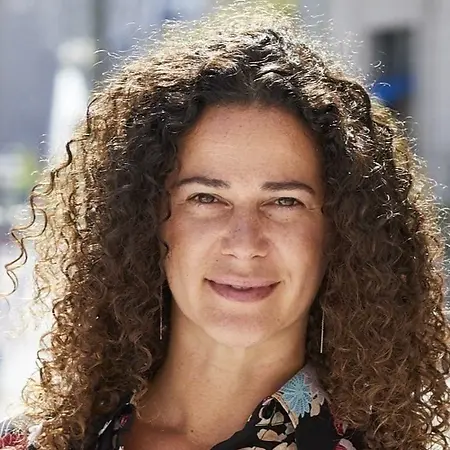
Value what those who came before you have experienced by asking them to share wisdom. People want to feel valued and aware of their contributions.
Elaine Culbertson · In Her Own Words
Her Story
About Elaine
Elaine Culbertson is an independent writing and editing professional and longtime education leader based in Philadelphia, Pennsylvania. With a professional career spanning more than four decades in education, she has served as a classroom teacher, reading specialist, school principal, and curriculum director in both the Philadelphia School District and Wallingford-Swarthmore School District. Her work has centered on curriculum development, literacy instruction, and educational leadership, with a sustained commitment to improving teaching and learning across diverse school communities.
Alongside her career in public education, she has held a longstanding leadership role as Executive Director of the American Gathering of Jewish Holocaust Survivors, a nationwide organization founded and led by Holocaust survivors. In this capacity, she directed educational initiatives and oversaw the Holocaust and Jewish Resistance Teachers Program, which brought more than 1,100 educators to Europe and Israel to study Holocaust history firsthand. She has also contributed to curriculum development and teacher training through partnerships with organizations such as the Anti-Defamation League, supporting the implementation of the “Echoes and Reflections” Holocaust education program in schools across the United States.
In addition to her organizational leadership and consulting work, Culbertson is an author and public speaker, sharing her memoir Mamaleh, which explores her experience as the daughter of Holocaust survivors and a first-generation American. She remains actively engaged in Holocaust education and remembrance efforts, including her role as head of the Consortium of Holocaust Educators in the Philadelphia area. Through her writing, teaching, and advocacy, she focuses on preserving historical memory while promoting empathy, ethical awareness, and respectful human connection in education and beyond.
Her Interview
Ten minutes with Elaine
01What do you attribute your success to?
I think I had a dad who never felt there were limits to what one could achieve. He was always doing everything with his full mind and full energy, and that was an example to me. My father showered his family with love in a way that made us feel that we were important, but we also felt safe. When you come from an immigrant family and they make their way to America, you are their hope and the possibilities are all ahead of you. Because you were born in America, you' are as golden as this land. Every dream and every idea is vested in you. My father, Bernard Freilich, gave me that foundation of feeling both loved and secure, allowing me to pursue my work with full commitment.
02What’s the best career advice you’ve ever received?
Network and learn who your colleagues are.. Never underestimate people that you're working with. You never know what other opportunities they might have for you. People that you didn't recognize right away as someone who might have influence or who might lend you a helping hand, those are the people who know you best, who know your skills and strengths, and who can be your advocates. I think a lot of people get a boost in their work and in their careers from friendships, rather than just from business connections. Someone can, out of the blue, just say something to you that's going to be the leg up on the next rung on the ladder. Treat everyone you work with well. Give respect to get respect.
03What advice would you give to young women entering your industry?
Some of this is going to sound a little old-fashioned, but dress in a way that shows that you respect yourself. Carry yourself always with a sense that you are a role model for children and adults with whom you interact. You're always on, especially when you think you're not on. Just carry yourself with respect, and realize that you are always a role model.
04What are the biggest challenges or opportunities in your field right now?
The first challenge is always that when you're a young woman coming into anything, everybody expects that you're only there for a short time, that you'll be out because of maternity. When I started teaching, I was young, and it was "we have some opportunities here, but we're not going to choose you because we know that you're going to be out in a couple of years." The assumption that because you're a woman, you need to take a step back and let the men have these opportunities, because they're here for their careers, but you are just here to find a husband and retire back to your happy home. As you get older, you're stereotyped as not as smart, not as willing to learn new things, and the opportunities start to dry up because people say you've only got two or three years left. So on both ends of your career, and in the middle when you are raising children, the exact same thing happens - well, you won't be able to do this because you've got kids. That's a particular kind of challenge that certainly men don't face, and it has nothing to do with ability and merely to do with gender. Also being treated in a paternalistic way, like a man who would put his arm around you when he spoke to you - this is a way of cutting you down to size., reminding you to stay in your lane. I think we've gotten better about it, as women have gone into more professional areas and risen in business, law, and medicine, but I would guess a lot of this stuff still goes on. Women are still paid less, or passed over for promotions because a man has to support his family while a woman's income is just a second income.
05What values are most important to you in your work and personal life?
Honesty, integrity, and respect are fundamental to me. I believe in always putting your best foot forward - don't just do the job, finish the job. Put your particular spin on it and make sure that it's the best representation of who you are and what you are. Listen more than you talk. I tell my kids all the time, you have to listen just to listen, not listen to respond. These values guide everything I do, both professionally and personally.
Join Influential Women and start making an impact. Register now.