Eleanor Terlecki's nine-year restoration career exemplifies how people, process, and perspective drive sustainable success in a rapidly evolving industry while inspiring the next generation of women leaders.
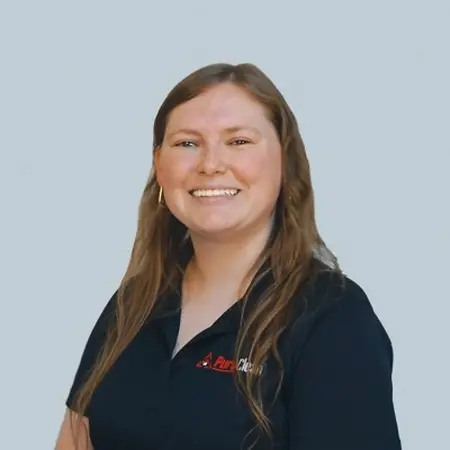
Influential Woman · Restoration Services
Eleanor Terlecki
Owner, PuroClean of Auburn, ME
Auburn, ME 04210
1Article published
2Awards received
Her Story
About Eleanor
I've been in the restoration industry for 9 years, and I'm currently the owner of PuroClean of Auburn, Maine, a position I've held for almost 2 years. My career in this field began as an admin at a competing company where I worked for about three and a half years. I then transitioned to PuroClean as an employee before making the move to Maine to open my own franchise. A typical day for me starts with a morning meeting with my technicians where I review their schedules, answer questions, provide important reminders, and help get them out the door by loading equipment or grabbing car keys. From there, I follow up with emails, write preliminary estimates, make adjuster follow-up calls, handle payroll and timesheet approvals, and basically anything else you can think of. My most notable professional achievement is my estimating platform, which I specialize in. At my previous company, I was doing about $1.6 million in estimates every year, and I take pride in getting those estimates out same day, if not within 24 hours. I hold a degree in ocean and coastal resources from Texas A&M University at Galveston and have earned three IICRC certifications: WRT (Water Restoration Technician), ASD (Applied Structural Drying), and AMRT (Applied Microbial Remediation Technician). I'm also certified to teach CE courses to insurance agents. I'm proud that within our first year of opening, we received bronze in the Best in 207 awards and recognition for being the best mold remediation in our area.
Her Interview
Ten minutes with Eleanor
01What do you attribute your success to?
I attribute my success in the restoration industry to a combination of people, perspective and process.
First, it comes down to the people. Restoration is a people-driven industry, our teams, our referral partners, and the customers who trust us during some of the most stressful moments of their lives. I’ve focused on building and supporting strong teams, fostering accountability, and surrounding myself with people who care about doing the job right, not just getting it done.
Second, success in restoration requires solid systems and a willingness to evolve. The industry is constantly changing, whether it’s insurance requirements, technology, or customer expectations. I’ve invested in training, documentation, and processes that create consistency, transparency, and faster response times, while staying open to innovation and continuous improvement.
Finally, perspective matters. Restoration isn’t just about drying structures or cleaning damage, it’s about restoring stability and trust. By approaching each project with integrity, clear communication, and a long-term mindset, I’ve been able to build credibility in the industry and maintain strong relationships that drive sustainable success.
02What’s the best career advice you’ve ever received?
The best career advice I’ve ever received is to focus on doing the right thing, even when it's slower or harder.
In the restoration industry, there are constant pressures, tight timelines, emotional customers, insurance complexities, and situations where cutting corners might seem easier in the moment. That advice taught me to prioritize integrity, documentation, and clear communication over shortcuts. In the long run, doing the job correctly and ethically always builds stronger relationships and a better reputation.
It also reinforced the importance of taking a long-term view. Restoration is not just about one job or one claim, it’s about consistency, trust, and how you show up day after day. That mindset has guided my decisions, helped me navigate challenges, and ultimately shaped a career built on credibility and sustained growth.
03What advice would you give to young women entering your industry?
I would tell young women entering the restoration industry to own your knowledge, don't shrink yourself to fit the room and set your standards early.
This industry can be fast-paced, technical, and still very male-dominated, but competence and consistency speak louder than anything else. Learn the work, understand the processes, ask questions, and don’t be afraid to advocate for yourself. You earn respect by being prepared, following through, and holding firm to professional standards.
I’d also encourage them to find mentors and build a strong network. The restoration industry is built on relationships, and having people who support your growth makes a real difference. Most importantly, remember that you belong here. Your perspective, leadership, and professionalism strengthen the industry, and there’s plenty of room to build a successful, impactful career on your own terms.
04What are the biggest challenges or opportunities in your field right now?
In the restoration industry right now, the biggest challenges and opportunities are closely tied together, they’re rooted in rapid change, rising expectations, and the need to deliver with both speed and quality.
One of the biggest challenges is keeping up with evolving technology. From advanced moisture detection tools and digital documentation systems to AI-assisted estimating and workflow software, the tools available today can dramatically improve efficiency, but only if teams are trained to use them well. There’s a real learning curve, and companies that lag risk falling behind.
Workforce development is another major challenge we face. Skilled labor shortages, employee retention, and training are ongoing issues. Restoration work demands technical skills, empathy, problem-solving, and resilience. Attracting and retaining people who want to grow and build long-term careers is both difficult and essential. Insurance complexities continue to be a challenge, too. Changes in carrier expectations, documentation requirements, and claim workflows require that restoration professionals stay sharp, adaptable, and proactive in communication.
With these challenges come significant opportunities:
- Technology adoption can elevate service quality and customer experience. The companies that embrace useful tools, not just for the sake of new tech, but to solve real business problems and stand to differentiate themselves.
- Investing in people and culture is a huge opportunity. Companies who prioritize growth, training, mentorship, and clear career paths will attract better talent and build stronger teams. That’s a competitive advantage that no piece of equipment can replace.
- Customer expectations are rising, but that’s an opportunity to redefine what great restoration service looks like. Transparent communication, responsiveness, and empathy are elements that customers remember and share.
Overall, the industry is evolving rapidly and that evolution rewards those who are willing to learn, adapt, and lead with a long-term perspective.
05What values are most important to you in your work and personal life?
The values that matter most to me, both in my work and in my personal life, are integrity, accountability, empathy, and consistency.
Integrity is foundational. In the restoration industry, people are often meeting us during a crisis, and trust has to be earned quickly. Doing what’s right, being honest in communication, and standing behind decisions, especially when it’s uncomfortable, matters to me in every aspect of life.
Accountability is equally important. I believe in owning outcomes, following through on commitments, and holding myself to the same standards I expect from others. That applies at work, in leadership, and in personal relationships.
Empathy ties it all together. Restoration isn’t just technical work, it’s emotional work. Understanding what people are going through, listening first, and responding with care makes a real difference. That same mindset carries into my personal life as well.
Finally, consistency builds trust. Showing up the same way every day, with professionalism, respect, and intention, is what creates strong teams, lasting relationships, and a life aligned with my values.
Her Content Hub
Articles by Eleanor
Leading with Purpose: Eleanor Terlecki Featured on Influential Women
How Eleanor Terlecki Built a Thriving Restoration Business on Integrity, People, and Purpose
Eleanor Terlecki’s Success in Restoration: Built on People, Process, and Perspective
Eleanor Terlecki has been in the restoration industry for nine years. She began her career as an administrator at a competing company, where she worked for approximately three and a half years. She then joined PuroClean as an employee before relocating to Maine to open her own PuroClean franchise, which she has operated for nearly two years.
Eleanor specializes in estimating and previously produced approximately $1.6 million in estimates annually at her former company. She prides herself on delivering estimates the same day or within 24 hours.
She holds a degree in Ocean and Coastal Resources from Texas A&M University at Galveston and has earned three IICRC certifications:
- WRT (Water Restoration Technician)
- ASD (Applied Structural Drying)
- AMRT (Applied Microbial Remediation Technician)
She is also certified to teach continuing education (CE) courses to insurance agents in the state of Maine.
Within her first year of opening her business, Eleanor’s company earned Bronze recognition in the Best in 207 Awards and was recognized for Best Mold Remediation in the area.
Eleanor attributes her success in the restoration industry to a combination of people, perspective, and process.
First, it comes down to people.
Restoration is a people-driven industry—our teams, referral partners, and the customers who trust us during some of the most stressful moments of their lives.
Eleanor has focused on building and supporting strong teams, fostering accountability, and surrounding herself with people who care about doing the job right—not simply getting it done.
Second, success in restoration requires strong systems and a willingness to evolve.
The industry is constantly changing, whether through insurance requirements, technology, or customer expectations.
Eleanor has invested in training, documentation, and processes that create consistency, transparency, and faster response times while remaining open to innovation and continuous improvement.
Finally, perspective matters.
Restoration is not simply about drying structures or cleaning damage—it is about restoring stability and trust.
By approaching each project with integrity, clear communication, and a long-term mindset, Eleanor has built credibility within the industry and maintained strong relationships that drive sustainable success.
For young women entering the restoration industry, Eleanor offers this advice:
Own your knowledge. Do not shrink yourself to fit the room. Set your standards early.
This industry can be fast-paced, highly technical, and still predominantly male-dominated, but competence and consistency speak louder than anything else.
Learn the work.
Understand the processes.
Ask questions.
Do not be afraid to advocate for yourself.
You earn respect by being prepared, following through, and maintaining strong professional standards.
She also encourages women to find mentors and build strong professional networks.
The restoration industry is built on relationships, and having people who support your growth makes a meaningful difference.
Most importantly, remember that you belong here.
Your perspective, leadership, and professionalism strengthen the industry, and there is tremendous opportunity to build a successful and impactful career on your own terms.
The best career advice Eleanor has ever received is simple:
Do the right thing—even when it is slower or harder.
In restoration, there are constant pressures: tight timelines, emotional customers, insurance complexities, and situations where cutting corners may appear easier in the moment.
That advice taught Eleanor to prioritize integrity, documentation, and clear communication over shortcuts.
In the long run, doing the work correctly and ethically always builds stronger relationships and a stronger reputation.
It also reinforced the importance of maintaining a long-term perspective.
Restoration is not just about one project or one insurance claim—it is about consistency, trust, and how you show up every day.
That mindset has guided Eleanor’s decisions, helped her navigate challenges, and ultimately shaped a career built on credibility and sustained growth.
Today, some of the restoration industry’s biggest challenges and opportunities are closely connected.
They are rooted in rapid change, rising expectations, and the growing demand to deliver both speed and quality.
One major challenge is keeping pace with evolving technology.
From advanced moisture detection tools and digital documentation systems to AI-assisted estimating and workflow software, today’s technology can dramatically improve efficiency—but only when teams are properly trained to use it.
There is a learning curve, and companies that fail to adapt risk falling behind.
Workforce development presents another major challenge.
Skilled labor shortages, employee retention, and training remain ongoing concerns.
Restoration work requires technical expertise, empathy, problem-solving abilities, and resilience.
Attracting and retaining people who want to build long-term careers in the industry is both difficult and essential.
Insurance complexities continue to create challenges as well.
Changing carrier expectations, evolving documentation requirements, and shifting claims processes require restoration professionals to remain adaptable, proactive, and highly communicative.
Yet alongside these challenges come significant opportunities.
Technology adoption can elevate service quality and improve customer experiences.
Companies that embrace useful tools—not simply for the sake of innovation, but to solve meaningful business challenges—position themselves to stand apart.
Investing in people and workplace culture also presents a tremendous opportunity.
Organizations that prioritize growth, training, mentorship, and clear career pathways attract stronger talent and build stronger teams.
That competitive advantage cannot be replaced by equipment alone.
Customer expectations are rising—but that creates an opportunity to redefine what exceptional restoration service looks like.
Transparent communication, responsiveness, and empathy are qualities customers remember and share.
Overall, the restoration industry is evolving rapidly, and that evolution rewards those willing to learn, adapt, and lead with a long-term perspective.
The values that matter most to Eleanor—both professionally and personally—are integrity, accountability, empathy, and consistency.
Integrity is foundational.
In restoration, people often meet professionals during moments of crisis, and trust must be earned quickly.
Doing what is right, communicating honestly, and standing behind decisions—even when uncomfortable—matters deeply to Eleanor in every area of life.
Accountability is equally important.
She believes in owning outcomes, honoring commitments, and holding herself to the same standards she expects from others.
That philosophy applies to leadership, business, and personal relationships.
Empathy ties it all together.
Restoration is not only technical work—it is emotional work.
Understanding what people are experiencing, listening first, and responding with compassion creates meaningful impact.
That same mindset carries into Eleanor’s personal life.
Finally, consistency builds trust.
Showing up each day with professionalism, respect, and intention creates strong teams, lasting relationships, and a life aligned with personal values.
Join Influential Women and start making an impact. Register now.