Her Story
About Elizabeth
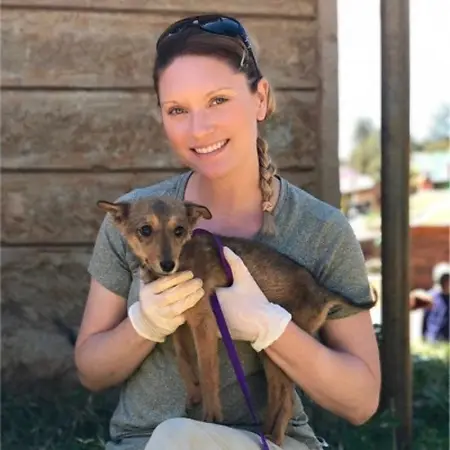
Elizabeth Austin is a Regional Epidemiologist and Biostatistician at the Chelan-Douglas Health District in Wenatchee, Washington, where she leads epidemiology efforts across North Central Washington. She analyzes trends in overdose events, respiratory illness, and the health effects of wildfire smoke, and she is developing a viral respiratory illness dashboard covering COVID-19, influenza, and RSV. Using tools such as R, ArcGIS, Power BI, and REDCap, she provides technical guidance to regional health jurisdictions and fosters collaboration across them.
Her route to public health was unconventional. After earning a bachelor's degree in international relations and working as a veterinary technician, she saw a way to join her interests in global affairs, animal health, and human health, and went on to complete her Master of Public Health at The George Washington University. She joined the Colorado Department of Public Health and Environment in 2019 as a respiratory disease epidemiologist. During the COVID-19 pandemic she advanced to Influenza and RSV Surveillance Manager, overseeing statewide surveillance while adapting to evolving CDC requirements. She later helped develop response protocols for H5N1 avian influenza in collaboration with the CDC, at a time when little guidance existed.
Elizabeth is now a Doctor of Public Health candidate at the Johns Hopkins Bloomberg School of Public Health, concentrating on health security, emerging infectious diseases, and biosecurity policy. She aims to contribute at the national level through organizations such as the CDC or NIH, helping strengthen the systems that anticipate and respond to future health threats. She serves on the board of the Africa Network for Animal Welfare and competes as a rally co-driver, earning third place in the limited two-wheel drive class of the 2025 Western Regional American Rally Association Championship. She also enjoys hiking, hot yoga, and time with her dog.
Her Interview
Ten minutes with Elizabeth
01What do you attribute your success to?
I attribute my success to adaptability, resilience, confidence, curiosity, and a genuine willingness to keep learning. My career has repeatedly asked me to step into unfamiliar situations and build new skills quickly, especially during major public health emergencies. Rather than letting a nontraditional path limit me, I have drawn on my background in international relations, veterinary medicine, and public health to develop a broader understanding of disease prevention and health security. Staying open-minded has also helped me navigate rapidly changing information, emergencies, and misinformation.
02What’s the best career advice you’ve ever received?
The most valuable guidance I have received has come through mentorship and learning from experienced professionals, particularly as I moved from veterinary medicine into public health and advanced within epidemiology. Those experiences taught me to seek out guidance while also building the confidence to make independent decisions and take on unfamiliar challenges.
03What advice would you give to young women entering your industry?
I encourage young women entering public health and epidemiology to be adaptable, resilient, confident, and open-minded, and to broaden their perspectives. Stay willing to learn and adjust as circumstances change, and don't be discouraged if your career doesn't follow a perfectly defined path. My own journey shows that experience from seemingly unrelated industries can become a real strength. Trust your abilities and stay confident when facing obstacles, uncertainty, or misinformation.
04What are the biggest challenges or opportunities in your field right now?
I see misinformation, emerging infectious diseases, and our society's ability to prepare for and respond to public health emergencies as the field's most significant challenges. These same challenges are also major opportunities for epidemiologists and public health professionals to strengthen disease surveillance, preparedness, communication, biosecurity policy, and emergency response systems. I am especially interested in where emerging infectious diseases, health security, and biosecurity intersect, and I hope my future work helps prepare us for the next major health crisis.
05What values are most important to you in your work and personal life?
I place the highest value on resilience, adaptability, integrity, continuous learning, preparedness, and service to others. Public health has shown me how quickly circumstances can change, and how important it is to stay flexible while making evidence-based decisions. I also value the confidence to move forward despite uncertainty and the openness to consider new information and perspectives.
Join Influential Women and start making an impact. Register now.