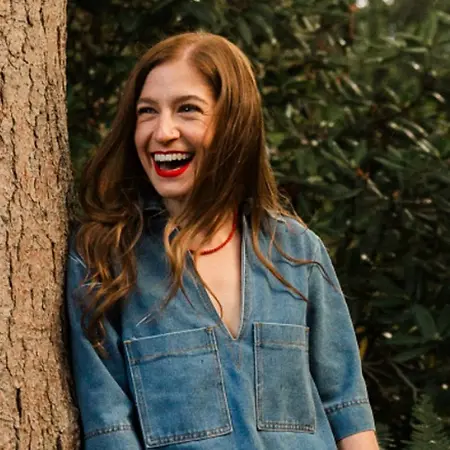
Her Story
About Elizabeth
I began my career with a clinical background, training as a speech-language pathologist and audiologist with an emphasis in pediatric audiology. After working in a speech and hearing clinic in Bellingham, I moved to Seattle and joined Seattle Children's Hospital in 2014 on the administrative side. That experience introduced me to process improvement in healthcare, where I was exposed to Lean Six Sigma and other improvement methodologies. I quickly became passionate about the work and realized I wanted to build my career around improving clinical operations and patient care experiences.
Because of my hands-on clinical background, I was especially drawn to process improvement within healthcare settings. I later became a process improvement specialist at a community health center in Seattle, where I helped support the build and 2020 go-live of a new electronic health record system. From there, I continued to grow in roles focused on process improvement, project management, and continuous improvement consulting, including returning to Seattle Children's Hospital as a continuous improvement consultant.
I eventually joined Fred Hutch Cancer Center to help integrate process improvement principles alongside project management practices. My focus is not only on delivering projects and achieving outcomes, but also on identifying opportunities to make workflows more efficient, improve experiences for patients, and better support care team staff throughout the process.
Today, I oversee a team of project managers and support a broad portfolio of institutional initiatives. My responsibilities include ensuring projects are progressing smoothly, guiding intake and prioritization for new ideas and initiatives across the organization, and helping formalize efforts so teams have the structure and support needed to succeed. My team is currently managing approximately 22 active projects across the institution.
Her Interview
Ten minutes with Elizabeth
01What do you attribute your success to?
I think most about the community I’m incredibly grateful to be a part of, including my friends, my deeply supportive family, and my professional network. Throughout my career, I’ve had leaders who became friends, mentors who guided me, and coaches who continue to inspire me. These are relationships I still actively nurture and lean on through both challenges and successes. The communities and connections I’ve built over the years have shaped who I am, and I truly would not be where I am today without them.
02What’s the best career advice you’ve ever received?
A dear friend once shared something with me that has stayed with me throughout my career: as women, it can be incredibly challenging to remain competitive and appropriately valued in the workplace. Sometimes, staying in the same role for too long can lead to being undervalued, even when you continue to grow and contribute in meaningful ways. Because of that, I’ve learned that there is nothing wrong with continuing to explore opportunities, seek new experiences, or advocate for what you want professionally.
What may look like “job hopping” to some people is often a reflection of growth, curiosity, and a willingness to keep learning and evolving. I think it’s important to continually ask yourself where you are adding value and where you are receiving value in return. That value is not always financial. It can come from mentorship, learning opportunities, innovation, meaningful challenges, or being surrounded by people who inspire and stretch you professionally.
If you find yourself in an environment where you are no longer learning, growing, or being challenged, it is okay to consider where else you might find those opportunities. What we value changes over time, and for me personally, I’m someone who is constantly driven by learning, innovating, and improving. If I’m in a role where I no longer have opportunities to grow or think creatively, I know I will eventually outgrow that environment.
03What advice would you give to young women entering your industry?
Be open to the scenic path. When I graduated from undergrad, I was certain I was going to become a clinical audiologist and follow a very specific career trajectory. But once I entered a healthcare environment and joined Seattle Children's Hospital, I became fascinated by how a large healthcare institution operated and what made it successful behind the scenes. That experience inspired me to move into the administrative and operational side of healthcare.
If I had been unwilling to explore something outside of the path I originally envisioned for myself, I would have missed so many opportunities for growth and discovery. Instead, I stayed open to new experiences and evolving interests, and that openness ultimately shaped the career I have today. I like to say that I ended up exactly where I was supposed to be, but I took the scenic route to get there.
04What are the biggest challenges or opportunities in your field right now?
One of the biggest challenges in healthcare today is the broader policy and funding environment, including pressures on federal programs such as Medicaid and Medicare, as well as uncertainty around federal research funding. These shifts can have real downstream impacts on clinical care delivery and on the ability to sustain important research initiatives across areas like cancer and infectious disease. It can be difficult to see funding constraints slow progress in critical areas of science and public health, especially when the goal is to improve outcomes for all patients and ensure equitable access to care.
At the same time, healthcare remains an essential and resilient field. There are always opportunities to contribute meaningfully, whether on the administrative, operational, research, or patient-facing side. For people who care about making a difference, it is an incredibly impactful space to work in. It can also be a demanding industry, but one that is deeply rewarding because of the direct connection to improving lives.
I’ve also been fortunate to work in an environment where many of my colleagues are women, particularly in healthcare settings, which can be different from other industries. That representation creates a strong sense of community and shared leadership. If you are looking for a field where you can do meaningful work alongside talented, mission-driven people, healthcare is a powerful place to be. And I would encourage anyone interested to connect with women and leaders in areas like cancer research and clinical care, where the work is both challenging and incredibly inspiring.
05What values are most important to you in your work and personal life?
Innovation has always been a driving force for me—I’m constantly looking for ways to improve and try new approaches. At the same time, I strongly believe that perfection can sometimes get in the way of progress. That mindset shows up in both my professional and personal life.
Rather than waiting for the “perfect” solution, I focus on making small, incremental improvements that move things forward. I’ve found that steady progress is often more impactful than trying to design an ideal plan from the start.
That perspective even carries into my personal life. My spouse is a marriage and family therapist, and we often talk about how we communicate and how we can continue strengthening our relationship. We both value growth in that space, but we also recognize that communication doesn’t have to be perfect to be meaningful or effective. Making something better today is often more valuable than holding out for perfection tomorrow.
Join Influential Women and start making an impact. Register now.