Her Story
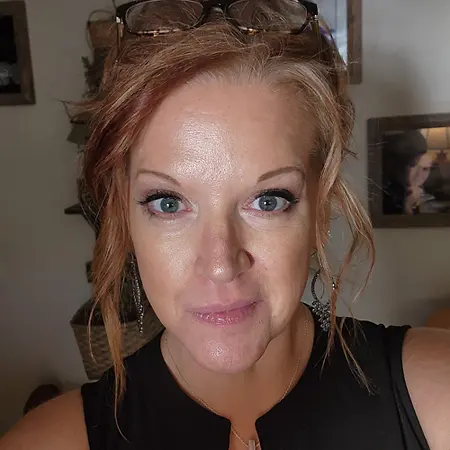
About Elizabeth
Elizabeth McQuade, RPL, is a seasoned public safety professional serving as 911 Senior Supervisor and Training Coordinator at Athens Co. Emergency Communications in The Plains, Ohio. With more than 27 years in emergency communications, she has built a distinguished career overseeing daily operations, supervising personnel, and developing comprehensive training programs to ensure excellence in public safety telecommunications. Beginning her career as a Telecommunications Officer in 1999, Elizabeth advanced through the ranks by demonstrating strong leadership, operational expertise, and an unwavering commitment to serving her community during its most critical moments. Throughout her career, Elizabeth has become a respected advocate for professional development within the 911 community. She currently serves as Vice President of the Ohio Chapter of National Emergency Number Association (NENA), where she collaborates with public safety leaders across the state to advance innovation, policy, and support for telecommunicators. Her partnership with Ohio APCO and involvement in statewide initiatives reflect her dedication to strengthening the profession and elevating the role of public safety telecommunicators as vital first responders. Driven by both professional experience and personal inspiration, Elizabeth is also the founder of Morgrace Critical Response Training, an educational initiative focused on cognitive health, autism awareness, dementia response, and suicidal caller intervention for first responders. She successfully earned course approval through the Ohio Peace Officer Training Academy and was selected to present at the NENA National Conference in Columbus. Through her work, Elizabeth emphasizes empathy, adaptability, and “giving more grace” in crisis response—equipping emergency professionals with the tools to better understand and support the individuals and families they serve.
Her Interview
Ten minutes with Elizabeth
01What do you attribute your success to?
I attribute my success to having a strong-willed faith and a solution-oriented mentality. Even when I don't have the solution at that moment, I have faith that I will find the best solution. When I face a struggle or know what I want in the end, I just keep positive and endure. If we have to change something, we change it. If we have to go a different direction, we go a different direction, but I'm stubborn enough to keep trudging on to get that outcome. I think it's important to encourage others to see their own personal strengths and enduring the stress from challenges that come your way builds resilience. I've had so many people come into my life within a very short time that fit perfectly in my career path to assist in my set goals. Whether it was their words, support or mentorship. Their presence in my life tells me more and more that my career path is has purpose. I have an opportunity that I need to grasp with both hands and allow it to guide me. If I hit a roadblock on the way down this journey, I won't let it deter my passion to help others. It's funny how life just falls in place at the right time and moments. When you let it guide you, those miracles will happen. You can actually reach your goals and beyond when you let it guide you and adapt to it.
02What’s the best career advice you’ve ever received?
The best career advice I ever received was from my mentor who looked at me and said, 'Liz, you have found something that's not out there. You have been given such an opportunity, and you would be so silly not to jump in and take control.' I knew he was right. This was when the Alzheimer's Association didn't want to get my training state-certified, and I had to decide whether to create my own company, which was a future goal of mine. But my mentor made me realize I needed to take hold of this opportunity to contribute to my community by making an impact to create more successful outcomes in all public safety responses. That advice encouraged me to create Morgrace Critical Response and pursue my passion for cognitive health training in public safety immediately, while incorporating other training course topics for personal and professional growth for first responders.
03What advice would you give to young women entering your industry?
I would definitely say to have a knack for multitasking, not only physically but mentally and emotionally too. Having that passion to help others is a must. Learn to take on any negativity, whether it's across the radio from the agencies we dispatch or callers who need emergency services. Learn to push aside personal feelings and to give people grace. If we give them grace in their situation, then we set an example for others to follow. It's very important to realize that public safety telecommunicators do not just answer phones. That we are the first, first responder for every call we receive. We are the calm who sets the tone for response and provides reassurance that help is on the way. We are not only calming the caller down, we're also their friend, we're their counselor, we mold ourselves to the narrative to get the best information from the caller in order to relay to our responders all while we are coordinating multiple responses during the dispatch phase through our radio systems. It's important for people to know when you decide to become a 911 dispatcher at a communication center you will be taught how to improve upon the skillset that you already have while learning new skills to be successful in this profession. Your agency will invest in creating the core foundation, tailored to your learning needs that provides you with the knowledge to aid your community on their worst day or during a traumatic event. It's literally a gift to be able to be on that side of the phone and be able to be that person's calm, their peace, and provide them with the assistance they need. Sometimes it's just a voice or how you just listen that can impact the lives affected by a call. I pray daily that God always guides me on what to say and what to do in certain situations, no matter the intensity of the call.
04What are the biggest challenges or opportunities in your field right now?
The biggest challenge and opportunity in my field right now is that cognitive health training doesn't exist in public safety, and dementia-related diseases and developmental delays are increasing. No one knows how to interact with individuals with cognitive impairments, and there are so many bad outcomes because there's not proper training. Cognitive health is 100% different than mental health, and just because someone's pacing, doesn't mean aggression depending on the situation and their past history, but it could be a therapeutic behavior. If we teach those signs, behaviors, and characteristics, and teach responders how individuals with cognitive diseases or delays see things differently, how everything's so much different sensory-wise, how it's over-modulated with touch, texture, dexterity, and senses, we can create better outcomes. A lot of times people keep that individual out of the conversation, and it's so important to keep them in it. I'm sitting behind the desk, and I literally want to bang my head against the wall because responders do not know how to respond to these calls and they're not going the way that they should be going. They don't have the options, but yet they need to know that they can learn the skills to adapt to these types of calls to make it better. Another challenge is that in Ohio, we're not seen as actual first responders yet. Currently the Enhancing First Responders Act has passed through the Senate. This bill recognizes our public service and lifesaving actions by classifying is as a part of the first responder system. This legislation is a significant step towards recognizing the critical role of 911 dispatchers in public safety. Ohio NENA and Ohio APCO are continuing to encourage our state representatives to adopt this initiative.
05What values are most important to you in your work and personal life?
The most important value to me in my work and personal life is grace. I think as individuals, no matter what field, career, or environment we are in, it's just allowing for grace. Not only to others but also learning to give grace to our own selves. By doing this, we set an example for others. Everyone's so hard on each other and themselves in this day and age. I would like to be apart of encouraging supportive environments. I named my company Morgrace Critical Response after my two daughters, Morghen and Kylee Grace, to emphasize this value. My daughters have taught me to really see people, to understand beyond what's given at face value, to look in their eyes and feel and try to look out of the box and envision what they're going through. I also value maintaining a passion to help others and being able to be that person's calm, their peace while providing them with assistance. I always felt that I had a calling to help people and that I was able to make quick decisions to overcome chaos or make better outcomes than what was presented to me at the time. I believe we all go through struggles for a reason. My personal and work experiences have strengthened my resolve to relate to others while being humbled during times of distress. I believe this is the path that I'm supposed to go toward and venture down to teach others what I have learned throughout the years in public safety and raising my two daughters. I'm excited for not only my own future and what I will experience but for the lives I may impact or inspire.
Join Influential Women and start making an impact. Register now.