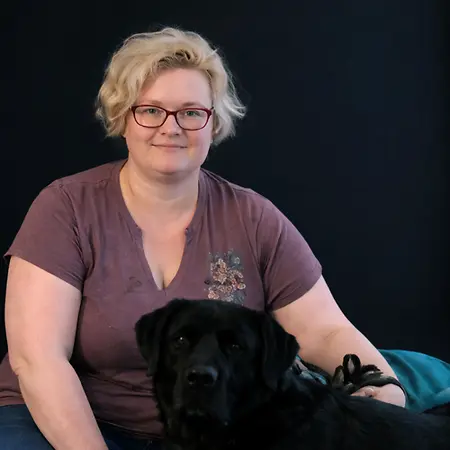
Her Story
About ELLEN
Ellen W. is a dedicated graduate student in Public History at the University of Arkansas at Little Rock, where she is actively developing her expertise in historical research, cultural anthropology, and public engagement. Currently serving as both a Learning Assistant and Learning Assistant Mentor, she works closely with faculty and students to foster effective communication, support classroom success, and enhance the overall learning environment. In addition to her master’s studies, Ellen is pursuing an applied archaeology certificate, further expanding her academic scope and preparing for a future in higher education.
Her career path reflects resilience, adaptability, and a clear sense of purpose. After graduating high school, Ellen served six years of active duty in the military, where she gained invaluable experience working with diverse groups and navigating complex team dynamics. During this time, she also built a family, later returning home to reestablish her career following a major life transition. Her military background instilled a strong sense of discipline, professionalism, and the ability to collaborate effectively with individuals from all walks of life—skills that continue to serve her well in both academic and professional settings.
Motivated by a passion for history and anthropology, Ellen made the intentional decision to return to school and pursue a path aligned with her long-term goals. Her professional experiences, including a public-facing internship as a tour guide at the Arkansas Inland Maritime Museum, demonstrate her ability to translate historical knowledge into engaging educational experiences. With a clear aspiration to teach at the academic level, Ellen is committed to advancing her education and contributing to the field through research, instruction, and public history initiatives.
Her Interview
Ten minutes with ELLEN
01What do you attribute your success to?
I would say knowing my grandmother helped me a lot, how she essentially headed the family as the matriarch. Even today, even though she's no longer with us for the past 20-odd years, I still want to be her when I grow up, and I'm in my mid-40s. She's like my role model in terms of perseverance, strength, and knowing who you are.
02What’s the best career advice you’ve ever received?
The best career advice I've received has been mixed. One professor told me not to go for my doctorate, which was interesting. I think he was trying to think of it in terms of you don't need a doctorate to find a job, because there is a lot of politics in academia. But I've had others who are helping me on the journey. I had two former teachers of mine helping me get my applied archaeology certificate, telling me, hey, you already got this knocked out. If you do this, this, and this, you'll get that certificate as well when you graduate with your master's degree.
03What advice would you give to young women entering your industry?
I would advise them to follow your passion, but don't let your passion overrule you. Don't allow outside forces deter you from what you want to study, but also know that some things might be out of your control. Just kind of absorb it, deal with it, and if you gotta scream and cry about it, do so.
04What are the biggest challenges or opportunities in your field right now?
The biggest challenges in my field depend on which area you're focusing on. In many ways, it could be a language barrier for a lot of people, especially if they want to read old documents or talk to native peoples if they're an anthropologist wanting to talk to a different society or culture in Africa or Asia. You have to have a trusted translator, someone who's not going to pull the wool over your eyes. You need to be willing to travel. If you're not comfortable moving to another state or another country, you can still do a lot of stuff locally. You can major in your local state culture or history and become niched into that field. But if you want to travel, you need to be prepared to have your eyes opened and realize that there is such a thing as ethnocentrism. One example is this: you grew up somewhere, and you believe wholeheartedly America is the best and the brightest. And then you go somewhere else, and you're like, oh wait, my country, my identity as an American, it's not always a good thing. This other country, another culture also has something that is worthwhile.
05What values are most important to you in your work and personal life?
The values most important to me are that you need to know who you are and be true to yourself. Be willing to work hard toward a goal, but also be prepared for life to throw you some curveballs. Don't let those curveballs destroy your goal too much, but you need to pivot when necessary. If you're too rigid in your path, you're going to break, and that's not a healthy way to do anything. You need to be able to be flexible and bend when necessary. In my case, I'm trying to do everything as local as possible, because my parents are elderly, and I don't want to be two, three states away and not be there for them.
Join Influential Women and start making an impact. Register now.