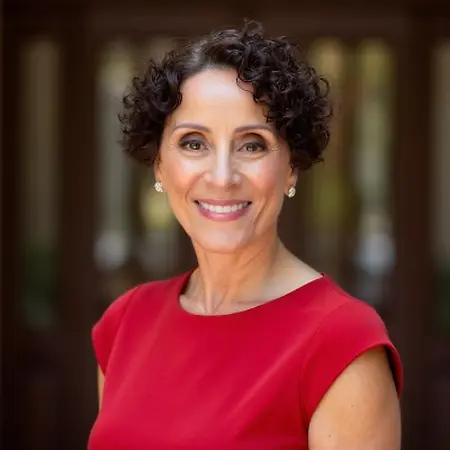
Her Story
About Elsie
My career journey has been anything but traditional. I started in IT at CompUSA and IBM, spending a year and a half on the road before I got tired of traveling and took a package. That's when I made the leap into land development, joining a land use company around 2006. I was there about a year when I went looking for experts in PIDs (Public Improvement Districts) and tax increment financing. I found Ike Coop, a super lawyer here in Dallas, asked him to come talk to my company, and within months he hired me as a paralegal in the land use section of his law firm. When the housing crisis hit in 2008, and the partners left to start their own firm in 2010, I went with them and simultaneously started my own company, Land Use Planning and Zoning Services. I started it because the big law firms serve big developers, but the regular person - the woman wanting to start a yoga shop, the man wanting a barber shop or nail salon - they need zoning help too but can't afford those big ticket prices. My expertise is in zoning, permitting, and understanding development code, building code, and Dallas's Plan 2.0. I work with the City of Dallas staff, navigate the 14-member City Plan Commission, and then move cases to the 14-member council plus the mayor. In 2020, I achieved what I consider my most notable accomplishment: I won the Dallas ISD bond contract. They had told me no in 2010, and I was hesitant to even bid again, but someone at the chamber encouraged me, saying 'we need you to bid on it.' When I won, I became the first woman to get this work at Dallas ISD. Now I work with teams of architects, surveyors, traffic engineers, and civil engineers - 98% men - to put projects together for this billion-dollar school district where all the schools from the 1950s need to be taken down and rebuilt. I understand the bigger picture of land development: where to lay the buildings, what square footage works, how big the acreage is, whether it all fits. I can read site plans, tell visibility triangles, check parking counts, and catch when things are laid over a plat incorrectly. My typical day involves reviewing emails first thing, then handling phone calls after 9 or 10 AM, doing Teams meetings with city staff, attending community meetings for schools, and going to City Plan Commission and Council public hearings. I'm also involved in the community - I was on the board of the Dallas Black Chamber of Commerce for six years and just came off in December, and I'm vice chair on a TIF (tax increment financing) board up north in Dallas.
Her Interview
Ten minutes with Elsie
01What do you attribute your success to?
Honestly, I think a generation of women before me took steps to make it easier for me. I didn't know it at the time, but as time went on, I met different women - women who are no longer on city council, who retired - and those women kind of stepped in for me. There was one councilwoman who told me before I started permitting, before 2010, 'put permitting on your resume.' I said I don't know it well enough, and she said, 'but you will. Put it on there.' So the women before me kind of helped me see that I never looked at it as going to be too hard. You think you're doing all this by yourself, and there was always some woman there that stood a little bit in the gap for me. That helped my success, and then having family and friends - things you can say to them you can't say at work. It's always a multitude of things that helps us get by. I think working out is really important to be able to sweat. I tell people if you don't like working out, go garden or something. Find something you like doing that you'll keep doing, so it's separate from work, separate from your children, separate from anybody else. It's just something you and your friends do, or you do. That's just yours. That'll kind of keep you balanced.
02What’s the best career advice you’ve ever received?
One is, don't quit. You're closer than you think. The other came from the land use partner - she said, 'No use of pissing people off. Just take the high road.' Because, you know, we're women. We can easily tell somebody how we feel, turn around and come back and tell you. And she said, 'I know you have it in you. She said, take it off the table.' She said you're going to have plenty of time to prove your point. She said, don't do it. It's just going to cost you. And it has, at times. You know, we don't get grace. They get a lot of grace. We don't get grace. So I just say things when they get angry. I'm like, why are you being overly emotional in this meeting? This is a professional meeting.
03What advice would you give to young women entering your industry?
Stay here. You have no idea how much my generation needs you. Because my generation was pushed out, right? So as much as they can keep pushing us out, my latter years, yes, I'm here now, but I really should have been here 15, 20 years ago when I was told no. My younger women, I tell them, stay here, you are the best project managers. Women. And I said that, and men don't like it, it's not a criticism. Men are very good at a lot of other things, but we are really good. Look at law firms. Who's the best legal assistants? They're the ones organizing everything for the lawyer. They're mostly women. We do a lot, and it goes so unnoticed, and we manage to do that while having children, raising children, getting a second degree. But I also tell younger women, you have to be able to breathe and not tell somebody off. Younger people are hard at that. The younger women, I don't blame them, they don't want to hear it. You can't talk to them crazy. But when I have a man talk to a younger woman who's got two degrees, and she professionally tells him off, and he's mad about it, I tell her, you're just hurting yourself though. Because he's not going to get rid of him. And he's not going to forget.
Join Influential Women and start making an impact. Register now.