Elvira E. Ramírez, MSW
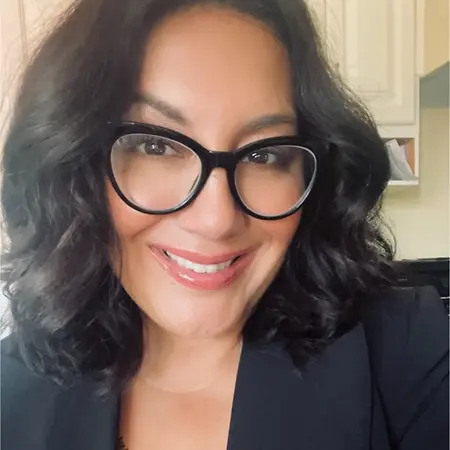
Elvira E. Ramírez, MSW, is a Clinical Social Worker and Director of Social Work based in San Jose, California, with over a decade of experience in hospice and end-of-life care. She specializes in psychosocial assessment, therapeutic support for patients and families, grief counseling, and interdisciplinary care coordination. Currently a doctoral candidate in Clinical/Medical Social Work at Simmons University, she is advancing her expertise in healthcare leadership and applied research, with a focus on improving end-of-life care delivery and reducing disparities among marginalized communities.
Her professional journey spans roles across hospice social work, hospital liaison services, and healthcare leadership. She has played a key role in developing and strengthening psychosocial programs within hospice organizations, including building care protocols, supervising multidisciplinary teams, and establishing bereavement and veteran support services. With prior experience in healthcare and medical device industries, she brings a strong foundation in patient advocacy, communication, and system-level collaboration. As a bilingual Spanish-speaking clinician, she is frequently relied upon to support Spanish-speaking patients and families, helping bridge critical gaps in access and understanding of care.
Elvira’s work is guided by a deep commitment to dignity, compassion, and social justice in healthcare. She is focused on improving hospice accessibility and encouraging earlier engagement with end-of-life services, particularly for underserved populations. Her leadership emphasizes collaboration, ethical practice, and culturally responsive care. Outside of her professional responsibilities, she values meaningful connection, community, and personal growth, bringing the same sense of purpose and presence to her personal life that she brings to her work with patients and families.
• Berlitz Certified in Spanish
• Widener University - MSW
• Working with Hospice and the Latest in Alzheimer's Research
• Encore Award
• JDRF-Top Fundraiser
• Certification of Completion
• JDRF
• Tour De Cure
• Santa Clara County Public Defender
What do you attribute your success to?
I attribute my success to making the choice to live and work on myself personally and professionally. I've struggled with mental health issues since childhood and dealt with a lot of trauma. I survived domestic violence, and up into my 20s, I was in and out of psychiatric hospitals for attempting suicide. The odds were against me. But now I'm in a completely different place. I made the choice to live and said, okay, what happened to me happened, but what we go through, we grow through. I continue to work on myself. I still have a therapist, but I love my life now. I love people. I'm not ashamed of things that I've done and my past, because I think it was meant to happen. This is where I am because of my life. I want to be an example to other young girls and women who are battling mental health issues or who've survived domestic violence. It's never too late to work on you, personally and professionally. When you put in the work, you can make it happen. If I can do it, you can do it.
What’s the best career advice you’ve ever received?
The best career advice I've ever received came from another doctor, a social worker, and it's what drove me to pursue my doctorate degree. The advice was that you can never stop learning. Continue to learn, continue to grow. Leadership means you're continuing to grow. Not everyone can be a leader, and some people are only managers, but a leader is open to growth, personal growth, professional growth. That's what drove me to pursue my doctorate degree. I want to continue growing in every aspect of my life. The other important piece of advice was the importance of self-care. The importance of taking care of ourselves, because when we show up for ourselves, we show up for others.
What advice would you give to young women entering your industry?
I would say you have to be kind to yourself and have a mission. Have a personal and professional mission. See what direction you want to go, but also identify where is your heart. I've trained nurses and other healthcare professionals within hospice, and there's times where I've had to tell them, I don't think hospice is for you anymore. You have to have that ongoing compassion and empathy, and the moment you lose that, it's time to remove yourself from your role. I think it's a lot of having self-reflection to guide you and keep you in tune with what is needed. What you need for yourself, but how can you show up best for the people that you serve?
What are the biggest challenges or opportunities in your field right now?
The biggest challenge in my field right now is late referrals to hospice among marginalized communities. Many of my patients are being referred to hospice too late. I've been doing research on this, and it's actually what my capstone is focused on. I'm working on establishing an app that will help address the barriers within marginalized communities and hospice. A lot of it is educating the medical community on how we address late referrals to hospice so that we can help families sooner rather than later. Once I obtain my doctorate, I would like to do a TED talk on end of life, breaking the barriers within hospice among marginalized communities.
What values are most important to you in your work and personal life?
The values most important to me are compassion, empathy, communication, and being a servant leader. I identify myself as more of a servant leader. I'm here to lift you up. It's not a top-down level approach for me. When people see that, they respect you and they will follow you. You lead by example, modeling behavior and modeling what your goals are. A lot of it is being more inclusive, equitable, and truly actively listening to those around you. I think it's important to allow your employees to give them a voice. You have to hear from your employees, you have to hear from others, those that you are leading, as to what's not working for me, how can I do better, how can I be better. It's continuing to educate, whether it be attending workshops or whatever it may be, to continue to grow. But definitely listening to others. Interprofessional communication is very important and sometimes that's taken very lightly.
Locations
Alameda Care Hospice
San Jose, CA 95136