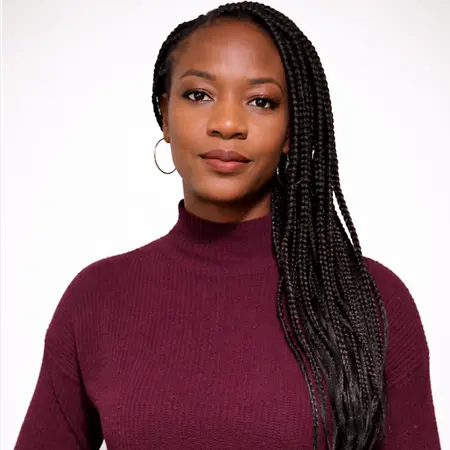
Her Story
About Emely
I have been working as an educator for 8 years, specializing in Montessori education for children from birth to age 6. My journey into this field began after a life-changing experience with my own son, who lost his right leg in a tragic accident when he was young. When he earned a scholarship to a private Montessori school, I was amazed by the respect he received and how the philosophy helped normalize his body and build his self-esteem in the middle of such trauma. I had never experienced that kind of respect as a child growing up in Honduras, so I started reading everything I could about Montessori and knew I wanted to be part of giving children what I never had. I started as a teacher assistant working with infants, then moved to a toddler classroom serving children ages 3 to 6. After two years, I earned my Montessori certificate and became a lead teacher. During my training, I won a scholarship to study with Mariana Bisotto in the Peace Program, which helped me go deeper into the Montessori philosophy and learn how to communicate with parents about child development in ways they can understand. I even participated in video phone calls with her clients' parents. I have also served on hiring committees to help attract people from minority backgrounds to Montessori education, as my school was working to implement diversity. As an immigrant from Honduras and a single mother raising a child with a prosthesis and my own disability in my right arm, I advocate for African American culture and help others understand different cultural perspectives. One of my biggest challenges was fighting to become a lead teacher when there were no Black women in leadership roles at my school. After the death of George Floyd, I made a meeting with my principal to ask why I wasn't being sent for training, and I wanted her to answer why children couldn't see a Black woman as a lead teacher. That conversation opened doors for me. Today, I lead my own classroom, welcoming children into the environment, helping them navigate the space, cope with emotions, stay safe, and communicate with families. I am most proud of having my own Montessori classroom, something I never thought would be possible for me when I started this journey.
Her Interview
Ten minutes with Emely
01What do you attribute your success to?
I attribute my success to my faith. When asked what I attribute my success to, I simply said 'I thumped' - meaning my faith and belief have carried me through all the challenges I've faced as an immigrant, a single mother, and someone fighting for representation in Montessori education.
02What’s the best career advice you’ve ever received?
The best career advice I have ever received is to not bring your emotions into the field. No matter how angry or sad you are, people in the field are not going to see your emotions as something they can relate to. I have learned to not bring my feelings, but to bring facts instead of emotions. This has helped me navigate difficult situations professionally and advocate more effectively for the children and families I serve.
03What advice would you give to young women entering your industry?
I would say to be authentic. Be authentic and love the philosophy. Not just the philosophy you are saying directly, but learn deeply what Montessori really is, so you don't get into something that is not what it's called. Don't be afraid of showing children your own culture. Montessori can be taught everywhere. Montessori can be taught in a good way. Montessori can be any culture, if you know how to apply it. Bring your whole self and your cultural background into the classroom, because that diversity is what makes Montessori education richer and more accessible to all children.
04What are the biggest challenges or opportunities in your field right now?
I think there are a few major challenges in Montessori education right now. One of them is that even though Montessori is well known and such a good philosophy, not a lot of people of color do it. When I was taking my training, there were just two Black women, and both of us were immigrants - one from Africa and me from Honduras. This means there is not a lot of diverse representation and cultural exposure for children in Montessori environments. It's changing from how it was before, but we still have a long way to go. Another issue is that because anybody can call themselves Montessori, not every Montessori school is really providing the authentic Montessori philosophy. Some schools just use the name. For me personally, one of my biggest challenges was that there were no Black lead teachers around me in my Montessori journey. I had to fight to get my Montessori certificate. The doors only opened to me after the death of George Floyd, when the United States went through so much during that time period. I was questioning why I wasn't being sent to do my training even though I was already in the school and asking for it. I made a meeting with the principal and wanted her to answer me why it was not possible for me to get my Montessori training. I explained who I was and what my desire was, and I asked why there were no Black lead teachers in the school. I wanted to know why children couldn't see a Black woman as a lead. That was my biggest fighting challenge.
05What values are most important to you in your work and personal life?
I have a lot of value in respecting everybody's differences. As I respect everybody's differences, I know that people's differences can make humanity see them with not good eyes and not understand child development or what people have been going through. I think one of my biggest strengths is that I have so much awareness of what people are going through, from my own experience, and I do value that. This means I advocate when I see people being mistreated, when I see children being mistreated or being misunderstood. I bring this value in order for people to feel that being unique is important, and they should not be afraid of saying something or advocating for what they value. Coming from my own experiences as an immigrant, a single mother, and someone with a disability, I understand what it means to be different and misunderstood, and I use that to help others feel seen and respected.
Join Influential Women and start making an impact. Register now.