Influential Woman · Technology
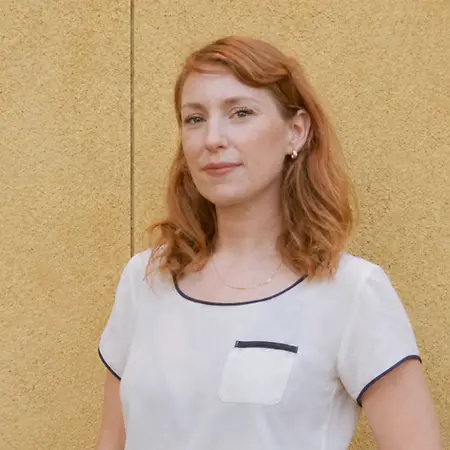
Emily Flynn
Senior CX Content Writer, Dropbox
Boulder, CO 80301
Her Story
About Emily
Emily Flynn is a Lead UX Writer, Content Designer, and content strategy professional with 15 years of professional writing experience, including the past five years focused specifically on AI-driven products and experiences. She is currently based in Boulder, Colorado, and serves as a CX Content Specialist at Dropbox, where she works on the Dash AI product. In this role, she develops Help Center content, agent resources, in-product guidance, and chatbot writing for both internal and external users, ensuring clarity and usability across complex AI-powered systems.
She began her career as a reproductive health advocate immediately after college, building a women’s health-focused business grounded in education and access to information. With early exposure to entrepreneurship through her father, who worked in digital marketing and SEO, she taught herself web content design, SEO, and information architecture to create and grow a localized online platform. As peers and nonprofit organizations saw the impact of her work, she began expanding her writing practice into broader content and UX roles, gradually shifting from one-on-one advocacy to systems-level content strategy and design.
Today, Emily’s work sits at the intersection of technology, ethics, and human-centered design. She is known for writing for users in high-intent, high-stakes environments, where clarity and precision matter more than marketing language. Her experience in reproductive health advocacy continues to inform her approach to product writing, particularly in ensuring users can quickly understand and trust the tools they are using. Alongside her work at Dropbox, she continues to consult in femtech and contribute thought leadership on the intersection of technology, reproductive health, and ethical AI, while previously holding roles at Grammarly and MD Anderson Cancer Center, and studying at Bryn Mawr College.
Her Interview
Ten minutes with Emily
01What do you attribute your success to?
I attribute my success to being a self-advocate. These writing skills are considered quote-unquote soft skills, especially within tech, so being a woman in tech, it's been a lot about standing up for myself and my work, and really pushing to show how important content is. A lot of my writing isn't marketing-focused - it's about meeting users where they already are. They're already in the product, they're already using the feature, and not having to continuously just write in marketing jargon or pushing something on the user. Instead, really meeting them where they are and helping them to understand what they're using. That came from my time as a health advocate too, in these high-stakes, high-stress situations in medical environments. There's not really time for fluff, and it's not about marketing, it's about speaking up for intuition or the knowledge that somebody already has about their body and their health. So once I switched into more traditional tech spaces or even health tech spaces, I really carried those experiences of advocacy into the work that I'm doing with writing. Sometimes you're battling an engineer and you need to be like, you're not a writer, I can't build the product, and you might not be able to write about it. And then from that advocacy, turning that into collaboration also. I think that's been a successful pattern - respectful scope in addition to the advocacy and the work we're able to actually get done together.
02What’s the best career advice you’ve ever received?
The best career advice I've ever received is not losing your sense of self. Even if you are moving from brand to brand, you're having to stick within narrow confines of style guides and brand voice, in the work that you're producing, that doesn't mean that you have to be kind of a robot at work. You can bring a lot of yourself to work. Even when it seems like within technical writing or the design system work that I've done, and the scope feels so narrow and rigid sometimes, it still takes a level of life experience and creativity. I've benefited from mentors and managers and colleagues who have really helped model that - with wit, with compassion, with just life experience, and being able to show how much that can contribute to a writing career that might not look like you're writing a novel at work. Sometimes even technical writing and technical solutions do involve a good bit of compassion, and storytelling, and thinking outside of the box. Getting the advice that that's okay, or to utilize those sorts of less than obvious sources for solutions has been really impactful for me. I feel really grateful to have had people in my life who have advocated for that for me, and have modeled that as well.
03What advice would you give to young women entering your industry?
Let your work speak for itself and take pride in your work. When you show it, don't back down from it. Especially if you're entering into the tech space, you really want to make sure that you don't feel like, if you're going into content design, or UX, or technical writing, don't let people bully you into thinking that you don't know what you're doing. If you have the strong skill set of the type of writing that you're doing, then stick with that. There is a science to it, there is an art to it, there is a method to the madness that sometimes is undervalued. Be confident, learn, be humble to an extent, and learn and be gracious, but if you really know that you have the skills, you might have to be defending yourself even kind of late on in your career, unfortunately, as a woman, especially on the kind of soft skills side, or not necessarily within product. There's strange hierarchies. So, take up the space that you need to take up, defend the work when you know that it's good, and then from there, always be learning and always curious. You don't know everything, but feel firm in knowing what you do know.
04What are the biggest challenges or opportunities in your field right now?
I think a lot of folks who are writers or work in content can probably empathize with content all being kind of lumped into the same specialty a lot of times, and there's actually a lot of different nuance between the different types of content development and the different skill sets that go into that. Sometimes it can be trying to write about or speak to peers and colleagues about the different resourcing, or why it's taking so long to write, or why a writer might really defend something within a style guide, or a certain parameter, brand voice. If certain colleagues are used to the writing looking one way, because maybe they worked at a different firm, or are used to writing with different sorts of agencies or freelance, then they can be a little bit stuck in their ways. There's always a rhyme and a reason, and there's always an architecture to the content development. So it's a lot about trying to advocate for the decisions being made around content, and why certain things look and sound a certain way, or follow certain procedures or certain order. And then also how to be flexible and creative within those confines as well. So it's kind of a double-edged sword sometimes.
05What values are most important to you in your work and personal life?
I would say I value honesty above all things. Honesty and directness. I am an East Coast eldest daughter working in a sort of strange West Coast optimization, kind of passive-aggressive space. And I find, the more I'm in that space, the more I realize that dancing around things, and being indirect, and being dishonest does not help. It's not the rising tide that lifts all boats. It might seem like niceness is the priority when you're working with colleagues and dealing with collaborative efforts, but niceness just at the base doesn't necessarily help get things done, or help real collaboration and real respect happen. Especially as a woman, sometimes directness is not looked upon as being very valuable, or it's intimidating, or people have a bad taste in their mouth about direct women. But I think if you want to show up and work, and you just want to do your 8 hours of work, and do a good job, and be able to shut your laptop off at the end of the day while still creating good content or helping create valuable products, then being able to be direct, and honest, and authentic - I know those are such buzzwordy buzzwords now, and can seem like therapy talk - but really they can lend themselves more towards kindness and collaboration than some kind of fake, flimsy, nice girl at work. I stand by my Philly eldest daughter way of being.
Join Influential Women and start making an impact. Register now.