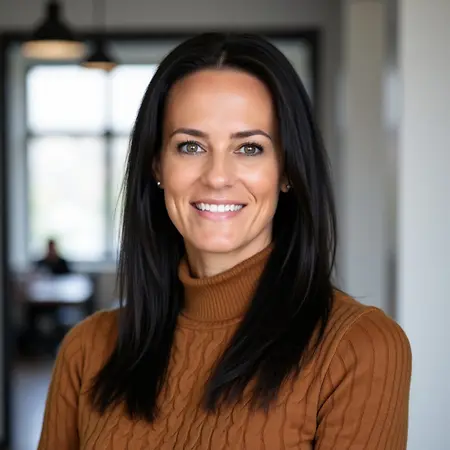
Influential Woman · Supply Chain Management / Oil and Gas
Emily Hullderman, CPIM
Supply Chain Consultant, AuditChain LLC
Houston, PA 15342
Her Story
About Emily
Emily Hullderman, CPIM, is a Supply Chain Executive and founder of AuditChain LLC with a proven track record of transforming complex global supply chain organizations across the oil & gas, manufacturing, pharmaceutical, healthcare, and fintech industries. With expertise spanning strategic sourcing, procurement, inventory management, logistics, materials management, supplier development, operations, financial controls, and organizational transformation, she has successfully led end-to-end supply chain functions supporting multi-site, highly regulated, and publicly traded organizations.
Throughout her career, Emily has built a reputation for solving complex operational challenges, leading large-scale transformation initiatives, and developing high-performing teams. She has directed supply chain operations supporting more than 99 manufacturing and operational facilities across North America, managed organizations exceeding 100 direct and indirect employees, and partnered closely with executive leadership to align supply chain strategy with financial and operational objectives.
Emily's experience extends across every stage of the supply chain—from demand planning and strategic sourcing through manufacturing, logistics, inventory optimization, supplier performance, contract negotiations, ERP implementation, and executive reporting. She has consistently delivered measurable business results, including multimillion-dollar inventory reductions, significant annual cost savings, improved inventory accuracy, optimized transportation networks, strengthened supplier relationships, and standardized enterprise-wide operational processes.
Her leadership experience includes driving SAP-enabled business transformation, implementing inventory governance programs, developing enterprise policies and procedures, leading SOX compliance initiatives, supporting SEC financial reporting, and operating within FDA, ISO, and highly regulated manufacturing environments. At CPI Card Group, she played a key leadership role in strengthening inventory controls, restructuring operational processes, and resolving material control deficiencies while supporting SOX compliance and financial reporting. At Bayer, she successfully navigated unprecedented global supply chain disruptions during the COVID-19 pandemic by developing innovative sourcing strategies that maintained production of critical medical products despite worldwide material shortages and supplier force majeure events.
Today, through AuditChain LLC, Emily partners with organizations to modernize supply chain operations, lead strategic sourcing initiatives, improve inventory performance, optimize supplier networks, implement operational controls, and execute complex transformation projects. She is currently leading end-to-end supply chain optimization and capital project initiatives within the oil and gas industry, including procurement strategy, supplier management, project execution, operational process design, and maintenance system development.
Emily is recognized for combining executive-level strategic thinking with hands-on operational leadership. Her ability to build resilient supply chains, lead organizational change, improve financial performance, and develop strong cross-functional partnerships has made her a trusted leader capable of delivering sustainable results across diverse industries and complex global operations.
Her Interview
Ten minutes with Emily
01What do you attribute your success to?
I attribute my success to the people and managers who believed in me, even when I didn't believe in myself. They know who they are. I can think of two of them right off the top of my head to this day that believed in me, believed in my expertise, wanted to know my opinions, and let me go out and lead without holding me back. They allowed me to think for myself, they allowed me to fix problems without calling them, and they trusted in me. That's huge, and it takes you really far. They are the ones that stand up for you, they're the ones who will reach out when you need something job-wise, they're the ones there going, if you need anything, you just give me a call. Those managers is what makes people who they are, and that's why I take so much pride in helping people under me, because there's been people who take pride in managing myself. We lack that in business nowadays. We lack the leadership, and when people do do that, you can see people who want to grow significantly.
02What’s the best career advice you’ve ever received?
The best career advice I ever received was, first, don't wear your heart on your sleeve, because I would always originally take things personally, and you just can't do that in this business. But I also firmly believe in taking care of your employees, and you'll get it back tenfold. If you want to look at my LinkedIn, I'm extremely proud of the recommendations and the stuff at the very bottom. I've always loved having a team, and I've always created an environment where my team can come speak to me about anything. It's definitely one of the things that helped me grow, but I've also helped other people grow. I take pride in ensuring that the people who work for me actually enjoy working for me and enjoy their job. I think that is hardcore one of the things anyone, anywhere can do - if you ensure that your people feel like they are appreciated and needed, you're gonna get so much back out of them, more than money could ever buy.
03What advice would you give to young women entering your industry?
When I entered the oil and gas industry, women were still a rarity in many operational leadership roles. I was fortunate to join Schlumberger at a time when the company was actively working to increase opportunities for women. In the region where I started in West Virginia, there were only about five women among hundreds of employees. It wasn't always easy, but it was rewarding to be part of that change.
My advice to other women is simple: keep your head up and keep moving forward. The challenges are real, and while we've made significant progress, some barriers still exist. Don't let those obstacles define you or discourage you. Continue proving your capabilities through your work, your leadership, and your perseverance.
At the end of the day, your work, your integrity, and your results will always speak louder than anyone else's opinion.
04What are the biggest challenges or opportunities in your field right now?
While significant progress has been made, I believe there is still work to do to ensure hiring and promotion decisions are based solely on capability and performance.
Another challenge is the changing dynamics of today's workforce. I've noticed a shift in employee ownership and accountability. Earlier in my career, many people treated their responsibilities as if they owned the business. They looked for ways to improve processes, volunteered solutions, and took initiative without waiting to be asked. Today, I more often see employees who are hesitant to act beyond their defined responsibilities or who wait for direction before addressing obvious issues.
I also believe organizations share some responsibility for this shift. Many companies have moved away from clearly defining expectations through comprehensive standard operating procedures and role clarity. When expectations aren't documented, employees are understandably reluctant to step outside their job descriptions. Developing clear processes while empowering employees to think critically and make informed decisions is essential to building engaged, high-performing teams.
The best teams I've led were built on trust, accountability, and empowerment. I encouraged employees to bring forward ideas, solve problems, and continuously improve our operations. When people know they have the support to think independently and contribute beyond the minimum expectations, both the employees and the organization benefit.
05What values are most important to you in your work and personal life?
I definitely value the work-life balance that is starting to become more common, because when I worked in oil and gas, that didn't exist. You're on call 24 hours a day, 7 days a week. I'm kind of still in that field, because you have to be - it runs 24 hours a day, 7 days a week. However, they've become more lenient on allowing you to work from home, work remotely, come into the office for other things, and that really helps inspire employees working at 2 AM. That completely changes things. Also, again, I value having good employees. I value the employees that work for me. I value their education. I value that they get promoted. Warren Whitlow, one of my managers at CPI, he texts me all the time and says, I'm so grateful for everything that you taught me. He now is a distribution manager for a pharmaceutical company. I take so much pride in that, more than I ever have in a job.
Join Influential Women and start making an impact. Register now.