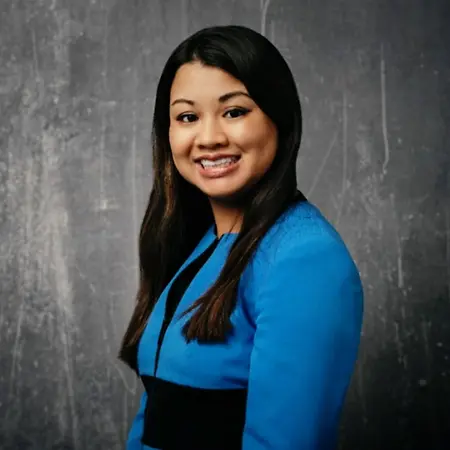
Her Story
About Emily
I've been working in the nonprofit sector for about 8 years, and I'm currently a development officer of institutional giving at the Brookings Institution, a role I just started in January. I began my career on the direct services side doing program implementation and boots on the ground work because I've always had a passion for public service, and I found that nonprofits are the most community-oriented ways to reach traditionally underrepresented populations like immigrant communities. When I was working on the direct service side of things, I was consistently frustrated by the lack of resources available to the communities I cared about, so I eventually made a strategic pivot into nonprofit fundraising so that I would be able to help resource the causes I cared about the most. Throughout my nonprofit fundraising career, I've worn many hats - I've done grant writing, digital fundraising, individual gifts, corporate gifts, government-related things, and now I'm more on the foundation side of fundraising. My current role is very unique because it's related to supporting a think tank and ideas. My fundraising supports themes of ideas within the Brookings Institution like racial justice, climate justice, and economic mobility. Day-to-day, I'm really supporting different scholars that focus on those areas of research, which includes taking brilliant ideas that they have started to develop and identifying funders where there's strong alignment, preparing different meetings with funders, researching opportunities for collaboration amongst the scholars and amongst funders, and above all, just really looking for new trends and opportunities to continue the great work that's being done in creative ways. I'm a huge fan of system building and innovation, and I've had the privilege of working for nonprofit organizations where there traditionally has not been a culture of fundraising, really building up the confidence both internally in the team and externally among funders to recognize the nonprofits I've represented as major players in the field. One specific achievement I'm really proud of is from my previous role at the Asian and Pacific Islander American Health Forum, where I supported their fundraising efforts for an annual health equity conference which focused on the intersection of racial justice and health equity for Asian Americans, Native Hawaiians, and Pacific Islanders. The way we did it was very inclusive, community-based, and something that was very meaningful for both the policy community and the public health community.
Her Interview
Ten minutes with Emily
01What advice would you give to young women entering your industry?
The main advice that I would give is be curious, but be curious in a way that is strategic. Always be searching for questions, and I definitely am the type of person who does not think that there's such thing as a stupid question, but I do think that there is such thing as an intelligent question. So when you are asking questions, ask for things that are either going to support you in terms of building your long-term leadership path or build rapport within the team you're hoping to build, beyond just the deeper surface area questions, because that's what's going to distinguish someone as they're building their leadership abilities.
02What are the biggest challenges or opportunities in your field right now?
In the nonprofit fundraising field, I see the nonprofit sector as really filling the gaps in the world that we live in. For example, the U.S., very notably, has a very challenging healthcare system, so compared to other countries, there's a huge number of healthcare nonprofits. And with the world being as chaotic as it is today, there's an even deeper need for the work that we're doing. But it can at times be overwhelming because there's so much growing need, just politically and interpersonally amongst the community. So that's both an opportunity but also a challenge in terms of looking for where there's really the most priority for growth, but also looking for where there's the most priority for collaboration and solving interconnected problems.
03What values are most important to you in your work and personal life?
I'm always big on the concept of whole person leadership, so that you can't really be actualized as a leader unless you are actualized in your self-identity. For me, and I talk about this openly, I was adopted from China at a very young age, so reconnecting with my heritage is something that's a big part of that leadership journey. I'm currently enrolled to take Mandarin courses, and then next fall I'll actually be taking a heritage trip back to China with other adoptees. That's a big goal as part of my leadership and personal journey. Beyond that, on the more professional side, I think in general just growing in my understanding of what it means to be a good mentor and how that ties both into my job professionally but my role within the community. I've had the privilege to serve on boards and help mentor people at different stages in their career. Making sure that as I'm developing my own form of whole person leadership, that I'm also being cognizant of how people lead differently and honoring that in the way that I mentor folks.
Join Influential Women and start making an impact. Register now.