Her Story
About Emma
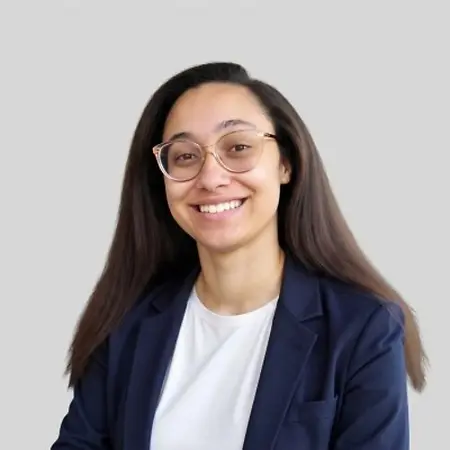
Emma Sackett is a Certified Phlebotomy Technician (NHA-CPT) currently serving as a PRN Phlebotomist at Mountain View Hospital while continuing her education and pursuing a future career in public health and healthcare law. With almost five years of healthcare experience, she has developed expertise in patient care, clinical education, curriculum development, and competency-based instruction. Her professional philosophy centers on the belief that healthcare is about people first, combining technical excellence with compassion, professionalism, and patient advocacy. Prior to her current clinical role, Emma served as a Phlebotomy Instructor at Mountainland Technical College, where she designed curriculum, developed competency-based assessments, created instructional resources, and mentored more than 180 students in technical skills, professionalism, and workforce readiness. Her experience also includes laboratory work at Brigham Young University–Idaho's Student Health Center and providing direct support services for individuals with disabilities. Throughout her career, she has remained committed to fostering supportive learning environments while maintaining compliance with healthcare standards and best practices. Emma earned an Associate's Degree in General Studies from Brigham Young University–Idaho and a Certificate in Phlebotomy Technician/Phlebotomist from Mountainland Technical College. She holds national certification as a Certified Phlebotomy Technician through the National Healthcareer Association (NHA), has completed continuing education in Trauma-Informed Student Support, and has earned multiple CDC training certificates. In addition to her professional responsibilities, Emma actively serves in volunteer leadership roles within her community and remains dedicated to advancing healthcare through education, advocacy, service, and lifelong learning.
Her Interview
Ten minutes with Emma
01What do you attribute your success to?
I attribute my success to a strong work ethic, attention to detail, continuous learning, and a genuine desire to help others succeed. Whether I am caring for patients, mentoring students, or developing educational materials, I strive to create meaningful experiences that build confidence, critical thinking, and compassion. I believe healthcare is about people first, and I approach every opportunity with collaboration, professionalism, creativity, and a commitment to making a positive impact.
02What’s the best career advice you’ve ever received?
My friend Kate once told me: "Do not let the setbacks of life that happen to all of us ever become an excuse to quit trying." This stuck with me and has since become a life mantra because it does an amazing job at redefining what failure is. It's not personal rather it's universal. What separates people isn't whether they struggle, it's whether they let the struggle write the ending.
03What advice would you give to young women entering your industry?
You're going to miss a vein. Everybody does. Don't let one bad stick shake your confidence for the next patient; they need you calm, not spiraling. Ask questions constantly in your first year, especially once you start to feel comfortable. This is when curiosity will matter most, not less. However, don't forget to keep asking questions! Technical skills can get you hired, but how you make a scared patient feel is what they'll actually remember. It's also what will carry you on the hard days: the combative patients, the impossible veins, the back-to-back draws with no break. And don't think of this field as a ceiling. It can be a foundation and I know this because it is my foundation as well. Lastly, never underestimate how critical the work of a phlebotomist is. Every diagnosis, every treatment plan, every 'we caught it early' starts with a sample that someone drew correctly. Phlebotomists aren't a footnote in healthcare we're the first data point in someone's care.
04What are the biggest challenges or opportunities in your field right now?
I believe one of the biggest challenges in phlebotomy right now is that it's still widely misunderstood. Many see it as 'just a poke,' when the reality is we're trained to assist clinicians in clinical determinations. Our accuracy can determine whether a diagnosis is right, a treatment plan starts on solid ground, or a disease is caught early and so much more. This misunderstanding isn't just a perception problem, it shows up in how we're staffed, compensated, and how much room we're given to actually connect with the people in front of us. Especially as patient populations get sicker and more complex. But I see all of this as an opportunity too. Healthcare is leaning harder into prevention and early detection, which means the accuracy of the first blood draw matters more than it ever has. It's the starting point for every diagnosis that follows, and it gives phlebotomists a real chance to be seen as essential to outcomes, not just a task on a checklist. There's also a growing appetite for accessible health education, and I believe phlebotomists are uniquely positioned to meet it. We're often the first laboratory face a patient sees, which makes us natural educators and advocates. Every time we educate someone, advocate for ourselves, or simply do the work with care and precision, we chip away at the misunderstanding and prove this field is a launchpad, not just a landing spot. For me, it's been both: a place I've grown in, and a place that's carried me toward public health and eventually healthcare law.
05What values are most important to you in your work and personal life?
I value compassion, continuous learning, collaboration, professionalism, integrity, and service. I believe healthcare is about helping people feel confident, capable, and genuinely seen. Whether I am working with patients, students, or colleagues, I strive to lead with empathy, support others through education and advocacy, and contribute to environments where both patients and healthcare professionals are empowered to succeed.
Join Influential Women and start making an impact. Register now.