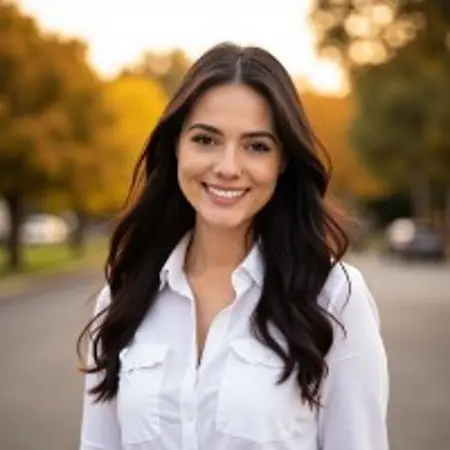
You know the saying, "where there is a will, there is a way"? It's true. Sometimes you just have to want something more than the man sitting next to you.
Erin Salano · In Her Own Words
Her Story
About Erin
Erin Salano (She/Her) is a Conservation Biologist and Environmental Scientist based in Santa Fe, New Mexico, with a career focused on wildlife conservation, environmental compliance, and habitat protection. She began her professional journey in July 2024 as a Wildlife Biologist with the New Mexico Department of Game and Fish (Department of Wildlife) shortly after completing her Master of Science in Biology from the University of Kentucky. She accepted the position prior to graduation and relocated to New Mexico to begin her work in ecological and environmental planning, marking the start of her career in state wildlife management. During her time here, she collaborated with the Department of Transportation on a large-scale wildlife corridor initiative designed to reduce wildlife-vehicle collisions, including major infrastructure projects such as a $50 million wildlife crossing in northern New Mexico that supports safe passage for species such as elk, mountain lions, and bears. Erin also worked closely with the Department of Defense on their Resource/Land Management plans and contributed to the Western Association of Fish and Wildlife Agencies' drafting of the Western Monarch Butterfly Conservation Plan. About a year and a half into that role, Erin transitioned to the New Mexico Department of Transportation where she accepted the role of Environmental Scientist and Bat Specialist During her time at Game and Fish (Department of Wildlife) Erin. In her current position, she is responsible for writing categorical exclusions and biological evaluations for major infrastructure projects, ensuring compliance with NEPA state and federal environmental regulations. Her work includes conducting biological surveys for protected species under the Migratory Bird Treaty Act and the Endangered Species Act, documenting wildlife presence through field observations, and coordinating closely with engineers and consultants to develop mitigation strategies that reduce impacts to ecosystems, including water quality, vegetation, and wildlife habitats. A core aspect of Erin’s work involves bat conservation and pre-construction assessments, where she serves as the first responder for bridge inspections to determine bat presence and coordinate safe exclusion prior to demolition. She also collaborates with archaeologists to ensure cultural resource compliance, particularly on projects involving tribal lands such as the Navajo Nation. Through this work, Erin integrates ecological science, engineering collaboration, and tribal partnership to support long-term landscape connectivity, wildlife conservation, and environmental stewardship.
Her Interview
Ten minutes with Erin
01What do you attribute your success to?
As a first-generation student, I have always been motivated to prove myself—not only for my own future, but to make my community proud. I attribute my success to the strong foundation my mother provided, which instilled in me discipline, resilience, and a sense of purpose. I have also been fortunate to have supportive mentors, including my graduate school advisor and his wife, as well as a professor at the University of Arizona, who believed in me and encouraged my growth. Their guidance, combined with my own ambition and drive, provided a glimpse of what was possible. Me? I am a go getter, so I came and I conquered.
02What’s the best career advice you’ve ever received?
Don't let the fear of failing hold you back.
03What advice would you give to young women entering your industry?
I would say don't let what everyone tells you dictate what you do. When I was almost done with my master's, I had a position open at Berkeley with a lab that did urban ecology, and everyone and their mother was like, you need to go, you need to go. But I would literally just be doing it for the title and the clout. The advisor told me right off the bat that I would have to have two additional jobs in addition to teaching, and I'm just like, well, I don't know if I want to do that anymore. I kind of want to start working, I kind of want to start my life. If I want to have children one day, I don't want to do it when I'm 40 and I'm barely getting my career started. But that pressure from everyone was so hard to walk away from. So that's what I would say - trust your instincts, follow your dreams. Because people always laugh at you, but if you really want to do something, it really is true that waking up and wanting to go to work is pretty great. Find and chase your purpose. Chase your purpose. Don't give up on your dreams, and don't let the opinions of others dictate the choices you make, because it's your life, and at the end of the day, you're the one that's gonna have to live with the consequences of the choices you make.
04What are the biggest challenges or opportunities in your field right now?
Definitely being a minority, being a woman, in a very male-dominated field. I walked into a training the other day, there was 46 of us, and out of those 46, 11 were women. It's super male-dominated, especially because at the DOT, there's a lot of construction and surveyors and permitting monitors and all that good stuff, so it's mostly men. In my team, there's 4 of us, I am the only female, and I am the only person under 40. Sometimes it's not a challenge, but it's just very different, coming from my background into such a male-dominated field with all this different experience and privileges, because they're men, and they're white. I also face a lot of imposter syndrome sometimes. I constantly feel like I need to do more, like I'm not pushing myself hard enough, and then I touch base with my supervisors, and they're like, no, you're doing great, you show initiative, this is rare, but I still feel like I need to do more. This feeling of I'm not doing enough is always looming over my head. Currently, moving from the Department of Wildlife into the Department of Transportation, I feel like I've gotten definitely a lot of judgment from the wildlife biology community, because they're like, oh, well, now you work for the Department of Transportation, and there's such a misconception that the DOT is MVD, which is motor vehicle division, and it's not. People think that's what I do. So they're like, how did you give up a job where you worked with animals to now work with the DOT? And I'm like, I'm doing the same thing I was doing at the Department of Wildlife, I just got a $15,000 increase, which helps me have a better quality of life. So that's probably the biggest one, just facing this criticism and judgment from my peers and colleagues because of the semi-career change in their eyes. It's really not, but yeah. It's far from my family too - they're in Phoenix, they're in Arizona, and they don't plan on moving to New Mexico. As your parents get older, you want to be close to them. And some people don't take you seriously because you're young.
05What values are most important to you in your work and personal life?
I always thought that if I have children, I don't care what they end up doing, as long as they become a productive member of society and just get back to their community and care about other people. I am kind of trying to do that as well, and I care about nature, I care about animals, and this is kind of the way that I feel like I can truly impact their well-being and their existence. I definitely was put on this earth because I have a higher purpose, and I'm so excited. There's so much life ahead of me, and this is just the beginning, so I'm very excited to see what life brings.
Join Influential Women and start making an impact. Register now.