Her Story
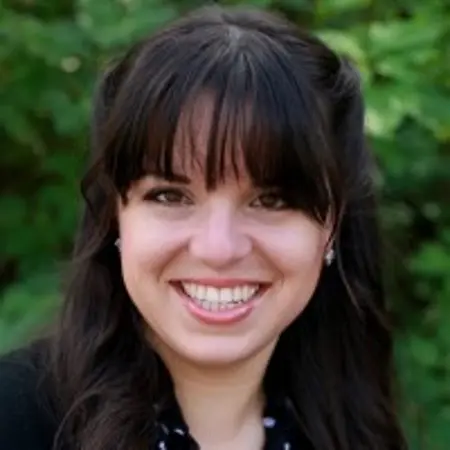
About Erin
Erin K. Smith serves as Director of Learning Sciences and Innovation at Socrates Preparatory School, where she has dedicated approximately 11 years to advancing innovative educational practices. In her current leadership role, she combines classroom instruction with the development, research, and piloting of new educational programs. Among these initiatives is a passion exploration program that she organized and now implements alongside students and facilitators. Her professional expertise encompasses educational leadership, support for neurodivergent learners, executive function development, and the thoughtful integration of emerging technologies such as artificial intelligence to help address executive function challenges and educator burnout.
Smith holds a Bachelor of Arts in German with a minor in Music from the University of Northern Colorado. Her approach to education is shaped by a commitment to lifelong learning, curiosity, and creating practical tools that help both students and educators navigate academic and personal challenges. She is particularly interested in helping learners strengthen executive function and emotional-management skills while encouraging them to develop individualized strategies, or personal “toolboxes,” that promote independence, resilience, and sustainable growth. She credits her professional accomplishments to her tenacity, the encouragement of mentors and family, and an enduring desire to make a meaningful contribution to education by helping reform systems and practices that did not adequately serve her as a student.
Beyond her professional responsibilities, Smith demonstrates a strong commitment to service and community involvement. She volunteers with First Descents as a therapy dog handler, supporting young adult cancer survivors, and organizes the Light the Night Walk for Blood Cancer United, through which she helped raise $3,500. Her personal and professional values are grounded in integrity and curiosity, which she views as essential to meaningful growth and lifelong learning. Through her work with students, educators, and community organizations, Smith seeks to create environments where people can develop greater self-awareness, resilience, independence, and confidence while learning how to manage challenges without internalizing the struggles of others.
Her Interview
Ten minutes with Erin
01What do you attribute your success to?
I attribute my success largely to tenacity, a strong sense of purpose, and a genuine desire to make a meaningful contribution to the world. I have always felt that I was meant to make a difference, even when I did not have a clear vision of what that purpose would look like. Over time, I have come to recognize education and educational reform as central to that purpose, particularly my desire to help create a system that serves students better than the system that served me. I am also motivated by the opportunity to share solutions when I overcome challenges, because I find great fulfillment in helping others grow, develop, and navigate difficult experiences more effectively. At the same time, I remain committed to my own growth and lifelong learning. I am deeply grateful for the teachers, parents, family members, friends, mentors, and supporters who have encouraged me, challenged me, and believed in me throughout my journey. Their influence, combined with my persistence and commitment to helping others, has shaped both my success and the way I approach my work.
02What’s the best career advice you’ve ever received?
The best career advice I have received is to learn how to remain empathetic without taking on other people’s emotions and struggles as my own. I naturally care deeply about others, and when someone is experiencing strong emotions, I have sometimes found myself absorbing those feelings rather than simply being present and supportive. A mentor recently helped me recognize this pattern, and that awareness has been incredibly valuable. I have learned that observation is the first step toward meaningful change, much like the scientific method, and becoming more conscious of my emotional responses allows me to recognize when I am carrying something that does not belong to me. This has helped me maintain empathy and compassion while also protecting the focus and energy I need to support others effectively. I have come to understand that I do not have to internalize someone else’s emotions in order to care about them or help them.
03What are the biggest challenges or opportunities in your field right now?
I believe one of the biggest challenges in education today is the unrealistic number of responsibilities placed on educators. Teachers are often expected to wear countless hats, work well beyond their contracted hours, and meet increasingly complex demands while managing significant stress and limited support. While compensation remains an important issue, I believe the challenge extends beyond pay to educator well-being, workload expectations, and access to meaningful mental health and professional resources. At the same time, these challenges present tremendous opportunities to reform how we support educators and how we design learning systems for a much wider range of learners. Education needs to move beyond standardized approaches and place greater emphasis on creativity, adaptability, communication, empathy, stress management, and executive function. I am particularly passionate about supporting neurodivergent learners and helping students develop practical tools for executive function and self-regulation. My own experience recognizing that task initiation is one of my executive function challenges showed me how transformative it can be to understand how your brain works and develop strategies that address those challenges. I believe every learner should have the opportunity to build a personal toolbox of strategies, supports, and technologies that help them navigate areas where they may struggle. Ultimately, I see an enormous opportunity to create a more flexible, human-centered education system that recognizes different ways of learning and equips both students and educators with the tools they need to thrive.
04What values are most important to you in your work and personal life?
Integrity is the most important value in both my professional and personal life. I want my actions to consistently reflect the person I intend to be so that others can rely on me, trust me, and know what to expect from me based on how I conduct myself. To me, integrity means being consistent, dependable, trustworthy, and accountable, particularly when it comes to honoring confidentiality and treating others with respect. Beyond integrity, curiosity and lifelong learning are also central to who I am. I genuinely love learning, asking questions, and discovering new ideas, and I believe curiosity is essential to personal growth as well as humanity’s ability to evolve and improve. I strive to approach both my work and my life with an openness to learning, growing, and finding better ways to contribute to the people and communities around me.
Join Influential Women and start making an impact. Register now.