Her Story
About Eve
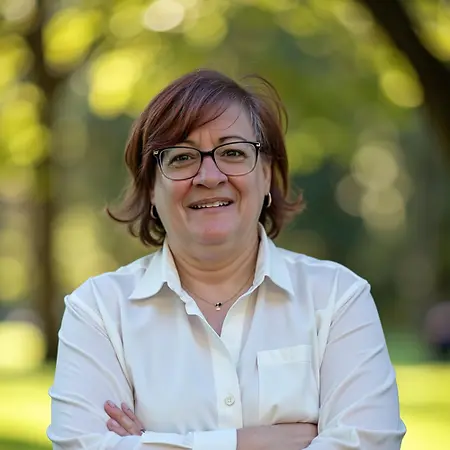
Eve Murphy is a Technical Lead for Application Integration at AMAROK Security, where she leads enterprise automation and system integration initiatives across cloud-based SaaS platforms. She specializes in designing and implementing scalable integration solutions using Workato iPaaS, helping streamline business processes, reduce manual workloads, and improve operational efficiency. In her current role, she also serves as a technical architect and team lead, guiding cross-functional stakeholders, removing system blockers, and ensuring seamless data flow across business applications.
Prior to joining AMAROK, she spent more than 14 years at Workiva, where she advanced through multiple roles including Salesforce Administrator/Developer, SaaS Operations Engineer, and Senior Integration Engineer. During her tenure, she helped build and scale internal training programs, supported enterprise cloud adoption, and mentored interns—many of whom transitioned into full-time roles. Her work focused heavily on cloud-based financial systems, automation, and improving user confidence in enterprise software through structured onboarding and support systems.
Earlier in her career, she began in military service in logistics and software systems in 1986, where she supported large-scale supply chain operations, including a critical systems conversion for the 82nd Airborne Division shortly before deployment. She later worked on government and defense-related contracting projects involving organizations such as Boeing and Lockheed Martin, and contributed to university systems modernization efforts involving database and secure data architecture. She earned her degree from Saint Leo University in Business with a concentration in Computer Information Systems, and her career has consistently centered on automation, systems integration, and mentoring teams to build efficient, scalable technical solutions.
Her Interview
Ten minutes with Eve
01What do you attribute your success to?
I attribute my success to several key factors that have shaped my journey. First and foremost, I have an innate drive to always learn new things and stay relevant. My kids, who are 21 and 24, keep me current and connected to what's happening in the world. I've also learned that the normal milestones in a person's life are irrelevant to me - I'm turning 60 this year with a 21-year-old, and that perspective has freed me to focus on what truly matters. Tenacity, resilience, and creativity have been essential, along with my willingness to redefine what I call success over and over again. I've learned not to avoid help for mental health - when I had two challenged kids, of course I went to therapy, because there are things you simply can't control. I've had traumatic events in my life, but I don't let them define me, just like I don't let my children's injuries and chronic illnesses define them. One of the most important lessons I've learned is to be as graceful to yourself as you are to the people around you. I didn't feel successful until I started being graceful with myself, allowing myself recharge time, letting everything drop and then picking up the pieces that matter, and partnering with my manager when projects weren't going as planned instead of just giving up. What really makes me tick is mentoring that mentality and skill set in the interns that come up through my team and then get hired as full-time employees, watching them evolve and knowing I had a part in that journey.
02What’s the best career advice you’ve ever received?
The best career advice I ever received was from my first supervisor in the military, who told me: if you hold a slot on my team, you're gonna do the job. That simple statement taught me that if you're there, you're there for a reason - be successful, be as successful as you can be, and don't set your own limitations. What holds people back the most is them setting their own limitations. I took that advice to heart immediately. The day I was promoted to E4, I walked into our admin section and asked for the worksheet for E5. They looked at me like I was crazy - I had just been promoted that day - but I told them my goals had changed and I needed to know what those new goals were. I was promoted to E5 seven months later, the shortest time possible. My advice has evolved over the years to include: don't hold yourself back, find a way you can relate to what you're learning, and you don't have to work on anybody else's timeline for your professional evolution. Make it as relatable to you as you need. Another piece of advice that shaped me came from my dad, who said don't do what you love for a living, because then it becomes work and you don't have anything to fill your bucket when you're off work. I've found a way to balance that - I'm a creative person who does artistic things, but I'm not in an art field. I still use creativity in my work, but art is reserved for decompressing and filling my bucket.
03What advice would you give to young women entering your industry?
My advice to young women entering the tech industry is multifaceted and comes from hard-earned experience. First and foremost, own your success. We as women have this habit of being too hard on ourselves and controlling too much. It's very typical for a woman to get praise and say 'I'm just doing my job,' but when something goes wrong, they take full responsibility. Why is that? Give credit to the team as a whole, but don't diminish your own contributions. I watch my interns refuse to use positive verbiage when sharing their accomplishments, and I ask them, why not? Say 'Great news! We brought this in a week ahead of time. Looking for your feedback.' Own your success - it's not taught, especially in the tech industry where everything going well means you did your job, but something going wrong means you failed. Choose your companies carefully for the experience they can give you, but if you are not feeling valued, if you're not feeling energized, and you're going home feeling like a failure, define what you're looking for and look elsewhere. Network and find the right company, because the wrong company can destroy your self-esteem. You have to have confidence to push that button when you're getting ready to go live with something, and if you're at a company where you know they're gonna fire you if something goes wrong, how likely are you to have confidence taking risks and learning new things? Practice self-advocacy and be aware of the toll work is taking on your body, your psyche, and your mental health. Everything is technology these days, so if you're in a STEM field, don't think that because you took a job, you're there forever. If it's not healthy for you, find the next job - but ask the right questions in the interview. Finally, be approachable and start conversations with people. We're all learning, especially at the pace that technology evolves, no matter what level you're at in the industry. We're all in the same swimming pool, so don't stare at each other thinking the other person knows more than you do.
04What are the biggest challenges or opportunities in your field right now?
The biggest challenge and opportunity in my field right now both center around artificial intelligence. AI is everywhere, but it means a different thing for every company, and every company is trying to enable it somehow without understanding what it can do and without understanding the risks involved. This has created a kind of sideline market that's in tandem with traditional integrations and STEM-type data management. The critical issue is that you have to understand the foundation before you can push it through AI - AI doesn't take the place of the foundation, and that's terrifying. As a company, we had to put safeguards in place because there are simply so many public AI platforms, and we don’t allow company data on public servers, which was a serious concern. The opportunity side is equally significant: STEM, data, and technology exist at every company now. Everything, every company, no matter what, has this type of department. That means there are endless opportunities for people in this field. However, the challenge is that the people who are buying the solutions and being sold the possibilities may not be understanding what AI really means - they're following the buzzword. We need to be thoughtful about safeguards and ethical integration as the industry continues to evolve, and we need to understand AI beyond surface-level implementation.
05What values are most important to you in your work and personal life?
The values most important to me center around accountability, growth, and meeting people where they are. My number one value is not having fear of accountability. It's not a matter of whether your automation made a mistake - it's gonna happen at some point - it's about knowing how to fix it and what you do after to make it better. I ask people in interviews about their biggest mistake and what they did after to fix it, because you need to own all of it - your successes and your failures. Your failures actually lay the groundwork for better successes, but people are afraid of that word. Failure is subjective, especially in the IT field. You could have a totally successful project that's in place five years later and still feel like a failure if you delivered it one month late, but that's really not a failure. I've learned that things are never complete in my field - you turn something in, put an automation in place, but you still have to manage it, maintain it, and evolve it as the software evolves. My mantra, both personally and professionally, is to meet people where they are. Personally, I tell myself to be the person you wish was in your life when you were a child. Professionally, I believe in being the leader you wish you worked for when you first started working. It's about understanding individuals while helping them evolve personally and professionally. I don't expect people to learn my communication style - I change the way I deliver information until I see that aha moment. It's not about making people conform and forget their past, it's about meeting them where they are and helping them evolve. That's why I was a good foster parent and why I believe I'm an effective leader.
Join Influential Women and start making an impact. Register now.