Her Story
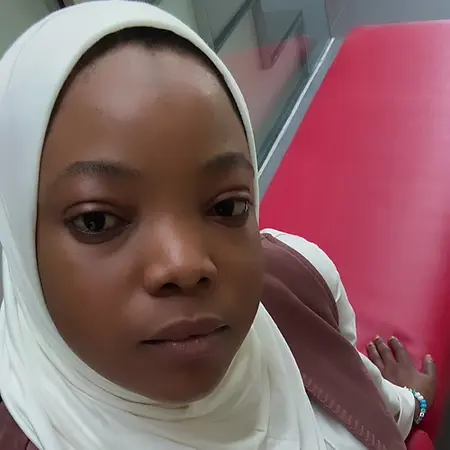
About Fatima
Fatima Muhammad is a biochemistry and molecular biology researcher and academic currently serving as a Research Assistant at New Mexico State University. She focuses on protein biochemistry, molecular biology, protein expression and purification, molecular structure and function, and gene knockout and overexpression studies. She previously worked as an Assistant Lecturer at the Federal University of Technology Minna, where she taught multiple areas of biochemistry and supervised laboratory and student research. She holds a bachelor's and master's degree in biochemistry and is pursuing a PhD in molecular biology. Her work involves using bacterial models to study gene functions through deletions, complementation, and mutations to understand protein roles and develop insights for new drug discovery.
Her Interview
Ten minutes with Fatima
01What do you attribute your success to?
I attribute my success to perseverance, a strong commitment to continuous learning, and the support of mentors, family, and colleagues who have encouraged me throughout my journey. I have learned to see challenges not as reasons to stop, but as opportunities to grow, adapt, and become better at what I do.
As a scientist and educator, curiosity has also been a major driving force in my journey. I am constantly motivated by the desire to understand, discover, and contribute knowledge that can make a meaningful difference. My experiences in teaching, research, and pursuing a PhD have taught me the importance of discipline, resilience, and being willing to learn from both successes and setbacks.
Most importantly, I believe success is not defined solely by individual accomplishments, but also by the impact we have on others.
Being able to mentor, teach, encourage, and create opportunities for others, particularly the next generation of scientists is an important part of what success means to me.
02What’s the best career advice you’ve ever received?
The best career advice I’ve ever received is to never be afraid of starting again, learning something new, or stepping outside my comfort zone. Growth often happens when we are willing to embrace challenges that initially seem beyond our abilities.
I have carried this advice with me throughout my career, especially as I transitioned from teaching biochemistry to pursuing advanced research. I’ve learned that I don’t need to have everything figured out before taking the next step. What matters is being willing to learn, ask questions, remain persistent, and keep moving forward.
I’ve also learned not to measure my journey against someone else’s timeline. Every experience be it a success, setback, or unexpected change can contribute to the scientist, educator, and person I am becoming.
03What advice would you give to young women entering your industry?
My advice to young women entering science and research is to believe that you belong in every room your hard work has earned you a place in. Be curious, ask questions, seek out mentors, and never be afraid to admit when you do not know something. Science itself is built on asking questions and finding answers.
Do not allow setbacks, failed experiments, or moments of self-doubt to define your potential. Many at times, the greatest growth comes from learning how to troubleshoot, adapt, and try again. Build a strong support network, embrace opportunities that challenge you, and be intentional about developing both your technical skills and your confidence.
Most importantly, do not feel that you have to become someone else to succeed. Bring your own perspective, experiences, and ideas to the table. Your voice matters, and your journey may ultimately inspire another young woman to believe that she belongs there too.
04What are the biggest challenges or opportunities in your field right now?
One of the biggest challenges in my field is the growing threat of antimicrobial resistance. As bacteria continue to develop resistance to existing antibiotics, there is an urgent need to understand the molecular mechanisms that allow pathogens to survive, adapt, and cause disease, and to identify new therapeutic targets beyond traditional antibiotics.
At the same time, I believe this challenge presents an enormous opportunity for molecular biology and protein biochemistry. We are increasingly able to investigate bacterial systems at the molecular level and uncover processes that were previously poorly understood.
My own research reflects this direction by studying bacterial proteins involved in essential processes such as metal acquisition and cellular adaptation, with the broader goal of understanding vulnerabilities that could eventually be exploited therapeutically.
Another exciting development is the rapid integration of artificial intelligence, computational protein-structure prediction, advanced mass spectrometry, and increasingly powerful structural and biophysical techniques into biological research. These technologies are accelerating how we predict protein structures and interactions, generate hypotheses, and investigate disease mechanisms. However, experimental validation remains essential.
I see the future of my field in combining these emerging technologies with rigorous experimental science to translate fundamental molecular discoveries into practical solutions. For young scientists like me, this is an exciting time because we have an opportunity not only to understand how microorganisms work, but also to contribute to innovative strategies for addressing major global health challenges.
05What values are most important to you in your work and personal life?
Integrity, perseverance, continuous learning, and compassion are some of the values that guide both my work and personal life. As a scientist, integrity is especially important to me because meaningful research depends on honesty, careful work, and the willingness to follow the evidence, even when the results are different from what we expected.
Also, I value perseverance. Research has taught me that progress is rarely a straight path. Experiments fail, ideas evolve, and unexpected challenges arise, but I believe there is always something to learn from the process. I try to approach those moments with curiosity, patience, and a willingness to improve.
Beyond professional accomplishments, I value service and the positive impact we can have on others. My experiences as both an educator and a researcher have strengthened my belief in sharing knowledge, supporting others, and creating opportunities for those coming behind me. Ultimately, I want my success to be measured not only by what I accomplish, but also by the knowledge I contribute, the people I inspire, and the difference I make in my community and beyond.
Join Influential Women and start making an impact. Register now.