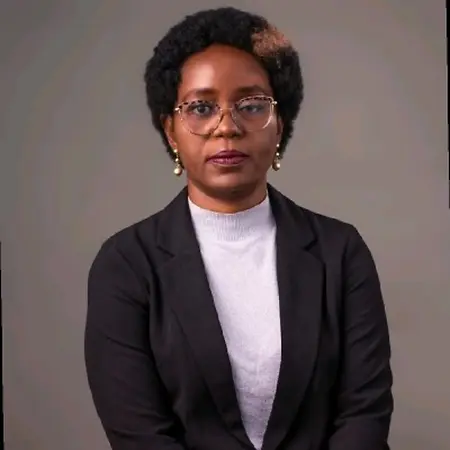
Her Story
About Felicia
My path as an educator and microbiologist has evolved significantly over the past 16 years. I started with transforming biomass and food resources into innovative, useful products, then moved into deep investigation of antimicrobial resistance among tropical pathogens and the critical implications for public health, which is what I am still doing right now. My focus has always been to advance industrial, environmental, and analytical microbiology by bridging my molecular research background with practical applications. I work to convert complex information from raw samples collected in the environment into something that people will be able to understand. Whether I am investigating the prevalence of multidrug-resistant E. coli in clinical settings, studying how irrigated vegetables are potential routes for transmission of certain strains of enterobacteria, or evaluating groundwater quality in industrial areas, my goal is to ensure that the invisible biological pathways that connect environmental factors to human health and survival are made visible and actionable. As Associate Professor and Head of Biological Sciences, I have learned to prioritize a culture of academic excellence and strategically establish institutional growth wherever I find myself. I have joy when I'm able to bring students, whether a student that is afraid of the lab or the calculations, to understand that laboratory techniques are simple and can easily be understood. I have been able to mentor over 100 undergraduate and postgraduate students, teaching them that microbiology is not just about working in the laboratory alone, but that the laboratory itself is an open door for them to attain their potential in life.
Her Interview
Ten minutes with Felicia
01What do you attribute your success to?
I attribute my success first to God. I believe in God, and I believe He is able to help me. I believe in prayer, so I attribute my success first to God. Then, the fact that I am resilient. I don't allow my environment to deter me from whatever I want to do. I try as much as possible to ensure I am able to do everything possible that is right and authentic to resist whatever hindrance I am encountering in whatever I want to achieve. Even in teaching my students in the classroom, I inculcate this in my being committed to passing the information that I have to them. When I applied for the Seeding Lab grant the first time, I wasn't given the grant. I went over a second time, and I got the grant. I was so happy. I do not believe that there is anything that could determine me from achieving whatever I want to achieve.
02What’s the best career advice you’ve ever received?
The best piece of advice I have ever received professionally came from my PhD supervisor. He told me that I should never assume that the data speaks for itself. I should be the voice for the data. As a scientist, when I am deep in academic research, there's a tendency for me to get lost in the metrics that I get from the data. He told me that the data that I collect is not what will change whatever policy I want to change by the research that I am carrying out, but that I should be the voice to interpret that data to policymakers and to ordinary people in my environment, so that policies can be changed. In other words, what he was trying to tell me was that my data should not just remain on the table or on the shelf in my office, but I should ensure that whatever data I'm able to get, I make a voice out of it and bring it to the policymakers and to the ordinary people in my environment. That really shaped my entire philosophy as an educator and a leader. It's made me realize that my job isn't just to find the truth under the microscope, but to communicate it with enough clarity, to communicate it with warmth, to make it accessible so that others can understand it and use it to protect their environment and their communities.
03What advice would you give to young women entering your industry?
I would tell young women entering microbiology and biotechnology to embrace the grits of the discipline. They should not allow anyone to limit them into being just a classroom lecturer or just a bench scientist. They should believe that they can lead departments, they can secure life-changing international grants, they can consult at national level, and they can mentor the next generation all at the same time. I would like to encourage them to refrain from how they look at failure. In molecular science and biotechnology, humans fail constantly. Sometimes the gels that you want to run don't run correctly. Sometimes the hypotheses that you put forward are disproven by lab experiments that you are carrying out. In my journey, I have learned that it's not a personal defeat. It is simply raw data. It is a signpost telling me which direction to try next. When you lose the fear of making mistakes, you gain the absolute freedom to innovate and to lead.
04What are the biggest challenges or opportunities in your field right now?
The biggest challenge in my industry currently is how to interpret whatever results we get from our experiments in the lab to the ordinary people who are directly affected by these results, especially those who are illiterates or semi-literates. It's a general thing in my industry, especially in Africa. There is a kind of gap between those that are literate and the illiterate. As a literate person who is a scientist, it's difficult for you to go to those illiterates and tell them about what you did in the lab, especially as a microbiologist who deals with organisms that you can't see with the ordinary eyes. You need to be innovative, you need to be resilient in passing information to be able to pass whatever information you have to these people. Another biggest challenge in my career, especially in Africa, is the access to equipment. Those equipment are expensive, and most of the parents that send their children to schools are not ready to pay as much. Most of the institutions cannot use state-of-the-art equipment, and so they are limited in a way with the kind of laboratory experiments that could be done with the students. One of my biggest challenges is the silent, silent spread of the global resistance system. What I mean by global resistance is a reservoir of antibiotic-resistant bacteria that builds up in our soils, in our water system, in our communities. This threat is invisible to the naked eye, and it is difficult to get the public and policymakers to treat it with the vital urgency that it deserves.
05What values are most important to you in your work and personal life?
The values that are important to me in my workplace and my personal life are authenticity, inclusion, and being committed to lifelong learning. By authenticity, I mean showing up as a real and approachable human being. I don't believe in science as an exclusive club. In my classroom and labs, I want my students to see me as a mentor who has walked the same path, made mistakes, and remained constantly curious. By inclusion, I mean I am actively building scaffolding for those who feel left behind in the class. If a student is intimidated by a lab environment or struggling with foundational concepts in microbiology or in whatever I'm teaching, my value system dictates that I should not ignore such students. I meet with such students where they are and pull them up. I want to build spaces where students of all backgrounds feel they are represented and have the courage to contribute to scientific progress. In terms of relationship and integrity, for me, it's everything. Whether I am collaborating with an international researcher, peer reviewing a manuscript, or spending time with my family, how we treat each other and the truth we rebuild is what ultimately defines a successful life relationship.
Join Influential Women and start making an impact. Register now.