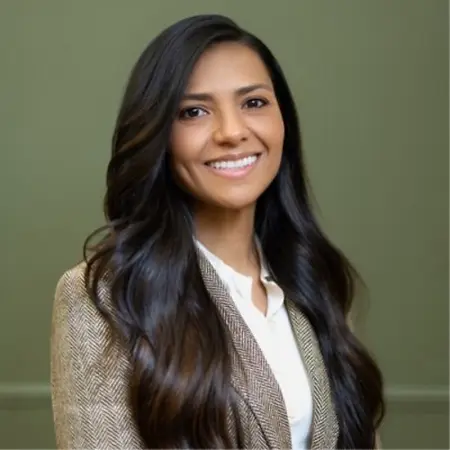
Her Story
About Fernanda
I have been serving the nonprofit sector since 2009, starting as a volunteer and transitioning to professional roles in 2013. My work has centered around education and social development. Throughout my career, I have been deeply committed to promoting access to higher education and opportunities for leadership and community development. As an underprivileged student and DACA recipient who came to the United States from Brazil at age 15, and had no family in this country for 18 out of my 24 years here, I understand firsthand the challenges faced by under-served communities. My community rallied around me, helping me fund-raise to complete my education, which drives my sense of responsibility to continue investing in social impact work and creating opportunities for others and is what I am most proud of in this journey. I am currently seeking new opportunities in the philanthropic, corporate social initiative, and nonprofit world where I can continue to make a meaningful and tangible difference.
Her Interview
Ten minutes with Fernanda
01What do you attribute your success to?
I attribute my success to lots of determination and compromise. I was in school for 14 years of my life and earned 4 degrees (1 of which is not accredited in the US), which meant I had to compromise on my social life to dedicate myself to studying and learning. You must be determined about what you want, and work hard and be humble; I think that's one of the most important indicators of success. If you can get dreamy and creative in that process too, that's what gives you the motivation. If it's all hard work, then it's not good, but the excitement of what people can build together for impacting positive change is what will keep you going. I also give credit to my communities, because for the last 4 years of my education, my community pushed me to start a fundraiser, and around 165 people supported me over the course of four years, helping me fund-raise over $60,000 to finish paying for my degrees. Without them and without their love and support, especially with all the challenges and attacks on DACA, I would not have been able to get here.
02What’s the best career advice you’ve ever received?
The best career advice I've ever received is to prioritize fostering good relationships. I think that's the most valuable component in collaboration and in creating solutions together. Once you have good, solid, healthy relationships in place, it makes it a lot easier to maintain good processes and results. Especially in a very transactional and aching world that we live in, there's even more value in tending to those who are closest to us.
03What advice would you give to young women entering your industry?
I would definitely tell them to follow what's is already working out well for them, what is in their heart, what feels right and true to them, because there are so many ways that you can express your passion in this industry. There are so many very exciting things and a variety of essential work to be done, but we must focus on what's most important to us and how we can best contribute, and potentially even in new ways than what's already being done. Especially in the social impact field, which is most of the work I've done, there's a lot of pressure to abide to groupthink, and if you don't think alike, you are not always treated fairly and may even be perceived as a problem. But we must be able to stand for what we believe in and test things out. Even if you don't feel like you're making a significant difference, if you're impacting one person, one life, just with a small action, that's already some real change. That still matters a lot.
04What are the biggest challenges or opportunities in your field right now?
The biggest challenges right now are definitely locking down nonprofit funding. With nonprofits, there's just a lot of shifting priorities and fear around money, considering all the public administration noise and shifts that we've had in the country. Corporations and donors have become a lot more conservative or strategic about how they spend their money, and so that's been a real struggle for nonprofits in maintaining and retaining their staff for that reason. I would also say freedom of speech has definitely been a challenge over the last couple of years. Nonprofits workers, volunteers, and advocates just haven't had sufficient freedom, without punishment or unfair consequences, for simply advocating and doing humanitarian work. Another challenge is maintaining team cohesion and productivity in today's hybrid and remote culture of work. Those are the top three challenges that I have personally witnessed the most in my field over the last decade.
05What values are most important to you in your work and personal life?
The values most important to me are integrity, kindness, generosity, and resilience. I think we live in a world where there has been increasing entitlement to what we deserve, and as access to a lot of things have become easier and quicker. And I want to be clear, we do deserve very good things and when we need them. But I believe refusing to take responsibility and to cooperate towards positive change, and walking away even from problems that are easily solvable, is not always the answer. I think building on problem solving and conflict resolution creativity and resilience is really important for progress, personally and professionally.
Join Influential Women and start making an impact. Register now.