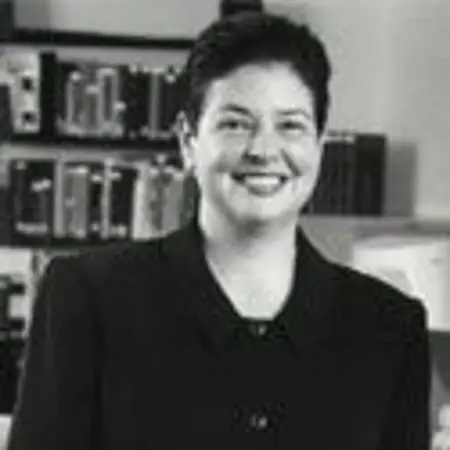
Her Story
About Filippa
I started my career in legal education 35 years ago at Northeastern University Law School, where I was the director of the Law Library and a faculty member, and I actually got tenure there. Since 2002, I have been at Boston College where I am the Associate Dean for Library and Technology Services and director of the Law Library. I am a tenured faculty member and I teach a course that I designed called Mindfulness and Contemplative Practices for Lawyers. I am MBSR (Mindfulness-Based Stress Reduction) certified and also certified in Mindfulness Institute for Emerging Adults meditation. I lead meditation sits and lecture frequently on contemplative practices and mindfulness for lawyers because they are in such a high-stress position. I am very interested in student formation and helping lawyers find relief from the secondhand trauma they experience and the stress of such a high-stress job. I found mindfulness about a dozen years ago as a daily meditator, and it is something I have loved sharing. I have given up the other courses I used to teach, like art law, semester in practice, and advanced legal research, because I just see even more and more of a need for mindfulness. So many of our students are really faced with a lot of stress in the legal profession, and it has become even more competitive than ever. They really need a valve where they can experience some calm and equanimity, build up resilience, and to me, mindfulness hits all of those points. I recently co-authored an article with Beth Cohen from Western New England School in the Boston Bar Journal on the transition from law school into practice for lawyers. I co-chair the Legal Education Committee subcommittee of the Massachusetts Supreme Judicial Court's Standing Committee on Lawyer Wellbeing with Beth Cohen. Before legal education, I was in law firms, and before I got my law degree, I was actually in public libraries.
Her Interview
Ten minutes with Filippa
01What’s the best career advice you’ve ever received?
A nun named Sister Maureen Joseph once told me something that really stuck with me. I was saying I wished my girls would study more, and she said, 'Philippa, your girls are not you.' It was so neutral, so true. We just want what's best for our children, but they are not us. That advice helped me understand that everyone has their own path and their own way of doing things.
02What are the biggest challenges or opportunities in your field right now?
AI is going to make big, big changes in all of these fields. I think some things will be good, but I don't really trust it 100 percent. We have to sort of embrace it, otherwise we'll be left in the dust, but I just think there are no stops on it, there are no safeguards. I think it's a real energy hog, and I think it's going to have deleterious effects on the climate and on our well-being. One of the things I'm afraid of with AI is that we can appreciate what AI can do because we know how to do something the old-fashioned way, but people who have learned to use AI without really thinking a problem through, that's what I'm afraid of. The legal profession is a rather conservative profession based on precedent and what went before, and I think it makes people a little bit uptight sometimes. The people who practice are a little bit more like they conform, and that's why sometimes some of the really famous lawyers are people who don't conform. It's hard to have that confidence to be different. There is even more and more of a need for mindfulness because so many of our students are really faced with a lot of stress in the legal profession, and it has become even more competitive than ever.
03What values are most important to you in your work and personal life?
I really don't see myself as anybody really important, or what I do, I just really enjoy it. I'm basically a classic caregiver, and for me, helping people in some small way gives me a lot of feeling that I'm making a difference. I really love people and I like helping people, and that's basically it. I don't like to see people used as just seeing one side of them. When people work with us, we've got to get to know them, their families, their family situations, what their problems are. I kind of see a holistic view of who this person is, not just what this person can bring. I think when people know you care about them like that, I think they do better work. I wrote an article on servant leadership and how important it was, and that's leadership where the job of the leader is to just make everybody who reports to that person succeed. The leader kind of clears the way to make it easier for people, or takes away obstacles, or helps them overcome obstacles in order for them to realize their best selves, not a leader who takes credit for things. I practice radical humility, and I have found that it allows you to be closer to people. Some of my mistakes have taught me and have really been helpful. I feel this is all gravy, and I'm so grateful for everything I have. I think gratitude is another thing that helps.
Join Influential Women and start making an impact. Register now.