Influential Woman · Visual Journalism and Science Communication
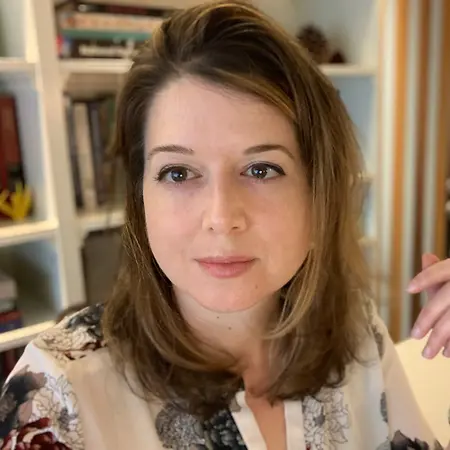
Fiona Martin
Visual Journalist at The Seattle Times | Founder of Visualizing Science
Seattle area, WA, 98109
Her Story
About Fiona
Fiona Martin is a Visual Journalist at The Seattle Times and founder of Visualizing Science, where she specializes in transforming complex scientific and environmental information into clear, compelling visual narratives. With more than 20 years of experience in visual science communication, she has built a career at the intersection of science, illustration, and journalism, helping audiences understand systems and processes through diagrams, maps, and data-driven storytelling. Her work is grounded in the belief that well-designed visuals can make science and other complex topics more accessible, trustworthy, and understandable.
Her journey began after meeting a medical illustrator at a high school science and math career fair, an experience that inspired her to pursue a B.S. in Marine Science and a Graduate Certificate in Scientific Illustration at the University of California, Santa Cruz. Despite being told by an academic advisor in environmental toxicology that there was "no future" in illustration and encouraged to remain on a traditional research path, she chose to follow her passion for visual science communication.
That decision launched a career spanning academic publishing, scientific collaboration, and public engagement. Fiona spent many years at the nonprofit scientific publisher Annual Reviews in Palo Alto, where she partnered with leading researchers from around the world to refine and enhance scientific figures for publication in peer-reviewed journals. She later expanded into independent consulting, spending more than a decade as a freelance science illustrator and contractor for organizations including NOAA's Climate Program Office, the National Park Service, scientific publishers, and research institutions. Throughout that work, she helped translate complex research into engaging visuals for diverse audiences.
After joining The Seattle Times, Fiona brought her scientific background and visual storytelling expertise into journalism. She now produces breaking-news graphics, maps, data visualizations, and explanatory illustrations covering science, health, public policy, economics, and environmental reporting.
Her work has been recognized with multiple professional honors, including contributing to the Pulitzer Prize Finalist series Tunnel Vision, an investigation into efforts to restore urban salmon streams in Washington state. She remains committed to helping audiences understand complex issues "at a glance" through visual storytelling and systems thinking, and credits journalism as the place where her scientific and artistic interests fully converge.
Fiona has a rare genetic hearing loss, with approximately 80% hearing loss in her left ear and 50% in her right. Throughout her career, she has relied on a combination of assistive technology, speech reading, and AI-powered captioning tools to navigate communication challenges. These experiences have shaped both her approach to problem-solving and her commitment to making information more accessible and understandable for others.
Her Interview
Ten minutes with Fiona
01What do you attribute your success to?
I attribute my success to a combination of curiosity, persistence, and a commitment to lifelong learning. Early in my career, I was inspired by a medical illustrator and decided to pursue formal training in scientific illustration, even when some people questioned whether it was a practical career path. That experience taught me the importance of trusting my instincts and pursuing work that genuinely interests me.
Since founding Visualizing Science in 2005, I've continually expanded my skills to meet the changing needs of visual communication. I started as an illustrator, but over the years I've added data visualization, mapping, publication design, reporting, and front-end development to my toolkit. Some of my most rewarding projects have come from being willing to learn something new and step outside my comfort zone.
I've also been fortunate to build strong, long-term relationships with colleagues and clients, including organizations such as NOAA, NPS, and, more recently, collaborative teams at The Seattle Times. The best work happens when talented people bring different perspectives together to solve communication challenges.
Most importantly, I've never lost sight of the goal behind the work: helping people understand complex topics and see the world in a new way. Whether I'm illustrating ocean ecosystems, visualizing climate data, or creating graphics for investigative journalism, that sense of purpose continues to motivate me every day.
02What’s the best career advice you’ve ever received?
Early in my career, while interning at a company that created illustrations for science textbooks, I had the opportunity to show my portfolio to Ed Bell, then an editor at Scientific American. I was hoping to work there someday, so I was eager to hear his feedback.
He told me my illustrations were strong, but one piece stood out to him: a chart I had created about childhood vaccines. He encouraged me to do more work with data because, in his view, that was where visual communication was headed. This was nearly 20 years ago, long before "data visualization" became a common term.
Looking back, his advice was remarkably prescient. Today, data-driven storytelling is everywhere—from interactive graphics in major national publications to maps and charts in local newsrooms. That conversation taught me the importance of paying attention to emerging trends and being willing to expand your skill set.
03What advice would you give to young women entering your industry?
Don’t underestimate the value of your perspective. Journalism and visual communication are strongest when people with different backgrounds and experiences have a seat at the table. Women bring important viewpoints, empathy, and insight that can help stories resonate with audiences in meaningful ways.
I would also encourage young women to think beyond simply presenting information and consider how people connect with it. Whether you're communicating science, public policy, or community issues, facts matter—but so do emotion, representation, and trust. Some of the most effective communication creates a dialogue, helps people see themselves in the story, and meets audiences where they are.
Finally, be willing to experiment and take creative risks. Some of my most rewarding projects have come from exploring new approaches, including climate-themed comics developed through a fellowship project. Humor, storytelling, and creativity can open doors to conversations that data alone sometimes cannot. We recently launched early prototypes at www.itsgettinghotinhere.com and hope to continue developing the series. The field is constantly evolving, and there is plenty of room for new voices and fresh ideas.
04What are the biggest challenges or opportunities in your field right now?
One of the greatest opportunities in visual journalism is collaborating with talented reporters to help audiences understand complex topics. Visual storytelling can make difficult concepts more accessible, engaging, and memorable. I recently contributed to the Pulitzer Finalist series Tunnel Vision, which examined Washington state's efforts to restore salmon habitat in urban waterways. By allowing readers to follow a salmon's journey through an interactive stream environment, we transformed a complex infrastructure and environmental story into an experience that was intuitive and relatable.
A continuing challenge is helping people recognize the value of visual communication as an essential part of journalism, not simply a supplement to the written story. Graphics, illustrations, maps, and data visualizations can reveal patterns, provide context, and make information easier to grasp at a glance. As information becomes increasingly complex and audiences have less time, visual journalism plays an increasingly important role in helping people understand the issues that affect their communities.
05What values are most important to you in your work and personal life?
I believe in curiosity, transparency, and helping others understand the world around them. The motto at UC Santa Cruz, Fiat Lux—“let there be light”—captures much of what motivates me. I’m fascinated by what lies beneath the surface, both literally and figuratively. Whether I’m illustrating ocean ecosystems, visualizing geological processes, or explaining a complex policy issue, I enjoy uncovering hidden layers and making complicated ideas more accessible. There’s something deeply rewarding about helping people see and understand something they hadn’t before.
Join Influential Women and start making an impact. Register now.