Influential Woman · Mental Health, Holistic wellness
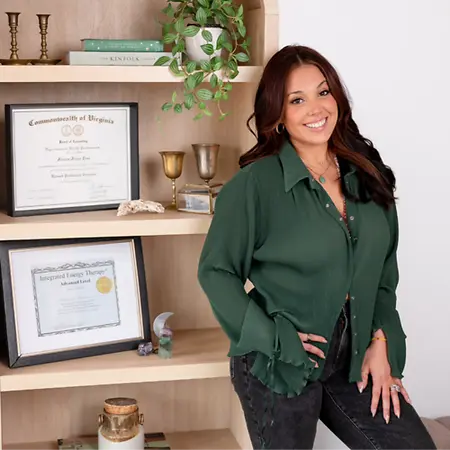
Frances Rosa
Owner of Rosa Luna Collective & Psychosomatic Integrative Therapist, Rosa Luna Collective
Burke, VA 22015
Her Story
About Frances
Frances Rosa, LPC, is a licensed therapist with over 13 years of experience in trauma-informed mental health and integrative wellness. Her work centers on helping women recover from burnout, trauma, and chronic overwhelm through nervous system regulation, somatic care, and holistic healing practices. As the owner and co-founder of Rosa Luna Collective, a women-owned wellness brand, Frances blends clinical expertise with integrative approaches to support women through life transitions, emotional healing, and nervous system restoration. Her work bridges evidence-informed mental health practices with intuitive and body-based modalities, creating spaces where women can reconnect with themselves and rebuild resilience. In addition to her clinical work, Frances develops educational content and community programming that makes complex topics like trauma, emotional regulation, and burnout accessible to wider audiences. Through workshops, digital platforms, and community experiences, she has built engaged online communities while advocating for a more human-centered approach to mental health and wellness.
Through Rosa Luna Collective, Frances is committed to helping women move out of survival mode and into a more regulated, empowered way of living.
Her Interview
Ten minutes with Frances
01What do you attribute your success to?
I attribute my success to my access and opportunity to learn and collaborate with other industry leaders, none of which would be possible without the love and support from my family. Throughout my career, I have developed a deep respect for the complexity of the human experience. I’m a licensed mental health counselor with over a decade of clinical work, multiple certifications, and extensive training in trauma-informed care. I truly love this field and the work of supporting people through some of the most vulnerable moments of their lives.
At the same time, working inside traditional mental health systems has shown me the limitations of how healing is sometimes defined. Insurance structures often require therapists to translate very human experiences into clinical language or measurable treatment goals. While evidence-based practices are incredibly valuable, healing doesn’t always follow a perfectly structured format.
Sometimes people don’t need a worksheet or a perfectly worded goal. They need space to vent, cry, reflect, and sit in the mess of what they’re going through without feeling like their pain needs to be justified in clinical terms.
That perspective is part of what led me to create Rosa Luna Collective and integrate somatic and nervous system work into my practice. Insight is important, but understanding alone doesn’t heal the body. Healing happens when the nervous system feels safe enough to process and integrate what someone has experienced.
My work focuses on bridging those worlds—honoring evidence-informed mental health care while also recognizing that healing is deeply human, embodied, and relational. When people are supported in both their mind and their nervous system, that’s when real transformation becomes possible.
02What’s the best career advice you’ve ever received?
The best career advice I ever received came from my dad. During a time when I was feeling overwhelmed as a new graduate, drowning in student debt, working for minimum wage, and trying to figure out how to build a career from nothing—he told me, “One day you’ll look back at this and laugh.”
At the time, it actually frustrated me because I felt like no one understood how heavy everything felt. I had passion and a dream, but very little financial stability and a lot of uncertainty.
What I didn’t realize then was that all of those early experiences, between the late nights studying, the office work, building relationships with clients, and navigating the growing pains of starting out, were shaping the resilience and perspective I would eventually rely on.
Looking back now, I understand what he meant. Those challenges were part of the expansion that led me to my work today. By staying the course and continuing to show up for the work I cared about, I didn’t just build a career. I discovered my calling, and in building my business, I found a deeper understanding of myself as well.
03What advice would you give to young women entering your industry?
The advice I would give to young women entering this field is to value authenticity over trying to be palatable to everyone. Early in your career it can feel like you need to appeal to the widest possible audience, but the truth is that meaningful work happens when you learn to love the work you do and the people you are truly meant to serve. General care is important, but what makes someone truly impactful is the courage to be one of one. That kind of presence only comes from authenticity. Stand out. Be bold. Take a stance. Speak in your real voice. When you nurture the space that feels true to you, you create something that can genuinely support others without abandoning yourself in the process. In my experience, the most sustainable and fulfilling work happens when you build something rooted in who you are, rather than trying to shape yourself into what you think people want you to be.
04What are the biggest challenges or opportunities in your field right now?
One of the biggest challenges in the mental health and wellness field right now is balancing accessibility with sustainability. There is an increasing demand for quality mental health care, but many systems still struggle to make that care both affordable for clients and sustainable for highly trained practitioners.
Insurance limitations, administrative burdens, and outdated reimbursement structures often create barriers on both sides. Clients may struggle to access the support they need, while clinicians with extensive training and experience are frequently under-supported or under-compensated within traditional systems.
At the same time, this moment also presents a powerful opportunity. There is growing awareness around mental health, nervous system care, and the importance of holistic wellbeing. More people are seeking approaches that look at the whole person, mind, body, and environment, rather than treating symptoms in isolation.
I believe the opportunity moving forward is to continue expanding access to education, preventative care, and integrative approaches while also advocating for systems that better support the professionals doing this work. When we prioritize both accessibility and practitioner sustainability, we create a healthier ecosystem for everyone involved.
05What values are most important to you in your work and personal life?
The values that matter most to me in both my work and personal life ultimately come back to the people who are most impacted by my wellbeing—my children, my husband, and my extended family. They are the reason I care so deeply about living and working in a way that feels authentic and aligned.
For me, authenticity means being energetically and psychologically connected to the work I do in my community while also honoring my own mental health and boundaries. I’ve learned that balance isn’t something that just happens; it requires intention, support, and self-awareness. I prioritize my own wellness and have maintained my own mental health support for many years because I believe you cannot sustainably hold space for others if you’re not also caring for yourself.
There’s a common phrase that says “you can have it all,” but that hasn’t always been my lived experience. What I’ve learned instead is that where we give our energy matters. When I’m aligned with my values alongside prioritizing wellness, boundaries, and meaningful work, I’m able to show up more fully for the people who matter most.
My work is deeply rooted in supporting women and community wellbeing, but that drive ultimately comes from the understanding that the greatest impact I will ever have is in the lives of the people who know me most personally, especially my children, who will remember how I lived, how I showed up, and how I made them feel.
Join Influential Women and start making an impact. Register now.