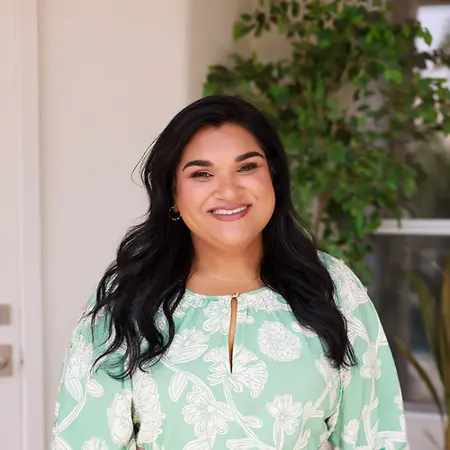
Influential Woman · Healthcare Technology
Gauri Behari
MD
Endocrinologist and Physician Innovator, Axis Endocrinology
Phoenix, AZ 85014
Her Story
About Gauri
My path to medicine was unconventional. I started in finance, working for Vanguard selling mutual funds and running my own income tax preparation business. I opened my first office in a low socioeconomic area of Phoenix, where I helped undocumented immigrants file taxes and apply for tax ID numbers. That experience changed everything for me. I realized my passion wasn't in finance, but in helping underserved people who just wanted to live good lives and needed help getting there. When I went to medical school in the Caribbean, I got a taste of what it's like to work in areas without the resources we have in the U.S. I chose to do my residency in internal medicine in rural Louisiana, where a percentage of my patients couldn't read or write and would sign with an X. They were the most welcoming, kind, appreciative people I'd ever met. I a,so had patients who had to pick which labs they could afford based on the cash in their wallet. That confirmed this was the population I wanted to serve. I did my fellowship in endocrinology back in Phoenix, where I got exposed to the Veterans Health Administration. The VA gave me a pathway to care for underserved veterans, and with my business background, I had a knack for innovating and creating new programs. I helped develop the telehealth program the Phoenix VA in 2019. When the pandemic hit in March 2020, I was one of only a small group of people nationwide with this expertise. I built a national tele-emergency care program that connects veterans with emergency physicians, nurse practitioners, or PAs in real time. That program is really successful: We can resolve two-thirds of cases remotely, and the time from when they call to when they get their prescription can be as little as 45 minutes. I left the VA in February to start my own consultancy, where I help healthcare tech startups build products that are culturally sensitive and health-equitable. I also educate them on making innovations accessible to underserved populations, not just wealthy people. I've set up a private endocrinology practice where I see patients and educate people about hormonal and metabolic health. I also have a podcast titled, "Get a Grip with Dr. Gauri Behari," which is a podcast for high achievers navigating professional self-doubt and workplace challenges, from freezing in meetings to people-pleasing and leadership ambivalence. Co-hosted with Natalie Bulger, it's evidence-based but unscripted — real talk over polished performance.
Her Interview
Ten minutes with Gauri
01What do you attribute your success to?
I'm a firm believer that the energy I put out into the world is the energy that I'm going to attract back. If I put out positive energy, I'm going to attract positive energy back. The best way for me to be successful is to help other people be successful. If I put my energy into helping other people open doors for themselves and rising high into being what they can do, that's only going to feed back to me in other ways as well. I'm not competing against other people. We're in this together, trying to solve the same problems together. Let me see how I can help them, because creating that network and sharing that positive energy is the thing that changed everything for me. The second thing is resilience inspired by watching other people do hard things. My parents are immigrants who came over from India in the 80s, and watching them navigate a whole other country in a whole other language, living paycheck to paycheck my whole life - they're so strong and resilient. Every time I go through something difficult, I think, okay, I can do this. They did this really hard thing, the thing I'm doing doesn't even compare to that level. I can get through this hard thing, too.
02What advice would you give to young women entering your industry?
Trust yourself and trust your instincts, because everything you've learned, everything you've gone through, has given you the skills that you have today to navigate whatever's thrown at you. It may not feel like you've learned the whole time, but subconsciously, we recognize patterns and things, and that's what our instincts tell us - hey, yes, I should do this, hey, I shouldn't do that. If something's telling you to pause, ask yourself, why? What's happening right now? What does this remind me of? Is this something that's me just being fearful because it's new, or am I being fearful because this reminds me of another situation that didn't turn out so well for me? A friend of mine shared this visual with me: crossing from one moment in your life to another is like a raft that you've put together, and it's really clumsy, because you've tried one thing, then you go back to land, and you fix it, and you try another. By the time you cross and get to this next journey that you're starting, and you look at that raft, it's not pretty. It's not one of those pretty ones that you can get at REI. It's a really messy one that doesn't look cute, and you would probably never show anybody all the mistakes you made to have to get there. But when you look at it, you're really proud of it - I did that. I crossed this rocky body of water to get to the other side, and so while my raft doesn't look pretty, I made it, and I know everything that went into making it. Even if things are messy, and even if I'm clumsy and I make a lot of mistakes, I'm always proud of the things I did to get through those things to get to the other side. I want people to appreciate the raft that they built.
03What are the biggest challenges or opportunities in your field right now?
I think the biggest challenges are that in the U.S., we have a lot of people who have chronic, complex diseases, and we do a really good job of identifying how we can fix them, but sometimes those treatments are not accessible. The second thing is, we've got AI entering medicine and healthcare at a rapid pace, but we need to make sure that it's implemented safely, and that people are comfortable using it, because if we're not careful, the existing healthcare disparities we have are going to widen. If the only people comfortable using AI are wealthy people, then the people who are going to benefit from all these innovations are going to be the wealthy people, and that will create that divide bigger. I think the biggest thing we need to do as a society is just remember when we think of solutions for things, we need to think of all possible people that could benefit from that solution, and what are we going to do to make that solution accessible? If we come out with a new medication, and it's $1,000 a month, well, that means people who help out our society, whether they're school teachers or crossing guards or police officers, then they can't afford that. And then what was the point of having that innovation? I don't view it as just a challenge - I view it as an opportunity to unite all of us. I think the world is really divided right now, but the way we can become more united is we can all agree that everybody deserves good healthcare and deserves an opportunity to be healthy.
04What values are most important to you in your work and personal life?
I think being honest and authentic and transparent is critical. I don't know how to be fancy and be polished, and when I try to, I don't feel like myself when I'm doing that. That's the thing that makes my patients trust me. During the pandemic, I got interviewed by the media for something pandemic-related for veterans, and I had a veteran, one of my patients, tell me the week after, 'You're the same person, whether I see you in clinic or I see you on TV.' My patient's trust in me is worth the world to me. I will never do anything to break that trust. You have to really trust in yourself, to just be yourself all the time, but also be comfortable with that vulnerability, because it's not always easy being yourself, especially when you're in a room where everybody else is different than you.
Join Influential Women and start making an impact. Register now.