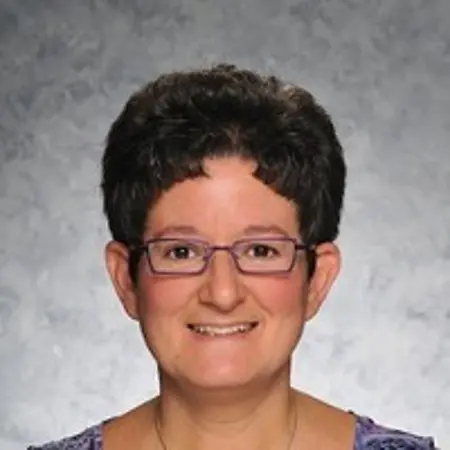
Her Story
About Gayle
Gayle S. Bieler is a nationally recognized leader in data science, artificial intelligence (AI), and advanced analytics whose career has been defined by innovation, entrepreneurship, and mission-driven impact. Over the course of 40 years, she built a remarkable career at the intersection of statistics, data science, computing, and scientific research focused on improving society. After earning both her bachelor’s and master’s degrees in Mathematics with a concentration in Statistics from Boston University, she briefly worked in the pharmaceutical industry before realizing she wanted her work to contribute to the greater good rather than simply drive profit. That realization led her to RTI International, a nonprofit research institute whose mission to improve the human condition deeply aligned with her values and aspirations.
At RTI International, Gayle forged her own unconventional and entrepreneurial path, gravitating toward projects and people that allowed her to solve meaningful problems while wearing many different hats. Her work spanned toxicology, epidemiology, public health, federal survey research and official statistics, clinical research, justice and public safety, software development, and statistical methodology, including contributions to tests for chemical carcinogenicity, one of which became widely adopted by organizations such as the FDA and the National Toxicology Program.
In the mid 2000s, as she began reading daily about the emerging field of data science in society, she recognized its transformative potential for science and research long before it became mainstream. Seeing that RTI and similar traditional research organizations lacked formal data science capabilities, she stepped forward to build what would become the Center for Data Science and AI. Although she initially hesitated to lead the initiative due to a good case of imposter syndrome, she ultimately embraced the opportunity and spent the next 11 years building the Center from the ground up into a thriving team of 37 data scientists, engineers, software developers, and designers.
Under her leadership, the Center established a nationally respected capability that transformed not only RTI’s research approach but also influenced the broader public-sector analytics landscape, solving important national and local community problems. Known for her deeply people-centered leadership style, Gayle built her team around mentorship, collaboration, and mutual trust rather than transactional management. She consistently prioritized the growth and success of her staff above personal recognition and takes great pride in helping shape the careers of emerging professionals while demonstrating what thoughtful, empowering leadership can look like. Following her departure from RTI after nearly four decades, she transitioned into consulting and professional mentorship, continuing to advise organizations on data science, AI, and organizational analytics while serving on the Board of Advisors for the Elon University Center for Organizational Analytics. Today, she remains actively engaged in conversations around the current state and future of federal official statistics, artificial intelligence, and the role of AI in scientific research, while also dedicating time to personal wellness, fitness, creativity, and the next chapter of her life and leadership journey.
Her Interview
Ten minutes with Gayle
01What do you attribute your success to?
I attribute my success to finding work that became a calling rather than just a job. For me, there are careers, there's jobs, and there's causes - and when it becomes a calling, you're willing to withstand a lot of things and go the extra mile all the time. That really adds up to success. You need some smarts, certainly, and you have to spend years being good at something and building up a good reputation. But all of that derives from believing in something. If you don't like your job, you're not going to go the extra mile, whatever part of your career you're in. I'm a cause-driven person, and when I find something I love, that I'm passionate about, that I believe in - that's what motivates me. You also need a good work ethic. But the key for me has always been perseverance and following something I think is important. If you're just assigned things and you're not really committed to them, you're going to do mediocre work.
02What’s the best career advice you’ve ever received?
Gayle believes the most important career lesson is to pursue work that genuinely matters to you and to stay adaptable as industries evolve. She emphasized the importance of remaining intellectually curious and continuing to learn, especially as technology rapidly changes the workplace.
03What advice would you give to young women entering your industry?
First, gain the technical skills in whatever field you're in. Be known as someone who gets stuff done and is continuously learning and innovating in their field. Be willing to take some risks and be good at things. When you first start, you don't know what you don't know, so do all the work that comes your way and take all the opportunities. You'll meet people, figure out what you like and don't like, and then start becoming more choosy about finding your own work to do, people you like to work with, and areas you want to work in. In the beginning, just take it all in, do it all, do as much as you can, get things done well, and keep learning. But you've also got to keep your eyes open - not only in the company you're in, but in the industry and in the world. Know what's going on in the world. That's how I figured out data science was coming before anyone else in my company - I knew it back in 2008 because I connected the dots. AI is such a big thing now and it's going to affect everyone and everything. You can't just sit back with your head under the covers or heads down doing the work you're given. You've got to know what's going on in the world, and that will give you ideas about how you want to steer your life. It does get tricky mid-career because you can get tired of what you started doing. Then it's kind of like, do you live a life of quiet desperation or do you find something else? Knowing what's going on really helps you gain perspective on your industry, why you're doing what you're doing, how it affects things. Follow the trends - what's coming? How is AI going to affect me? What should I be learning? What other skills should I be working on so I don't get displaced by it?
04What are the biggest challenges or opportunities in your field right now?
The biggest challenge I see is maintaining the trust and integrity of federal statistics and research institutions. Statistical work in the federal government is under siege right now because of lack of funding and massive staffing cuts - remember when Elon Musk and DOGE fired tons of people in the federal government last year? Most people don't follow this, but critical agencies like the Bureau of Labor Statistics that produce the inflation rate and jobs reports are losing staff and funding. The president even fired the head of the Bureau of Labor Statistics when he didn't like the jobs report one month. This is very important data for Americans to have to make decisions about lots of things, but the federal government is making it hard for nonpartisan people who do scientific work for the benefit of the American people to do their work. Restoring trust and integrity in federal statistics is something I'm passionate about. At the same time, AI represents both tremendous opportunity and risk. It's affecting every industry at an accelerating pace - it's been slow until now, but once it gets to a certain speed, it's faster than you could have imagined. No one really knows exactly how it will play out, but it's going to affect everyone one way or another. We're already seeing it displace jobs that were once in high demand, like software developers, because tools like Claude can do a lot of what junior developers used to do. Companies are saying they don't need to hire them anymore. Anyone sitting behind a computer doing routine intellectual work without much human interaction - those jobs are at risk. The challenge is using AI responsibly and ethically while the opportunity is in how it can improve research capabilities and organizational efficiency.
05What values are most important to you in your work and personal life?
The values most important to me are commitment, empathy, integrity, perseverance, and leadership. Commitment means being committed to a cause, not doing things in a superficial way. I'm not into superficial stuff or people who are just climbers trying to get past everybody to get to the next level. I admire people who are in things for the right reasons because they believe in something, not because it's transactional and will get them something else. Empathy is critical - not treating people in a transactional way, especially in the professional world. I've always put people first and treated them with respect, not as names on a spreadsheet. When one of my younger staff asked me how I created such an amazing team, I just blurted out: love. You've got to love what you're doing. Integrity and perseverance have carried me through my entire career. I wouldn't change a thing about how I led, even though I paid a price for it in the end. I did it my way, and that makes me proud of myself - not just chasing a bigger paycheck or more names underneath me on an org chart. Each person I hired was chosen carefully, and developing them and seeing them move forward and have impact in the world meant something to me.
Join Influential Women and start making an impact. Register now.