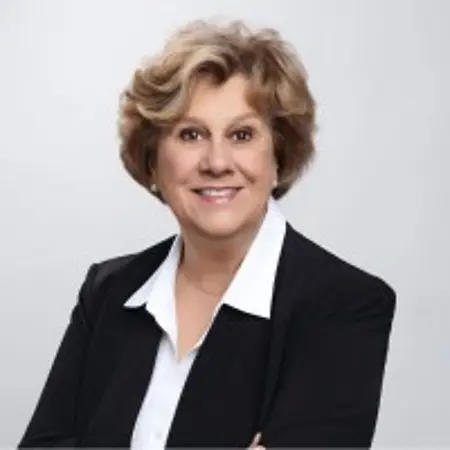
Her Story
About Gayle
Gayle Hope is a highly experienced banking professional with over five decades of expertise in treasury management, cash management, and client relationship services. She began her career in banking at the age of 18, starting in operations and quickly progressing through auditing and cash management roles. Her extensive experience includes co-founding one of the first cash management departments at Wells Fargo, where she spent 56 years developing industry-leading solutions for commercial clients across multiple sectors.
After her tenure at Wells Fargo, Gayle joined Cogent Bank as Senior Vice President, Treasury Sales & Deposit Relationship Manager. In this role, she is responsible for building a client portfolio from the ground up and delivering customized treasury solutions that align with client business goals. Known for her consultative approach and client-centered service, Gayle emphasizes respect, adaptability, and active listening to ensure her clients’ needs are always prioritized. She also leverages her entrepreneurial experience, owning and operating a fine jewelry store for over 31 years and a children’s boutique for 25 years, demonstrating her versatility and business acumen.
Beyond her professional achievements, Gayle is deeply committed to philanthropy and community engagement. She has served as Chef’s Auction Chair and board member for the March of Dimes for eight years, helping raise significant funds for the organization. Her career and personal values center on integrity, dedication, and lifelong learning, which have allowed her to mentor colleagues, build lasting client relationships, and make a meaningful impact in both the banking industry and her community.
Her Interview
Ten minutes with Gayle
01What do you attribute your success to?
I'm a workaholic - I've always been and always will be. I've never been one to sit still, and even in high school I worked various jobs because I couldn't stand not being busy. I started at the very bottom in operations and worked ungodly hours, but I didn't mind at all because I was learning. By doing a good job and working horrendous hours, I started getting promoted. Real life experiences and on-the-job training have been more valuable to me than a college degree. I made sure my kids got college degrees, but in my opinion, it doesn't take you to the top just because you have that - regardless of how smart you are or what you've done in the past, you have to work your way up. What fuels my brain is learning something new every day. Even after 56 years at Wells Fargo, I was still learning something new every day, and that's what keeps me going.
02What’s the best career advice you’ve ever received?
Start at the bottom and learn the business thoroughly. Advancement doesn’t come from a degree alone; it comes from experience, dedication, and a strong work ethic. Understanding every aspect of your field is critical, and putting in the hours to master it will pay off in the long run.
03What advice would you give to young women entering your industry?
First and foremost, you have to know what you want to do. If you want to become a banker, you're not going to start at the top - most young professionals don't. I don't care if you go into banking or whatever field you go into, be prepared and understand that you're better off, honestly, to start at the bottom, and that's what I did. I was in operations at the very, very bottom of the totem pole, but you learn so much more by starting at the bottom and working your way up. You become more valuable that way. Set your goals high, but understand it's going to take a while to get there. A college degree is wonderful - I mean, it's great, and I made sure my kids got one - but it doesn't take you to the top just because you have that. Regardless of how smart you are or what you've done in the past, you have to work your way up. That's my own personal opinion.
04What are the biggest challenges or opportunities in your field right now?
In my new position at Cogent Bank, the main objective is helping the bank grow their book of business and build the deposits. I'm building my own portfolio from scratch, so I didn't walk into a situation where I already had clients that I would be meeting with - this is a little new to me. I'm used to just going constantly, and when I was with Wells Fargo, I had a full book of clients that I was constantly in touch with on a daily basis while also prospecting. It's a little slower here because it's a new avenue for me, and this is a much, much smaller bank than where I came from. I was with a $2 trillion bank - Wells Fargo is one of the five largest banks in the country - and Cogent is much smaller at $2.5 billion. I had the opportunity to join several other large banks like the one I came from, but I saw Cogent as more of a challenge because I would have walked into exactly what I left with a full book of clients. This is totally different, so it is a bit of a challenge because I get a little antsy during the day when I don't have something going full-time. But I love having the opportunity to help a bank like this grow and be successful.
05What values are most important to you in your work and personal life?
Respect is absolutely critical - you have to respect the people you work with, the people you work for, and your clients. It's not all about you. You have to be able to adapt to different personalities - some are good, some are not so good, but you have to be able to do that. What I've learned over the years is to go in and let the prospect or the client do the talking. If you sit back and you listen, you're going to learn so much more than if you talk non-stop. Typically, those that talk non-stop are talking about themselves, and that's not the purpose of making the call. From a customer standpoint, building a client relationship is what matters most to me.
Join Influential Women and start making an impact. Register now.