Explore why grief is a natural response to loss, not a sign of weakness. Discover how understanding the grieving brain can replace shame with self-compassion and help you navigate profound change.
Verified Member
Influential Woman · Grief Support and Education
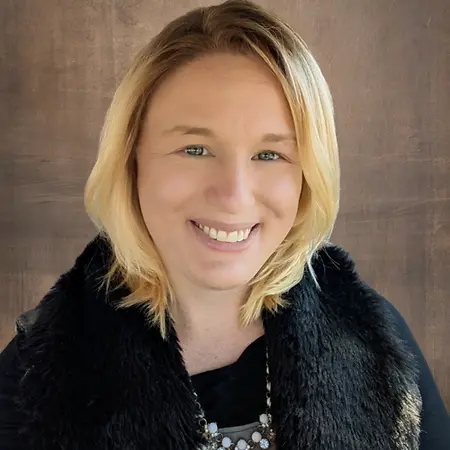
Genna Reeves, Ph.D.
Grief Coach/Peer Counselor / Death Doula / Funeral Celebrant, Invictus by Genna: Grief & Loss Services
Edgewood, NM 87015
5Years experience
1Article published
17Awards received
“
Confidence grew every time I chose to learn, show up before feeling certain, and keep going. Courage means keeping your values steady so fear no longer gets the final say.
Genna Reeves, Ph.D. · In Her Own Words
In Conversation
Genna Reeves for Bold. Brilliant. Unstoppable.
Read the transcript
Genna Reeves, Ph.D.: Speaker: Genna Reeves, Grief Coach/Peer Counselor / Death Doula, Invictus by GennaWhat does being an Influential Woman mean to you?Genna Reeves: To me, being influential or being an influencer really means creating spaces where people feel seen, heard, and empowered. It isn't about being the loudest voice in the room. It's about helping others feel less alone and more connected to themselves, to one another, and their communities. Community equals connection. And connection can equal influence. It also means fostering collaboration with others, helping people feel part of something larger than themselves, and being willing to sit with new ideas and explore them with a sense of curiosity and intention.What's one piece of advice you would give to younger women chasing their dreams?Genna Reeves: Some advice that I would give to younger women chasing their dreams is first to trust that your unique experiences have value. In grief support and end of life work, some of the most important qualities are presence, even though many people will want to focus on credentials. It is important to have humility, curiosity, presence, and the ability to build strong relationships. Seek out mentors, continue learning, and don't underestimate the impact that you can have simply by helping other people feel seen, heard, and understood. Also, find your tribe, and it may not be who you think it'll be, it can surprise you. Get into grief work for the motivation first and the money second. Keep learning and stay current on research as well. Be a proud and active lifelong learner because grief research is pretty new still, and there's still a lot to learn about how we experience it.
Full transcript available
Her Story
About Genna
Genna Reeves, Ph.D. is a grief coach, peer counselor, certified grief educator, and death doula based in Northern New Mexico. She operates a private practice, Invictus by Genna: Grief & Loss Services, while also serving as the New Mexico Community Liaison for HeartLight Center, Inc., a grief support and education nonprofit. In her work, she facilitates peer-based grief groups, workshops, and educational programs that support individuals navigating loss through evidence-informed frameworks such as the Companioning Model, the Dual Process Model, and Continuing Bonds Theory. She also contributes to professional development and curriculum design within end-of-life and grief education spaces, including teaching for End of Life Psychedelic Care.
With more than 15 years of experience as a scholar and educator, Dr. Reeves previously held academic roles in fashion and museum studies, specializing in historic and cultural dress at institutions such as Colorado State University, Oregon State University, and Kansas State University. She holds a Ph.D. in historic and cultural dress from Oregon State University, along with advanced degrees in apparel design and merchandising and educational leadership and policy. Her earlier research explored how dress and textile objects function as tools of memorialization and cultural expression, laying a foundation for her later transition into grief and loss work.
Dr. Reeves integrates her academic background, clinical training, and lived experience of loss into a holistic approach to grief support. She has trained with leading grief educators including David Kessler and Claire Bidwell Smith, and is actively involved in grief-centered professional networks such as the Association for Death Education and Counseling. Her work emphasizes compassionate presence, meaning-making, and community connection, while also incorporating creativity, ritual, and reflective practice to help individuals navigate complex and layered experiences of grief.
Her Interview
Ten minutes with Genna
01What do you attribute your success to?
When I think about what I attribute my success to, the main word that comes to mind for me is curiosity first, and then also resilience. I consider myself to be a lifelong learner, and I have always talked to people about the fact that that is a superpower that we can embody, because learning is something that helps us grow. My success I really see as being attributed to a willingness to keep learning, growing, adapting my thoughts, and responding to the needs of grievers. Throughout my career, I've noticed that I've really been willing to follow questions that matter to me, to explore things that don't make sense to me. I also want to highlight that my success has come from my relationships. My PhD mentor in particular, colleagues I've worked with, and even clients and community members I work with have all shaped my perspectives and helped me be a more well-rounded professional.
02What’s the best career advice you’ve ever received?
One piece of advice that has stayed with me is that you don't have to have the entire path figured out before taking the next step. Some of the most meaningful opportunities in my life—including leaving academia, building my own practice, and stepping into grief education—emerged because I was willing to move forward before I felt completely ready. Growth often happens through action, not certainty.
03What advice would you give to young women entering your industry?
It's okay to not have your entire path figured out before you take the next step. Some of the most meaningful opportunities that I have had in my life include leaving academia, building my own private practice, Invictus by Genna, and really just stepping into the idea of supporting other people. It's okay if you create a new idea or a new role, similar to what I did, because maybe it's what the world needs, and someone just hasn't thought of it yet. Ideas are our greatest currency. The other thing I would say is to find your tribe, and it may not be who you think it will be. You may be surprised, but definitely find your tribe and the people that you work with well. I would also say to get into this work in terms of grief support and education for the motivation before the money. Because if your heart is truly in it and you are good at what you do and you train, then the money will come. The focus should be on motivation first. And then also, as I said, keep learning and stay current on research.
04What are the biggest challenges or opportunities in your field right now?
One of the greatest challenges is that grief remains widely misunderstood. Many people receive little education about grief despite the fact that loss touches every aspect of our lives, workplaces, families, and communities. At the same time, I see tremendous opportunity. There is growing recognition that emotional well-being, grief literacy, and community support matter. I believe we are at an important moment where we can normalize conversations about grief and create more compassionate, grief-informed communities.
One of the biggest professional challenges I see is the growing demand for grief support combined with a lack of understanding about ethical practices within support spaces. As grief and mental health become more visible, more professionals are seeking training and exposure to this work, which is encouraging. However, there are times when individuals enter grief support spaces primarily as observers or learners without fully considering the vulnerability of the people sharing their experiences. Grief support groups exist first and foremost for participants, not as training environments. I believe our field has an opportunity to provide more education around ethics, informed consent, boundaries, and the distinction between supporting grieving individuals and learning from them. Protecting the dignity and trust of those who attend these spaces must remain our highest priority.
05What values are most important to you in your work and personal life?
For me, one of the things that I keep coming back to, and I think this is a theme that runs through professional life and personal for me, is I value community. One of the things that's most fulfilling for me is when I can combine community with movement of some kind. Spending time with my niece and nephew is incredibly refreshing and also nurturing for me, because it is such quality time to spend with these little humans who look up to me, and I appreciate that so much, and being able to connect with them.
Her Content Hub
Articles by Genna
Grief Doesn't Mean You're Broken
Understanding grief as a natural response to loss, not a sign of failure or weakness.

Grief Is Not a Sign That Something Is Wrong with You
One of the most common things I hear in my work is this:
"I think something is wrong with me."
It usually comes after someone has forgotten an appointment, walked into a room without remembering why, struggled to finish a sentence, or burst into tears over something that seems insignificant. Sometimes it's been weeks since their loss. Sometimes it's been years.
They aren't asking because they lack resilience.
They're asking because our culture has quietly taught us that grief should have an expiration date.
If we aren't "back to normal" quickly enough, we begin to wonder whether we're failing.
The truth is, grief doesn't simply affect our emotions. It affects our brains, our bodies, our relationships, our sense of identity, and even the way we experience time.
Understanding that changed the way I approach my work—and the way I view my own humanity.
Grief Is Rarely Linear
For years, grief was often described as a series of stages or something people eventually "got over." While those ideas helped move conversations about grief forward, they don't fully capture what many people actually experience.
Grief is rarely linear. It changes. It resurfaces. It surprises us. It asks us to adapt to a world that no longer looks the way we expected.
What I find most meaningful is helping people realize that these experiences are not signs of weakness. They are signs of a brain and body learning to navigate profound change.
That realization often brings visible relief.
The conversation shifts from:
"What's wrong with me?"
to
"Maybe this is a normal response to an extraordinary experience."
That single shift can replace shame with self-compassion.
Making Grief Research Understandable and Accessible
As a grief peer counselor, coach, support group facilitator, and educator, I've become passionate about making grief research understandable and accessible. Scientific discoveries about the grieving brain are incredibly important, but they become truly meaningful only when people can recognize themselves in them.
I highly recommend reading The Grieving Brain by Mary-Frances O'Connor.
Knowledge doesn't erase grief. It doesn't remove longing. It doesn't make loss disappear. But it can help us stop fighting ourselves while we're carrying it.
Loss Is Part of the Human Experience
I also believe this understanding extends far beyond bereavement.
We grieve many things throughout our lives—relationships, health, careers, identities, dreams, and the versions of ourselves we thought we'd become. Loss is part of the human experience, not the exception to it.
When we begin to understand grief instead of judging it, something remarkable happens.
We become gentler—with ourselves, with our families, with our coworkers, and with the stranger whose story we don't yet know.
Perhaps that is one of the greatest opportunities we have—not to eliminate grief, but to become more compassionate because we understand it.
Because grief doesn't mean you're broken.
More often than not, it means something mattered deeply.
And I think that's one of the most human experiences we can share.
Join Influential Women and start making an impact. Register now.