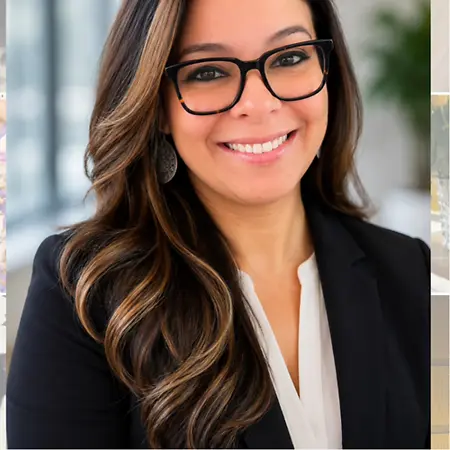
A powerful reflection on authentic leadership that emphasizes empathy, accountability, and personal growth. This inspiring piece explores how leading with compassion, recognizing individual worth, and maintaining work-life balance can transform organizations and empower the next generation of leaders.
“
Rest isn't quitting, it's recovering. I had to learn my worth isn't measured by how much I can hold, and give myself permission to rest without guilt.
Gina Felix, MBA · In Her Own Words
Her Story
About Gina
Gina Felix is a healthcare operations executive and Director of Operations whose career has been built around one core belief: exceptional leadership begins with people.
With a Bachelor’s degree in Healthcare Administration and a Master of Business Administration (MBA), Gina brings extensive experience leading complex, multi-site healthcare operations, developing high-performing teams, launching new clinical locations, strengthening operational infrastructure, and driving organizational growth. Her expertise spans operational strategy, financial performance, process improvement, compliance, workforce development, performance management, and cross-functional executive leadership.
Throughout her career, Gina has learned that achieving strong results is only one part of being an effective leader. How those results are achieved matters just as much. Her leadership philosophy combines accountability and high expectations with empathy, transparency, compassion, and respect. She is passionate about creating healthy workplace cultures where employees feel valued, leaders are empowered to grow, and teams understand the importance of the work they perform every day.
Gina's professional journey has also been shaped by resilience. Every challenge, transition, and opportunity has strengthened her determination to become the kind of leader who creates opportunities for others rather than simply occupying a leadership position. She believes some of the most influential leaders are those who recognize potential in people before they recognize it in themselves.
As a woman in executive leadership, Gina is passionate about encouraging others to recognize their value, advocate for themselves, pursue opportunities that may initially feel beyond their reach, and never allow someone else's perception to determine the limits of their potential.
Beyond her professional accomplishments, Gina considers her family one of her greatest sources of purpose and motivation. She wants her children to see through her journey that success does not require a perfect path. It requires courage, perseverance, authenticity, and the willingness to continue writing your own story.
As Gina continues her journey in executive leadership, her goal is not simply to build successful organizations. It is to build stronger people, healthier cultures, sustainable systems, and a legacy of leadership that creates opportunities long after she has left the room.
Her philosophy is simple: lead with empathy, operate with purpose, and leave every organization—and every person—you encounter better than you found them.
Her Interview
Ten minutes with Gina
01What do you attribute your success to?
I attribute my success to resilience, perseverance, and my willingness to continue growing through every season of my life. My journey has not always been easy or linear, but every challenge has taught me something about leadership, people, and, most importantly, myself.
I also attribute much of my success to leading with empathy. I have experienced firsthand the difference a great leader can make, as well as the impact poor leadership can have on people. Those experiences shaped the leader I intentionally choose to be today. I believe you can hold people accountable, achieve ambitious goals, and deliver exceptional business results without losing compassion or humanity in the process.
My family is another significant source of my motivation. I want my children to see that setbacks do not define their future and that they have the ability to create their own path. I want them to know that success is not about never experiencing failure or adversity, it is about having the courage to continue moving forward.
Finally, I attribute my success to never becoming complacent. I am constantly learning, challenging myself, and looking for opportunities to grow both personally and professionally. Every position I have held has been more than a title to me; it has been an opportunity to improve an organization, develop people, and leave something meaningful behind.
Ultimately, my success comes from knowing my purpose. I want to be the leader I once needed, open doors for others, and demonstrate that empathy and strong business leadership can and should exist together.
02What’s the best career advice you’ve ever received?
The best career advice I have ever received is, “Know your worth, trust your instincts, and never allow a title or an organization to determine your value.”
Throughout my career, I have learned that growth sometimes requires having the courage to walk away from environments that no longer align with your values, even when doing so feels uncomfortable or uncertain. Not every opportunity is meant to be permanent, and sometimes the experiences that challenge us the most ultimately teach us the greatest lessons about who we are and what we deserve.
I have also learned not to wait until I feel completely ready before pursuing the next opportunity. Some of the greatest growth in my career has happened when I stepped outside of my comfort zone, trusted my experience, and allowed myself to take up space at tables I once questioned whether I belonged at.
Today, I carry that advice into my own leadership. I encourage the people I lead to advocate for themselves, remain curious, continue developing their skills, and never underestimate what they are capable of achieving.
Your career is ultimately your story to write. Be intentional about where you invest your talent, surround yourself with people who recognize your potential, and never be afraid to turn the page when it is time for a new chapter.
03What advice would you give to young women entering your industry?
My advice to young women entering healthcare leadership is to never underestimate the value of their voice, perspective, and lived experiences. You do not have to become someone else to be an effective leader. There is tremendous strength in leading authentically.
Learn the business, not just your role. Understand operations, finance, people, strategy, and the patient experience. Ask questions, seek mentors, build relationships across departments, and become comfortable making decisions based on both data and human impact. The more you understand how an organization operates as a whole, the more prepared you will be when opportunities for leadership arise.
I would also tell young women not to wait for permission to pursue the next level. Apply for the position even if you do not meet every qualification. Ask for the promotion. Negotiate your compensation. Speak up in the meeting. Advocate for your ideas and accomplishments. You can be humble while still knowing your worth.
Most importantly, protect your values as you advance. Success should never require you to sacrifice your integrity, compassion, or well-being. Titles will change throughout your career, but your character and the way people remember being treated under your leadership will become part of your legacy.
There will be moments when you question whether you belong in the room. Walk into it anyway. Learn, contribute, lead with purpose, and remember that you may eventually become the woman another young professional looks at and thinks, “If she can do it, maybe I can too.”
04What are the biggest challenges or opportunities in your field right now?
One of the greatest challenges in healthcare today is balancing growth, financial sustainability, workforce demands, and operational efficiency while never losing sight of the patient experience. Healthcare organizations are being asked to do more with increasingly complex systems, rising costs, staffing challenges, evolving technology, and greater expectations from both patients and employees.
From an operations perspective, I believe one of our greatest opportunities is creating systems that allow healthcare professionals to focus more of their energy on delivering exceptional care. That means simplifying inefficient processes, leveraging technology and data strategically, developing stronger leaders, improving communication across departments, and building scalable infrastructure that supports growth without creating unnecessary burnout.
Workforce retention and leadership development are particularly important to me. Healthcare cannot solve every operational challenge simply by asking employees to work harder. Organizations must examine the systems, expectations, resources, and leadership structures surrounding their teams. Creating environments where people feel supported, accountable, valued, and connected to the mission is not only a culture initiative. It is a business strategy.
I also see tremendous opportunity in the continued evolution of technology, automation, data analytics, and artificial intelligence. When implemented thoughtfully, these tools can reduce administrative burden, identify operational opportunities earlier, improve decision-making, and create a more seamless experience for both patients and employees.
The future of healthcare will require leaders who can balance innovation with humanity. We need to embrace technology and operational efficiency while remembering that healthcare is ultimately about people.
I believe the organizations that will be most successful are those that can grow, innovate, and perform financially while still creating environments where patients feel cared for and employees are proud to work.
05What values are most important to you in your work and personal life?
The values that guide both my professional and personal life are empathy, integrity, authenticity, accountability, resilience, and family. I believe our values should not change depending on whether we are sitting in a leadership meeting or at home with the people we love, they should be reflected in how we consistently treat others.
Empathy is at the center of my leadership philosophy. I believe in taking the time to understand people, recognizing that everyone carries experiences and challenges we may never see. At the same time, empathy and accountability can coexist. Some of the strongest leaders I have encountered are those who can set high expectations, have difficult conversations, and make challenging decisions while still treating people with dignity and respect.
Integrity is equally important to me. I want my decisions to reflect what is right, even when the right decision is not necessarily the easiest one. Titles and accomplishments are temporary, but your character and the way you make people feel can leave a lasting impression.
Resilience has also played an important role in my life. I have learned that challenges do not have to become the end of our story. They can become opportunities to reevaluate, grow, and discover strengths we may not have realized we possessed.
Above everything, family keeps me grounded. They remind me why I work hard, why I continue pushing myself to grow, and why the legacy I create matters. I want my children to understand that success is not simply measured by a title, salary, or professional recognition.
It is measured by living authentically, treating people well, standing firmly in your values, and having the courage to create a life that genuinely reflects who you are.
Whether I am leading an organization or raising my family, I want the foundation to remain the same: lead with empathy, act with integrity, remain accountable, and never lose sight of the people who give the work meaning.
Her Content Hub
Articles by Gina
Becoming the Leader I Once Needed: Leading with Empathy, Courage, and Purpose
How Empathy, Authenticity, and Purpose Redefine Modern Leadership
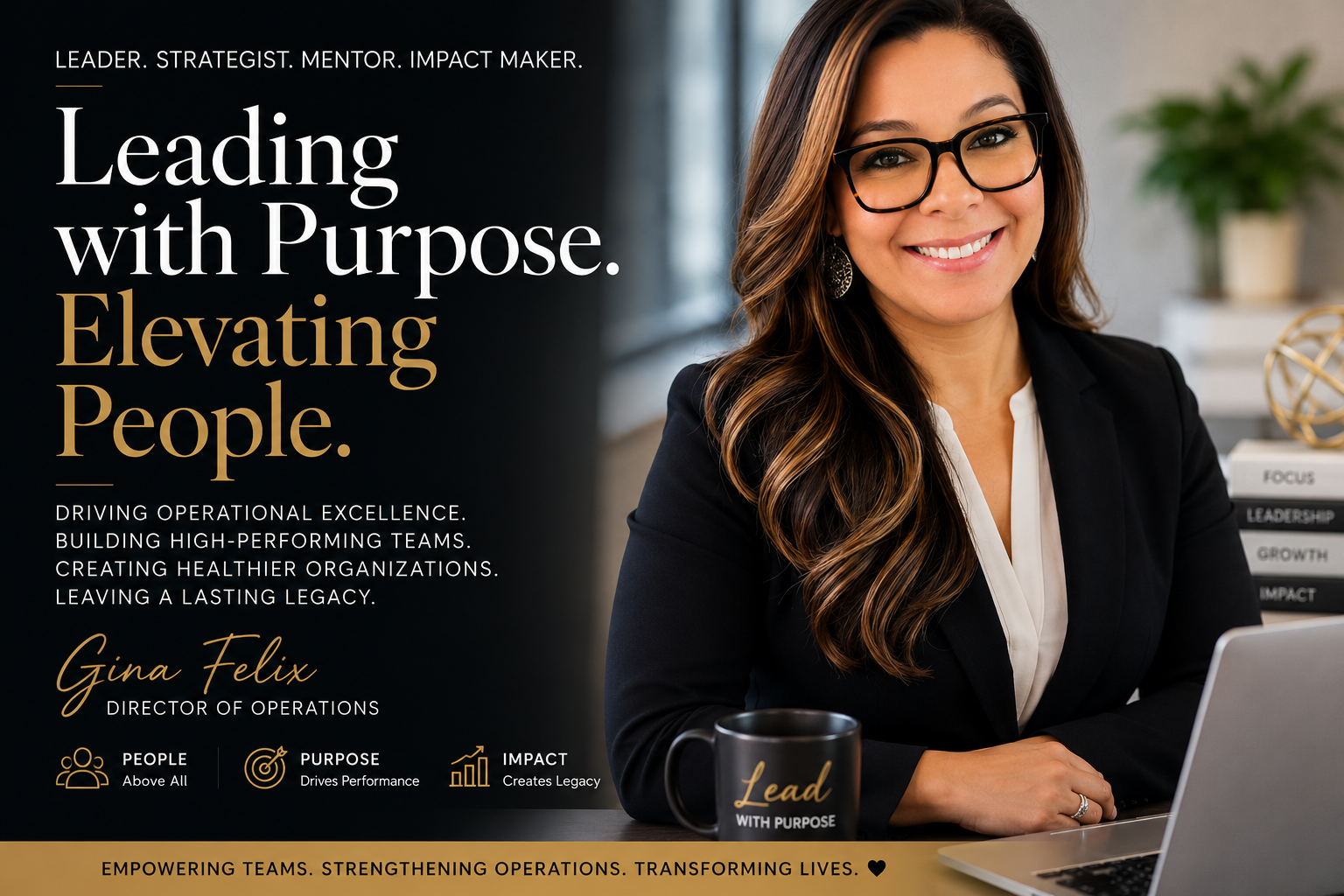
Becoming the Leader I Once Needed
Success rarely looks like a straight line.
Behind every title, promotion, accomplishment, and professional milestone are chapters that rarely make it onto a résumé—the moments of uncertainty, rejection, difficult decisions, self-doubt, sacrifice, and growth that ultimately shape who we become.
My journey into leadership has been no different.
Today, as a Director of Operations, I have the privilege of leading people, developing teams, strengthening organizations, improving operations, and helping create environments where both employees and businesses can thrive. But when I think about what has shaped me most as a leader, I don't immediately think about metrics, budgets, organizational growth, or professional titles.
I think about people.
I think about the leaders who believed in me. I think about the leaders who challenged me. And perhaps just as importantly, I think about the experiences that taught me exactly what kind of leader I never wanted to become.
Those experiences ultimately gave me one of the greatest purposes of my career:
To become the leader I once needed.
Leadership Is About More Than Results
I have spent much of my career in healthcare operations, where performance matters. We measure productivity, financial outcomes, patient experience, operational efficiency, employee performance, growth, and countless other indicators.
I believe deeply in accountability and results.
But I also believe how we achieve those results matters.
There is a misconception that empathy makes leaders less effective or that compassion somehow lowers expectations. My experience has taught me the opposite.
You can hold someone accountable and still respect them.
You can make difficult business decisions and still recognize the human beings affected by them.
You can expect excellence without creating fear.
You can lead with compassion without compromising performance.
Some of the strongest organizations are built by leaders who understand that their people are not simply resources on an organizational chart. They are individuals with ambitions, families, challenges, ideas, and tremendous potential.
When people feel respected, supported, challenged, and connected to a greater purpose, extraordinary things can happen.
That is the type of environment I want to create wherever I lead.
Know Your Worth, Especially When It Is Uncomfortable
One of the most important lessons I have learned throughout my career is that your value cannot be determined by one position, organization, leader, or moment in your life.
There will be times when someone does not recognize what you bring to the table.
There will be opportunities you do not receive.
There will be rooms where you question whether you belong.
There may even be seasons when you question yourself.
Those moments can either convince you to become smaller or challenge you to discover just how capable you truly are.
I chose the latter.
Women, in particular, can sometimes feel pressure to wait until we are completely qualified before pursuing an opportunity. We may hesitate before negotiating compensation, speaking confidently about our accomplishments, challenging an idea, or asking for the next opportunity.
I want women to understand that confidence does not mean believing you know everything.
Confidence means trusting yourself enough to know you can learn what you don't.
Apply for the position.
Ask the question.
Negotiate your worth.
Speak in the meeting.
Take the seat at the table.
And when necessary, build your own table.
Your Career Should Never Cost You Yourself
Ambition is powerful. I am ambitious, and I am proud of it.
I want to continue growing, learning, leading, and making an impact. But experience has also taught me that professional success should not require us to completely sacrifice ourselves in order to achieve it.
Burnout should not be a badge of honor.
Constant exhaustion is not evidence of commitment.
And an impressive title means very little if you have lost your peace, your values, or your connection to the people who matter most.
There are seasons when our careers require tremendous effort and sacrifice. Leadership carries responsibility, and there will always be difficult days. But there is a difference between being challenged by your work and being consumed by it.
I believe the next generation of leaders has an opportunity to redefine what successful leadership looks like.
We can build organizations that perform exceptionally without normalizing unhealthy environments.
We can create accountability without fear.
We can pursue growth without forgetting humanity.
And we can be ambitious while still protecting the lives we have worked so hard to build.
Family Changed My Definition of Success
My family is one of the greatest sources of motivation behind everything I do.
As my career has evolved, so has my definition of success.
Of course, I am proud of professional accomplishments. I am proud of my education, the organizations I have helped strengthen, the operations I have built, the teams I have developed, and every opportunity that required me to stretch beyond what I thought I could do.
But I also think about what my journey teaches my children.
I want them to understand that their lives do not have to follow a perfect path to become something extraordinary.
I want them to see that you can experience setbacks and still succeed.
You can change direction.
You can begin again.
You can outgrow environments.
You can make mistakes and learn from them.
You can experience moments that shake your confidence and still rediscover your voice.
Most importantly, I want them to know that they are the authors of their own stories.
The world will have opinions about who they should become. Other people may attempt to define their capabilities or place limitations on their dreams.
But ultimately, the pen belongs to them.
That is the legacy I care about most.
Women Need Women Who Open Doors
As I continue growing as a leader, I feel an increasing responsibility to help other women grow alongside me.
Leadership should never be about being the only woman who made it into the room.
It should be about asking, "Who can I bring into this room next?"
Mentorship matters.
Representation matters.
Encouragement matters.
Sometimes a person's entire trajectory can change because one leader recognized something in them they had not yet recognized in themselves.
I am that leader.
I want women earlier in their careers to know they do not have to choose between being strong and compassionate. They do not have to silence themselves to make other people comfortable. They do not have to have every answer before pursuing leadership.
Learn the business. Become exceptional at what you do. Understand the numbers. Develop emotional intelligence. Ask questions. Find mentors. Accept constructive feedback. Admit when you are wrong. Continue educating yourself.
But through all of it, remain authentically you.
The qualities that make you different may eventually become the qualities that make you an exceptional leader.
Keep Writing Your Story
If there is one message I hope another woman takes from my journey, it is this:
Do not allow one difficult chapter to convince you that you have reached the end of your story.
Some chapters will celebrate you.
Others will challenge you.
Some will introduce incredible people into your life, while others will teach you when it is time to walk away.
There will be chapters you never would have chosen for yourself that ultimately become responsible for tremendous growth.
Keep writing anyway.
I am still writing mine.
I still have goals I want to accomplish, people I want to impact, organizations I want to transform, and rooms I have yet to enter.
But I no longer measure success solely by how far I can climb.
I measure it by how authentically I live, how courageously I pursue what is next, how deeply I love my family, how many people I help develop, and whether the people who encounter my leadership leave believing a little more strongly in themselves.
Titles will change.
Organizations will change.
Careers will evolve.
But the impact we leave on people can remain long after we have moved on.
So I will continue doing what I have committed myself to doing throughout my journey:
Lead with empathy. Operate with purpose. Know my worth. Open doors for others. And become the leader I once needed.
- Gina Felix, MBA
Director of Operations
An inspiring personal narrative about overcoming adversity, pursuing education, and becoming a compassionate leader who lifts others while building inclusive cultures rooted in empathy and authentic representation.
The Story You Choose to Write
Overcoming adversity through resilience, education, and compassionate leadership to inspire others.

Your Story Is Still Being Written
There were many seasons in my life when I honestly didn't think I would survive.
Life has a way of testing us in ways we never anticipate. There were moments filled with uncertainty, heartbreak, and challenges that could have easily defined me. But I made a decision that changed everything: I refused to let my circumstances become my identity.
Instead, I chose to become the author of my own story.
Becoming the Mother They Deserved
One of the greatest motivations in my life has always been my children. Becoming the mother they deserved meant learning without the guidance of strong parental role models. It meant making mistakes, growing through them, and committing every day to becoming better than I was the day before. I wanted my children to see that our past does not determine our future. Our choices do.
Education Became Another Chapter
Education became another chapter in that story.
While raising my family and navigating life's challenges, I committed myself to earning both my bachelor's degree in Healthcare Administration and my master's degree in Business. Along the way, I became a member of the National Society of Leadership and Success (NSLS)-an achievement that represented far more than academic recognition.
Those accomplishments weren't simply about earning degrees or adding credentials after my name. They were promises I kept to myself. They were proof that no dream is too big when you refuse to quit. Most importantly, they were an example to my children that determination, discipline, and resilience can overcome even the most difficult circumstances.
I wanted them to know that they have the power to write their own story.
The Kind of Leader I Had Searched For
As my career progressed into healthcare leadership, I began to notice something that troubled me. The higher I climbed, the more I saw leadership become transactional instead of transformational. Too often, people were viewed as numbers instead of individuals. Empathy was mistaken for weakness, and compassion was treated as optional.
That experience didn't discourage me, it strengthened my purpose.
I chose to become the kind of leader I had searched for throughout my own career.
A leader who listens before speaking. A leader who believes that accountability and compassion can exist together. A leader who genuinely cares about the people behind the job titles because employees aren't simply resources. They're human beings with families, dreams, fears, and untapped potential.
Leadership is not about being the smartest person in the room. It's about creating an environment where everyone else can become their best.
Success Is Measured by How Many People We Help
I've always believed that success is measured not only by what we accomplish, but by how many people we help along the way. There is incredible power in encouraging someone who doubts themselves, mentoring someone into a leadership role, or simply reminding another person that they are capable of more than they realize.
When leaders choose empathy over ego, something remarkable happens.
Teams stop competing against one another and begin working with one another. Trust replaces fear. Collaboration replaces comparison. People become invested not only in their own success, but in the success of the entire organization.
That is the culture I strive to build every day.
A culture where one team works toward one mission. Where people feel valued, heard, and inspired to grow. Where leadership is demonstrated through service, humility, and integrity. Not titles or authority.
Strength Isn't the Absence of Struggle
My journey has also taught me that strength isn't the absence of struggle. Sometimes the strongest people are the ones quietly fighting battles no one else can see.
If you are experiencing mental health challenges, know this: your struggle does not define your future. Asking for help is not weakness, it is courage. Healing is not a straight path, but every step forward matters. Don't allow your pain to convince you that your story is over. Instead, let it become the fuel that propels you toward the life you deserve. Reach out, accept support, keep moving forward, and never give up on yourself.
Representation and Motivation
As a proud member of the Latino community, I also understand the importance of representation. There are moments when people may underestimate you, question your abilities, or make assumptions about what you can or cannot achieve because of who you are.
Don't let that become your limitation.
Let it become your motivation.
Stand tall. Walk with confidence. Be unapologetically yourself because the world needs leaders who are authentic. Every barrier you overcome creates a path for someone else to believe they can do the same. Every success challenges outdated perceptions and expands what others believe is possible.
For me, representing my community isn't just about personal achievement. It's about showing the next generation that they belong in leadership, that their voice matters, and that their dreams are worthy of pursuit. Success is not about proving people wrong out of spite; it's about proving to yourself, and inspiring others that anything is possible through resilience, hard work, and self-belief.
Your Story Is Still Being Written
If my story leaves readers with one message, it is this:
Never allow your circumstances to become the final chapter of your life. Keep learning. Keep growing. Keep believing in yourself, even when no one else does. Invest in your dreams. Put yourself first when you need to heal because you cannot pour into others from an empty cup.
Most importantly, empower those around you.
Real success isn't measured by how high we climb. It's measured by how many people we lift as we rise.
Every one of us has the opportunity to make a difference. Every one of us has the ability to lead with compassion. And every one of us has the power to write a story that inspires someone else to keep going.
Your story is still being written.
Make it one worth reading.
Join Influential Women and start making an impact. Register now.