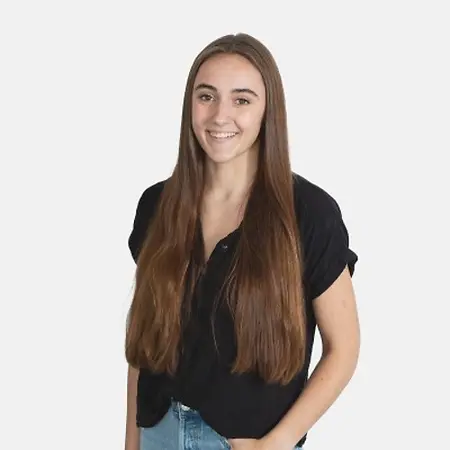
Her Story
About Grace
I work with a non-profit affordable housing developer that serves the Gulf Coast region, spanning from Texas and Louisiana all the way down to Florida. We provide affordable housing and do a lot of work with local public housing authorities to convert their existing housing stock that may be in need of repair or rehabilitation. We also provide supportive social services, partnering with different organizations to set up our tenants with health services, financial literacy, after-school care, and different things that help make life a little bit easier for folks that may be burdened by different costs of living. My area of expertise within the organization is on the design and construction side of things, making sure that the plans we're working through with the architects and sending to permitting are not just feasible, but are keeping those tenants in mind and making livable units. I'm always thinking about the needs of the population we're serving - some of our tenants may have multi-generational households, single-parent households, or be coming straight from a situation of homelessness and need that transitional space. A typical day can look like anything from feasibility analysis to being on-site with a hard hat walking through units as they're getting built, from calls with bankers and lawyers to site walks addressing problems on the ground. Within the past year, my team has been able to close deals on upwards of 700 units. My team is very small, less than 10 people, and the amount we're able to achieve just by working together and using our different expertise is something I'm very proud of. Housing is not an easy thing to build, which is why there is such a shortage of it, and the fact that we're able to produce that output with just the small team that we have is incredibly meaningful to me.
Her Interview
Ten minutes with Grace
01What do you attribute your success to?
I attribute my success to my amazing support system. When I was in school, I had professors that were incredible - not just in their participation on campus and in student mentorship, but also across the city. They were very committed to incorporating a social justice aspect into their professional practice and recognizing that the field of real estate and the built environment in general is a field that is heavily burdened by the mistakes of the past, including racial inequities and economic inequities. If we don't actively highlight the ways in which low-income families are burdened, or the ways in which redlining still exists today, or how urban renewal projects have shaped neighborhoods, then we won't ever be able to solve those problems. The professors I had, along with the coworkers I have now and different folks within my network, are all very mindful of that. They're all very active and loud about it, and they're not afraid to say what's being unsaid, maybe, in other rooms, because ultimately, that's what's gonna push towards a solution.
Join Influential Women and start making an impact. Register now.