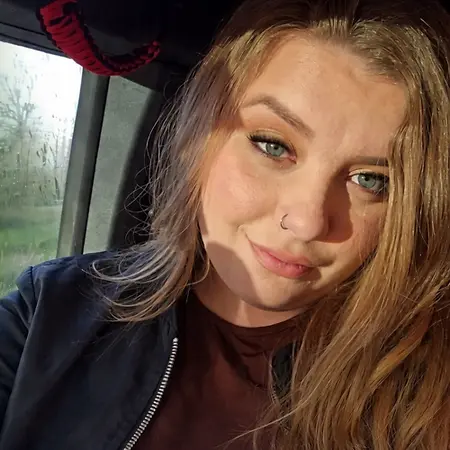
Her Story
About Gracie
Gracie Wenzel is a dedicated marine biologist and graduate student at Unity Environmental University, currently pursuing a Master of Science in Marine Conservation Biology. With a strong foundation in biology earned from Virginia Wesleyan University, she has cultivated a deep passion for ocean ecosystems, particularly shark and stingray conservation. Her academic journey is complemented by hands-on research, including remote research on whale shark feeding ecology in the Gulf of Mexico and visual system analyses of juvenile Atlantic stingrays, demonstrating both her technical expertise and commitment to advancing marine science. Professionally, Gracie has built extensive field and laboratory experience. She has worked as a marine biologist aboard commercial fishing vessels through NOAA partnerships, collecting biological samples and contributing to fisheries research. Her current role as a Microplastics Associate at Seaside Sustainability allows her to merge research, public engagement, and technological innovation in marine conservation. Additionally, her experience in veterinary reception and public education highlights her communication skills and dedication to fostering awareness about animal and environmental welfare. Gracie’s career is guided by a philosophy that combines compassion, curiosity, and bravery. She actively participates in global conservation initiatives, maintains professional certifications in ecosystem dynamics and marine safety, and has been recognized for her leadership and research contributions. Beyond her scientific work, she engages the public through outreach and advocacy, embodying a holistic approach to marine conservation that blends rigorous research, mentorship, and environmental stewardship.
Her Interview
Ten minutes with Gracie
01What do you attribute your success to?
I attribute my drive to my parents. They're always very supportive of me. Any job that I'm looking at, whether it's in the country or out of the country, they're like, go for it, do it, get the experience, go explore the world. Just do the best you can. I also have an undergraduate professor who was my advisor and who I did research with. From the very beginning of freshman year to even now, which is five and a half years later, she's in there whenever I need support or advice or anything. She's also a marine biologist, so she helps me find options and push me forward. She's not letting me quit. She went with me to all those conferences and still introduces me to people and makes connections for me.
02What’s the best career advice you’ve ever received?
The best career advice I've ever received is: don't say no during an interview. If they ask if you're willing to do something, say yes, and then figure it out later. Sound confident, don't say no. My mom has always said that too. She's like, don't ever say no, say yes until you figure it out, and then you can figure it out later. You have to be willing to take on challenges even if you don't know exactly how to do them yet, because once they hire you and put all that effort into you, they're usually going to train you anyway.
03What advice would you give to young women entering your industry?
Don't give up. A lot of people give up when they find out how hard it is to get into marine biology. Just keep pushing for it. Even if you have the support of your parents or not, just do what you can. Finances aren't always going to be the best, they're going to be tight, but you just have to learn to work around it and learn to build your schedule around what you want to do, so that one day you can look back and go, I made it. Marine biology has a lot of challenges to get into. There's not a lot of jobs for it right now, and the jobs that they do have, you need a lot of experience to get. That's why a lot of people go back to school and get a master's, do these unpaid internships, which is what mine is, to get all that experience. But don't let that discourage you. Keep pushing forward.
04What are the biggest challenges or opportunities in your field right now?
There are so many challenges in marine biology. There's not a lot of jobs for it right now, and the jobs that they do have, you need a lot of experience to get. That's why a lot of people go back to school and get a master's, do these unpaid internships, which is what mine is, to get all that experience. Even when I was working on the boats, it's a very dangerous situation, but a lot of people do it to start out in their careers to get the experience. Networking is huge in this field. It's who you know. Expanding your network, especially outside your own organizations and outside universities, is a big part of making it in this industry.
05What values are most important to you in your work and personal life?
Compassion is a big thing for me, not just to people, but to the animals. You can't be in this field unless you have compassion for the animals and you understand them. You can't be afraid of them. A lot of people are afraid of a lot of marine species and afraid of the ocean, but you can't be. You have to be compassionate and be brave, be willing to try different stuff that you never thought you'd be able to do or that you had the opportunity to do. I'm also driven by the environmental aspect. Reading about how people are treating these animals and having no care about it, plastic pollution destroying the oceans, that sort of thing, I don't want that to continue. When I do have kids, I don't want them to see that and ask why isn't anyone doing anything. Learning about conservation issues when I was younger, that's what draws me more towards the conservation and policy side of marine biology.
Join Influential Women and start making an impact. Register now.